Global Warming, Radiation Risks, and Their Impact on the Infrastructure of Healthcare Institutions
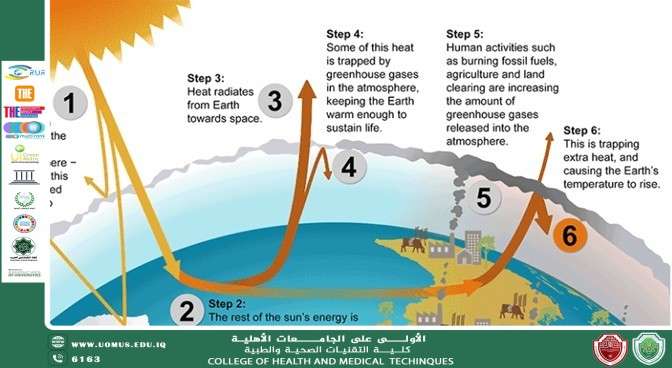
Global warming is considered one of the most significant environmental challenges of the modern era. It results from the continuous increase in greenhouse gas concentrations in the atmosphere, particularly carbon dioxide and methane. The relevance of this phenomenon to radiography and medical physics students lies in its indirect relationship with energy sources used to operate medical imaging and radiation-producing equipment, as well as its broad environmental and health impacts
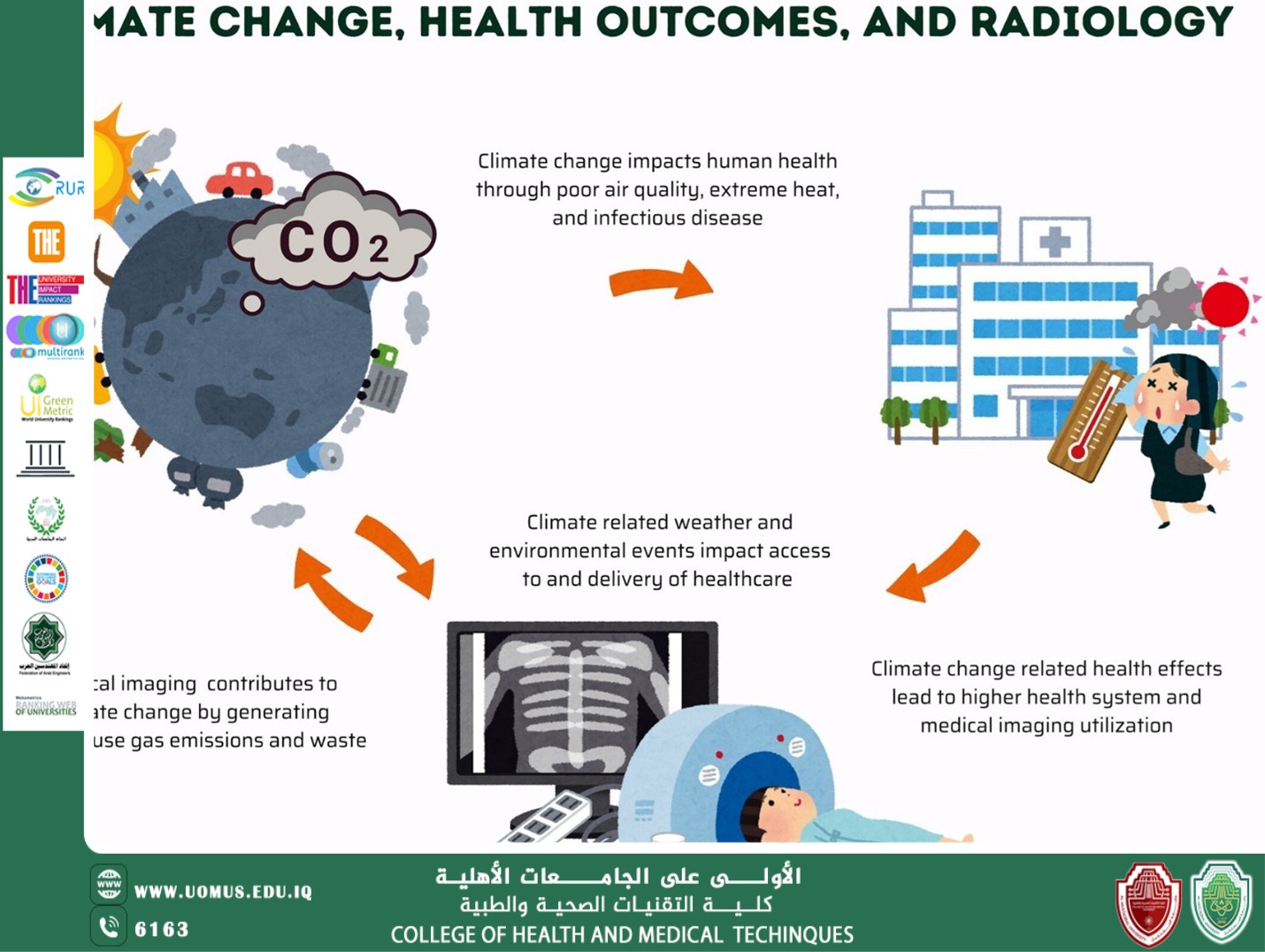
Global warming leads to climate changes that may affect the infrastructure of healthcare facilities. Increased ambient temperatures place additional thermal loads on sensitive medical equipment such as Magnetic Resonance Imaging (MRI) and Computed Tomography (CT) systems, increasing the demand for cooling systems and energy consumption. Furthermore, elevated temperatures may influence the stability, calibration accuracy, and performance of radiation detectors and dosimetric devices.
From the perspective of radiation risks, exposure to ionizing radiation is a central concern in the fields of radiography and medical physics. Ionizing radiation, including X-rays and gamma rays, has sufficient energy to ionize atoms and molecules in biological tissues, leading to damage to cellular structures and DNA. Such damage may result in deterministic effects, such as radiation burns, or stochastic effects, including an increased risk of cancer. Therefore, radiation professionals strictly adhere to radiation protection principles, particularly the ALARA principle (As Low As Reasonably Achievable), to minimize radiation doses to patients, workers, and the public.
The issue of global warming is indirectly linked to radiation risks through the expansion of nuclear energy as a low-carbon alternative to fossil fuels. Nuclear technology also plays a vital role in medical applications, particularly in the production of radioactive isotopes used for diagnostic and therapeutic purposes. Despite its advantages in reducing greenhouse gas emissions, improper management of radioactive sources or nuclear waste may lead to radiation contamination with long-term environmental and health consequences.
In conclusion, awareness of global warming and radiation risks among radiography and medical physics students is essential for developing responsible healthcare professionals. Achieving a balance between the safe use of radiation technologies and environmental sustainability requires continuous scientific research, strict implementation of radiation safety and quality assurance programs, and the adoption of energy-efficient medical technologies with minimal environmental impact.