
Non-Ionizing Medical Imaging Modalities and Their Safe Role in Modern Medical Diagnosis
Medical imaging has undergone significant advancements over recent decades, greatly enhancing diagnostic accuracy and clinical decision-making. Alongside these advancements, increasing emphasis has been placed on minimizing potential health risks associated with diagnostic procedures. Consequently, non-ionizing medical imaging modalities have gained prominence as safer alternatives to ionizing techniques.
Ionizing radiation possesses sufficient energy to ionize atoms and molecules within biological tissues, potentially causing DNA damage and increasing the risk of genetic mutations, particularly with repeated or high-dose exposure. These concerns have led international health organizations to advocate for radiation dose optimization and adherence to the ALARA principle. Within this framework, non-ionizing imaging modalities offer a valuable diagnostic approach with minimal biological risk.
Ultrasound imaging is one of the most commonly utilized non-ionizing diagnostic techniques. It employs high-frequency sound waves that interact with body tissues, producing echoes that are processed into diagnostic images. Ultrasound imaging is widely used in abdominal examinations, cardiology, and obstetrics due to its real-time imaging capability, accessibility, and well-established safety profile when used according to clinical guidelines.
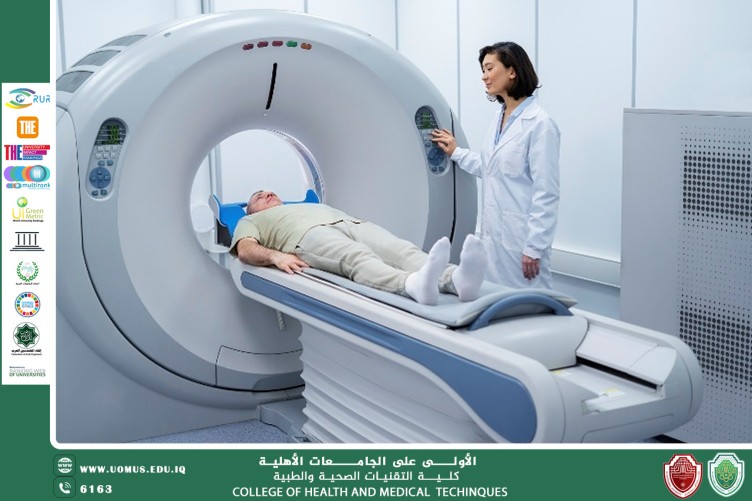
Magnetic Resonance Imaging (MRI) represents one of the most sophisticated non-ionizing imaging modalities in contemporary medicine. MRI utilizes strong magnetic fields and radiofrequency pulses to excite hydrogen nuclei within the body, generating high-contrast images of soft tissues. Because MRI does not involve ionizing radiation, it is considered a safe option for repeated imaging, provided that appropriate safety precautions are taken for patients with metallic implants or electronic devices.
Non-ionizing imaging also includes optical imaging techniques, which use visible or near-infrared light to evaluate tissue structure and function. These methods are particularly useful in dermatology, ophthalmology, and biomedical research, enabling the assessment of superficial tissues without exposing patients to radiation hazards.
Furthermore, thermal imaging techniques are employed in selected medical applications to detect variations in skin temperature associated with inflammation, vascular abnormalities, or neurological conditions. These non-invasive and non-ionizing techniques serve as complementary diagnostic tools with no established radiation-related risks.
In conclusion, non-ionizing medical imaging modalities play a crucial role in ensuring patient safety while maintaining high diagnostic performance. Supported by guidelines from reputable organizations such as the World Health Organization (WHO) and the American College of Radiology (ACR), these techniques continue to shape the future of safe and effective medical imaging, particularly for vulnerable patient populations.