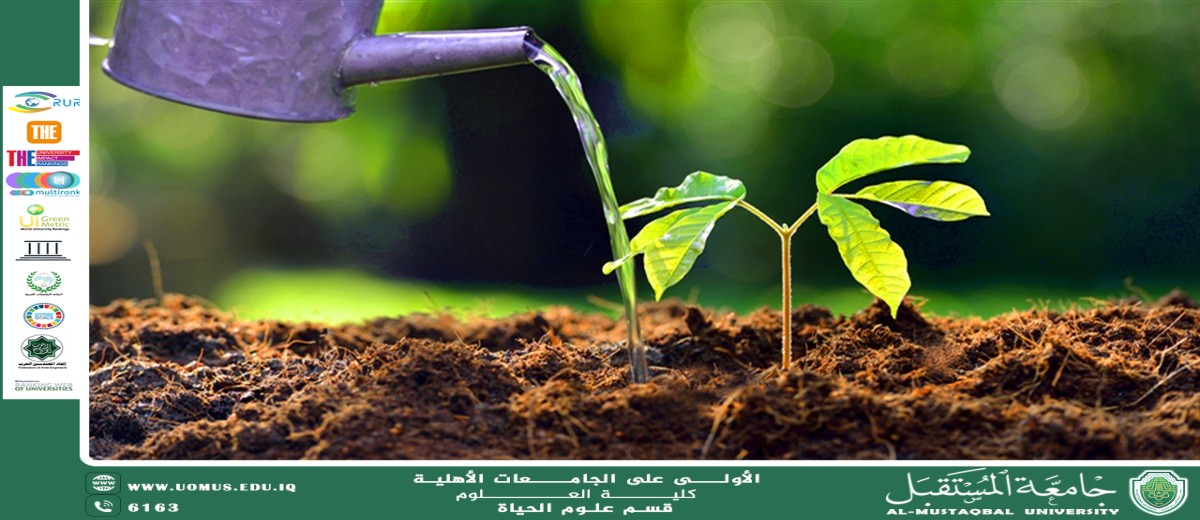

"Scientific Article for Ms. Noor Alhuda Azmi Hassan Title"Water and Soil: Foundations for the Preservation and Sustainability of Natural Resources
Water and soil are among the most important natural resources that support life on Earth, as they form the foundation for plant growth, agriculture, industry, and human daily life. With increasing population and intensive industrial activity, these resources face significant threats that require thorough study and scientific management to ensure their sustainability. This article aims to review the importance of water and soil, the challenges they face, and strategies for their preservation.
I. Water
Importance of Water
Water plays a vital role in all biological and economic processes. It is essential for drinking, agriculture, industry, and energy production. It also forms a key part of ecosystems that maintain environmental balance.
Challenges Facing Water Resources
Water Pollution: Caused by industrial waste, agricultural pesticides, and wastewater, leading to the deterioration of water quality and difficulty in its use.
Over-extraction of Groundwater: Excessive use of well water results in declining groundwater levels and depletion of natural water resources.
Climate Change: Affects rainfall patterns, increases drought periods, and leads to water scarcity in many regions around the world.
Water Management Strategies
Desalination and Reuse: Utilizing advanced technologies to desalinate seawater and treat wastewater for agricultural and industrial use.
Protecting Natural Water Sources: Safeguarding rivers, lakes, and groundwater from pollution and encroachment.
Community Awareness: Promoting a culture of rational water consumption and reducing waste.
II. Soil
Importance of Soil
Soil is the primary source for agriculture, providing plants with the necessary nutrients for growth and contributing to food production for humans and animals. Soil also plays a role in water storage, purification, and supporting biodiversity.
Challenges Facing Soil
Desertification: Caused by vegetation removal, unsustainable agriculture, and drought, leading to loss of soil fertility.
Chemical Pollution: Excessive use of fertilizers and pesticides results in accumulation of harmful substances in the soil and degradation of its fertility.
Soil Erosion: Wind and water remove the top layer rich in organic matter and nutrients.
Soil Preservation Strategies
Sustainable Agriculture: Adopting practices such as organic farming and crop rotation to maintain soil fertility.
Protecting Vegetative Cover: Planting trees and maintaining pastures to reduce erosion and improve soil stability.
Managing Chemical Waste: Reducing the use of chemical pesticides and fertilizers, and relying on natural and organic fertilizers.
Water and soil are vital resources indispensable for human life and ecosystems. With environmental pressures and climate change, it has become essential to adopt scientific strategies for their preservation and sustainability. This includes protecting water and soil sources from pollution, implementing sustainable agricultural practices, and raising community awareness about the importance of these resources to ensure a safe and sustainable future for generations to come.
Al-Mustaqbal University is the First University in Iraq