Wearable Devices… Your Silent Doctor(huda khudair hani).
Amid the accelerating digital revolution, wearable devices have become an essential part of our daily lives. They are no longer just trendy technological gadgets but have evolved into a “silent doctor” that quietly monitors our bodies and cares for our health around the clock.
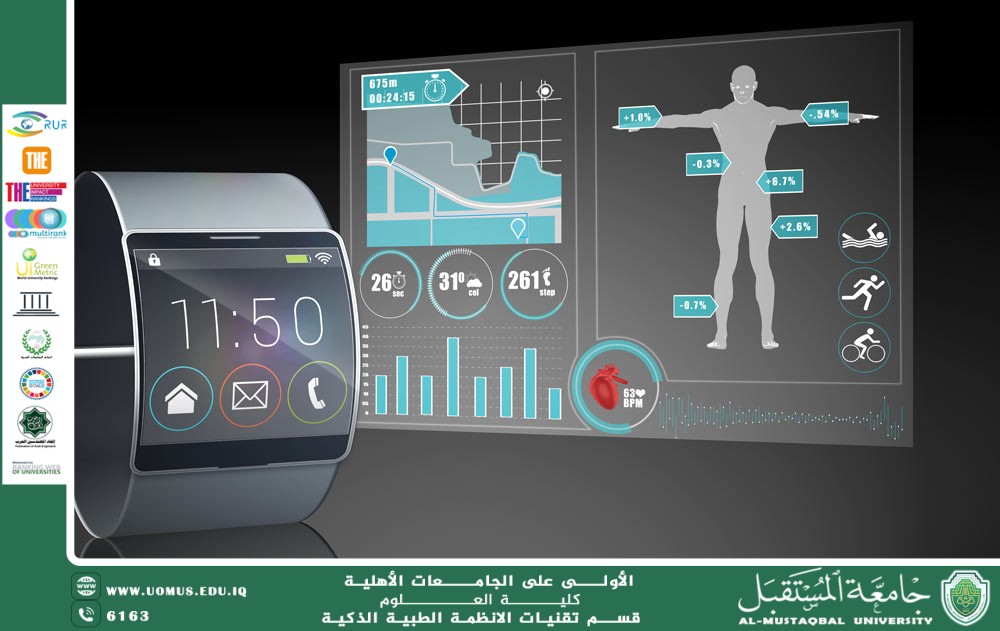
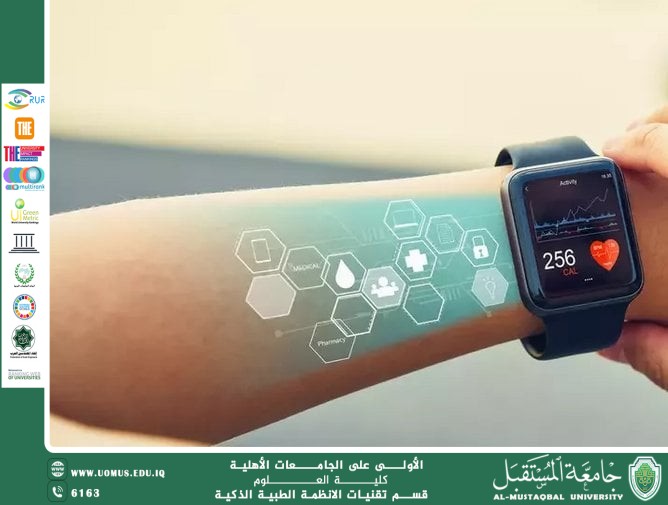
These devices include smartwatches, fitness bands, smart medical glasses, and even clothing equipped with advanced sensors. All of them work together to collect and analyze vital data such as heart rate, blood oxygen level, sleep quality, and physical activity. This data is not only displayed to the user but can also be transmitted directly to physicians or healthcare systems for remote monitoring and timely medical decision-making.
What makes these technologies a true revolution in modern medicine is their ability to shift healthcare from a reactive to a preventive model—detecting early signs of health irregularities before they develop into chronic conditions. They grant individuals greater awareness of their bodies and encourage the adoption of a healthy, sustainable lifestyle based on self-monitoring, balanced nutrition, and regular activity.
Wearable devices also represent a cornerstone of smart medicine and digital healthcare, as they integrate with artificial intelligence and big data analytics to provide personalized recommendations for each user based on their health history and daily behavior. In doing so, they enhance the quality of care while reducing pressure on healthcare institutions.
The importance of these technologies is further reflected in their contribution to achieving several Sustainable Development Goals (SDGs)—particularly Goal 3 (Good Health and Well-being) by promoting prevention and public health monitoring, and Goal 9 (Industry, Innovation, and Infrastructure) through fostering innovation in smart medical devices.
At Future University, the Department of Smart Medical Systems is keeping pace with this global trend through research projects and student applications that integrate wearable technologies with artificial intelligence and the Internet of Things to support health monitoring and sustainable living.
Ultimately, wearable devices are no longer just smart tools—they have become a silent partner in the journey of wellness, accompanying individuals every moment, monitoring quietly, alerting wisely, and proving that the future of medicine begins with a heartbeat measured on your wrist.
ALMustaqbal University The First University in Iraq.