**An article entitled: “Islamic Art… A Beauty That Transcends Time and Place”** By **Lecturer: M.M. Suhaila Kazem**.
Islamic art is considered one of the noblest forms of artistic expression known to humanity, as it succeeded in combining sensory beauty with a spiritual dimension, presenting a unique model that transcended the limits of time and place. This art was not merely a means of ornamentation, but rather a civilizational language that expressed Islam’s vision of the universe, humanity, and life.
The Intellectual Foundations of Islamic Art
Islamic art emerged from the doctrine of monotheism, which was clearly reflected in avoiding the depiction of the Divine Essence and, in most cases, refraining from representing living beings. This led the Muslim artist to seek creative alternatives, resulting in the prominence of geometric, vegetal, and calligraphic decorations as fundamental elements expressing cosmic order and divine perfection.
Elements of Beauty in Islamic Art
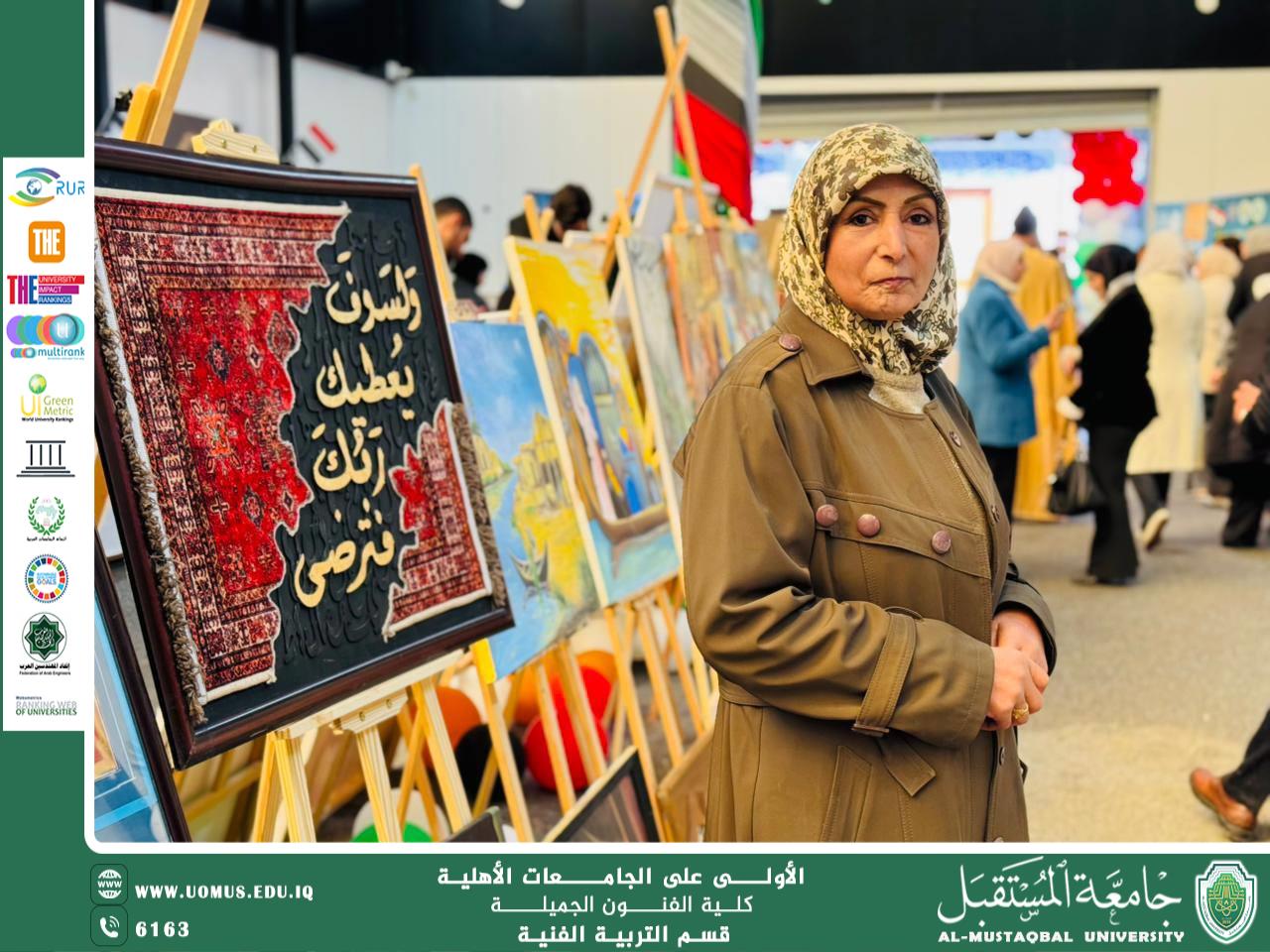
Islamic art is distinguished by precise geometric patterns based on repetition and symmetry, which create a sense of infinity and harmony. Vegetal ornaments (arabesque) symbolize life and renewal, while Arabic calligraphy holds an elevated status, combining aesthetic form with depth of meaning, especially in the inscription of Qur’anic verses.
Islamic Art Across the Ages
Islamic art extended across a vast geographical area, from Al-Andalus in the west to India in the east, absorbing local cultures without losing its identity. It flourished in architecture during the Umayyad period, developed in applied arts and manuscripts during the Abbasid period, and reached a peak of diversity and mastery during the Andalusian, Ottoman, and Mamluk periods.
The Universality of Islamic Art
The universality of Islamic art is evident in its ability to influence global art movements, as Western artists drew inspiration from its ornamental, geometric, and calligraphic elements. Its architectural masterpieces, such as mosques and palaces, continue to inspire artists and architects to this day.
Conclusion
Islamic art is not the product of a specific historical period, but rather a timeless expression of lofty human and spiritual values. Through its balanced beauty and profound symbolism, it transcended the boundaries of time and place, remaining a lasting testament to the greatness of Islamic civilization and its enduring creativity....Almustaqbal University, The First University in Iraq
.