**An article entitled: “Timeless Ornaments: The Story of Islamic Art Through Time”** By **Lecturer: M.M. Suhaila Kazem**
Islamic art is regarded as one of the highest forms of civilizational expression, in which beauty is blended with spirituality and thought with creativity. Ornamentation formed a fundamental element of this art, becoming a timeless visual language that accompanied Islamic civilization across the ages and reflected its distinctive vision of the world and the universe.
The Emergence of Islamic Art
Islamic art emerged with the rise of Islam in the seventh century AD, influenced by religious teachings that called for monotheism and avoidance of direct representation of living beings. This orientation led the Muslim artist to create aesthetic alternatives, giving rise to geometric, vegetal, and calligraphic ornamentation as essential decorative elements.
Geometric Ornamentation: The Language of Infinity
Geometric patterns in Islamic art are characterized by precision, symmetry, and repetition, based on refined mathematical principles. These ornaments expressed the concept of infinity and divine perfection, adorning mosques, palaces, and manuscripts, and imparting a sense of order and harmony.
Vegetal Ornamentation (Arabesque)
The Muslim artist drew inspiration from nature, yet did not reproduce it literally, instead transforming it into interlaced and stylized forms. These ornaments embodied beauty, life, and renewal, symbolizing bliss and eternity, and were especially prominent in Andalusian and Ottoman architecture.
Arabic Calligraphy: Art and Meaning
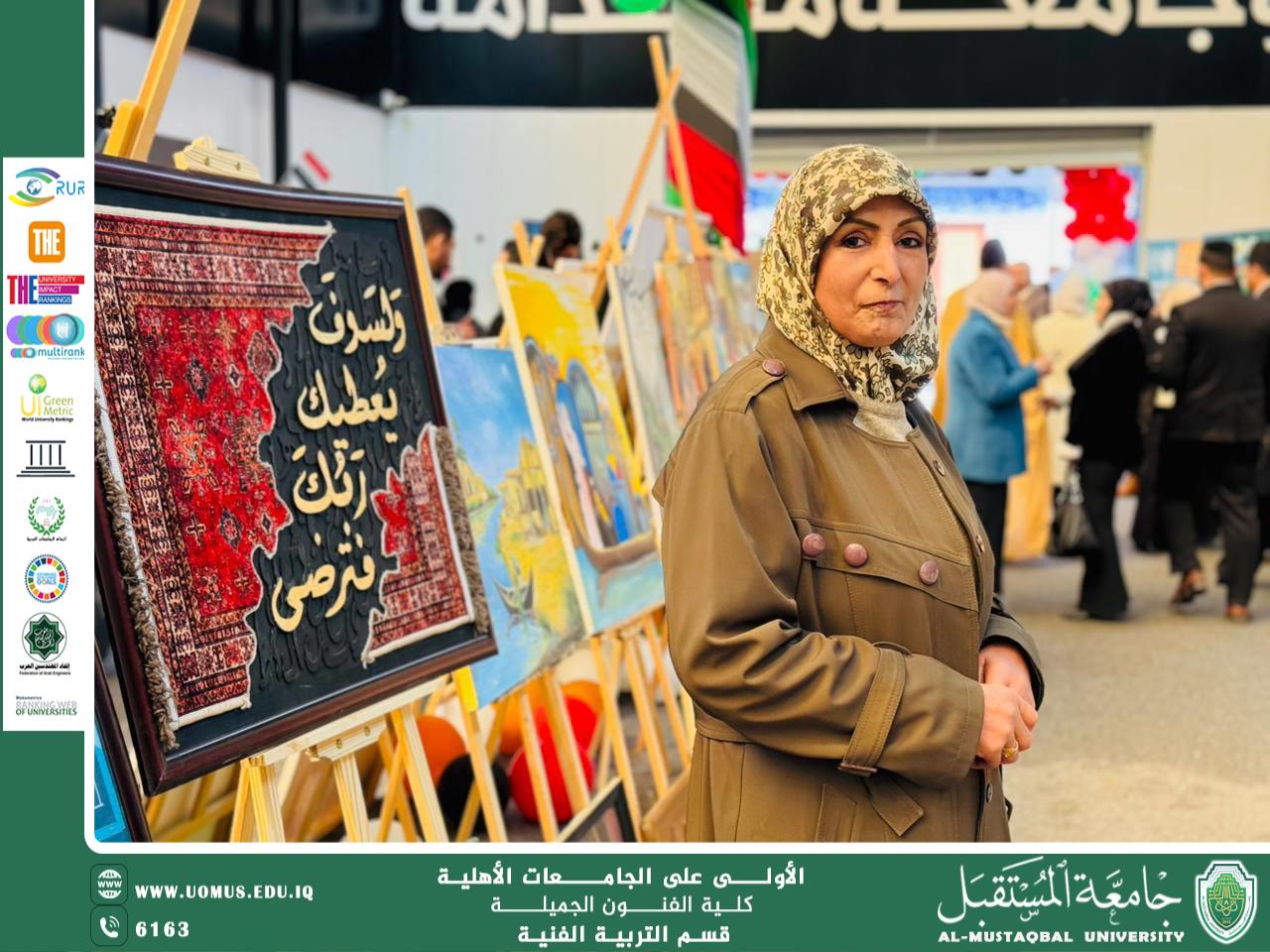
Arabic calligraphy occupied a unique position in Islamic art, combining visual beauty with spiritual depth. It was used to inscribe Qur’anic verses and Prophetic traditions, adorning walls, domes, and manuscripts, and became one of the most prominent manifestations of Islamic creativity.
The Development of Islamic Art Across the Ages
Islamic art evolved alongside the development of Islamic states, with its styles diversifying across the Umayyad, Abbasid, Andalusian, and Ottoman periods while preserving its distinctive identity. Despite differences in environments and cultures, Islamic art maintained its essence based on balance, symbolism, and spiritual beauty.
Conclusion
Islamic ornamentation is not merely decorative elements, but rather the story of a civilization that expressed its faith and thought through art. Thus, Islamic art, with its enduring ornaments, remains a testament to the greatness of human creativity and a bridge connecting the past with the present across time...Almustaqbal University, The First University in Iraq
.