
Detection of Thyroid Gland Diseases
The thyroid gland is one of the most important endocrine glands in the human body. It is located in the anterior part of the neck and plays a vital role in regulating metabolism, growth, and energy through the secretion of thyroid hormones, thyroxine (T4) and triiodothyronine (T3). Any dysfunction of the thyroid gland can lead to various health problems affecting multiple body systems, making early detection essential.
Common thyroid diseases include hypothyroidism, hyperthyroidism, thyroiditis, thyroid nodules, and thyroid tumors. The clinical symptoms vary depending on the type of disorder and may include fatigue, weight changes, palpitations, and mood disturbances.
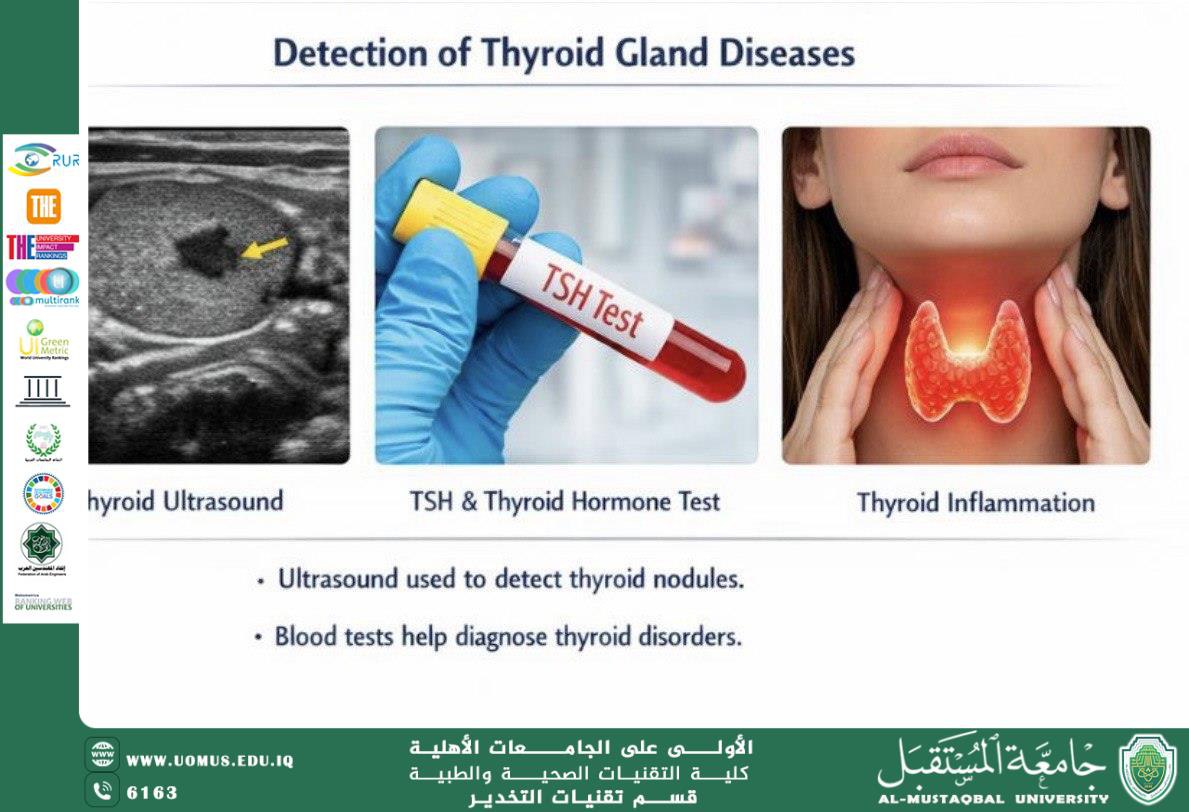
The detection of thyroid diseases relies on a combination of clinical evaluation, laboratory tests, and imaging techniques. Diagnosis usually begins with a thorough medical history and physical examination, followed by blood tests to measure thyroid-stimulating hormone (TSH) and thyroid hormone levels (T3 and T4), which are crucial for assessing thyroid function.
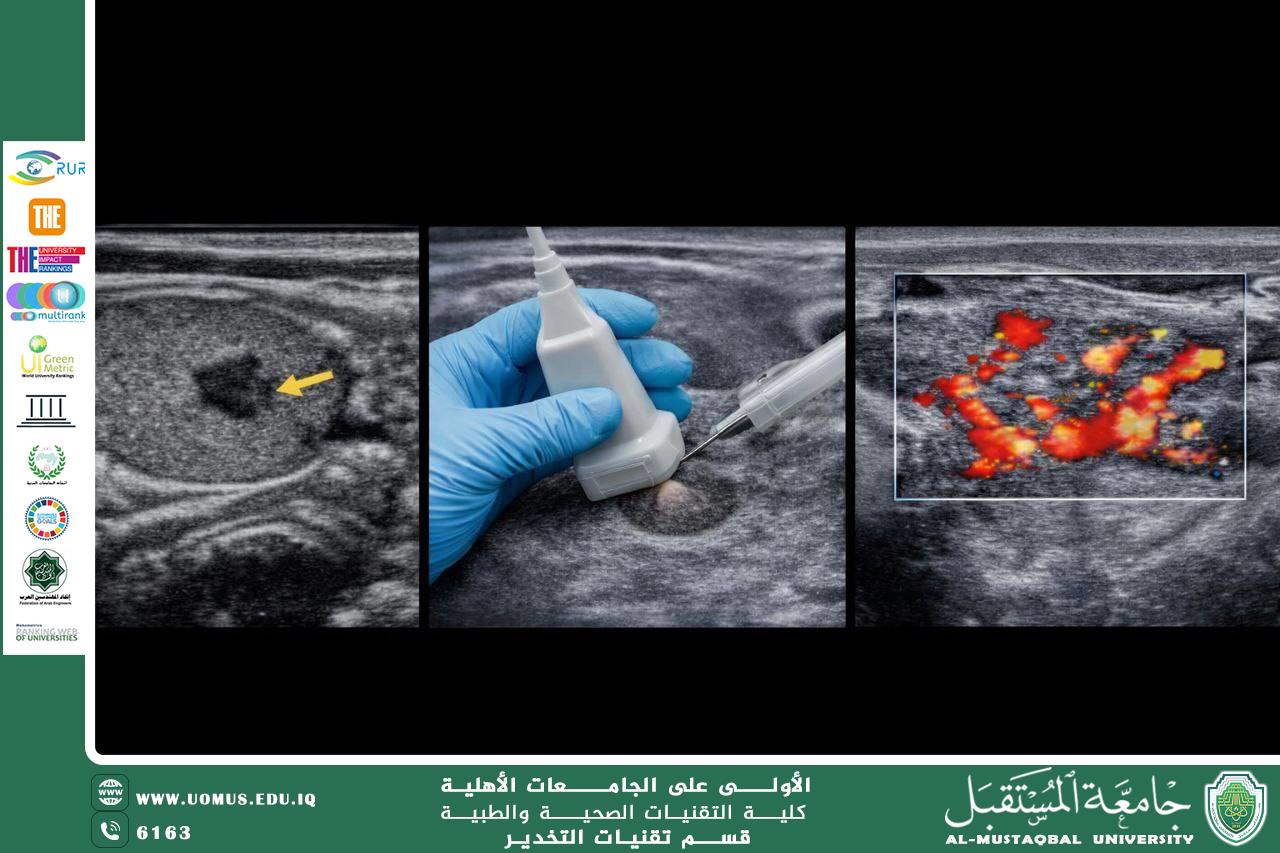
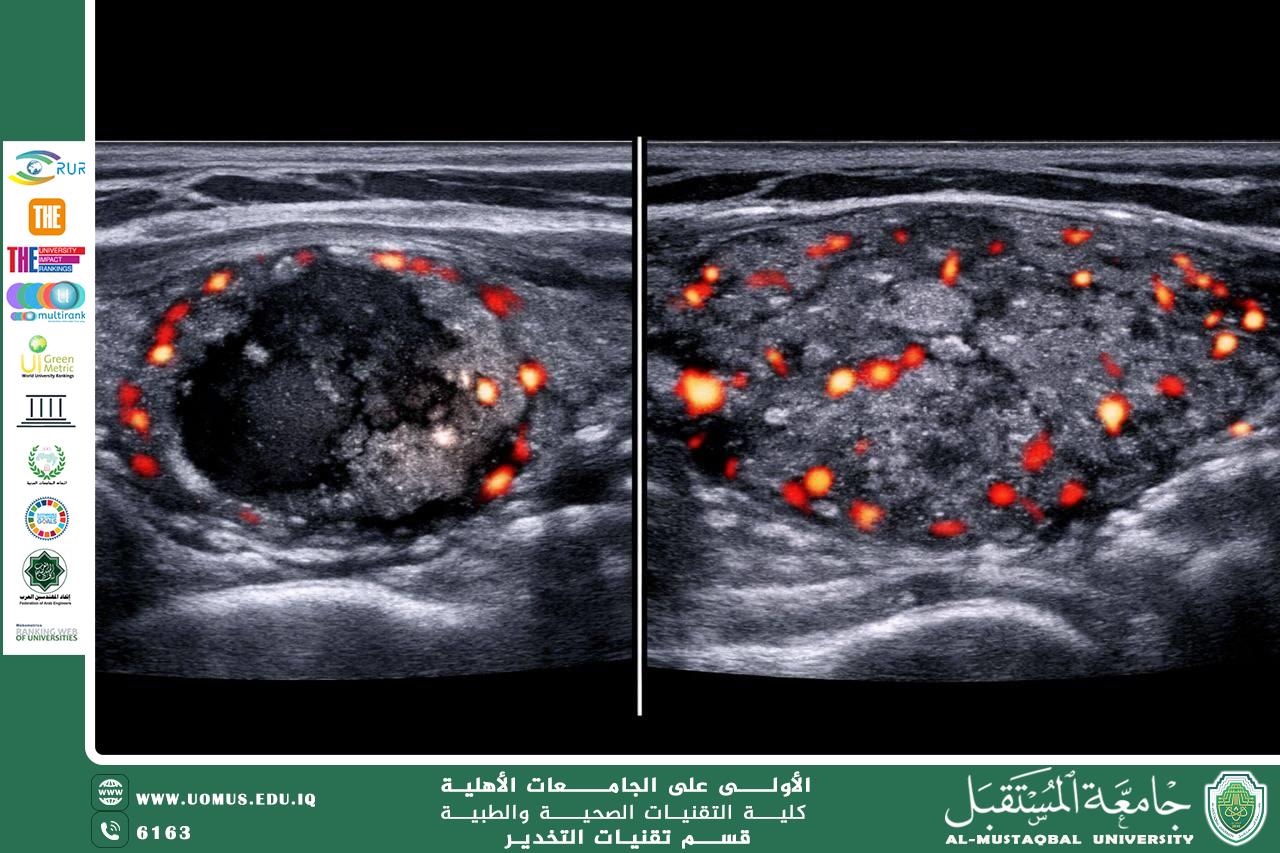
Ultrasound imaging is one of the most important diagnostic tools for evaluating the thyroid gland. It helps determine gland size, detect thyroid nodules, and assess their characteristics (solid or cystic). In certain cases, fine needle aspiration (FNA) biopsy is performed to accurately diagnose the nature of thyroid nodules.
Early detection of thyroid diseases significantly improves treatment outcomes and reduces the risk of complications. Therefore, regular screening is recommended, especially for high-risk groups such as women and elderly individuals.
Ahmed Ali Shaban
Al-Mustaqbal University
The First University in Iraq.