
Smart Environmental Sensors and Their Role in Reducing Respiratory Diseases (By Programmer Aheib Hashem Kareem)
Respiratory diseases are among the most common health problems worldwide, with their prevalence affected by environmental factors such as air pollution, dust, humidity, and exhaust gases. In light of this challenge, smart environmental sensors have emerged as an innovative tool for monitoring air quality and detecting pollutants accurately in real time, enabling early intervention and prevention of respiratory illnesses.
Smart Environmental Sensors: Concept and Function
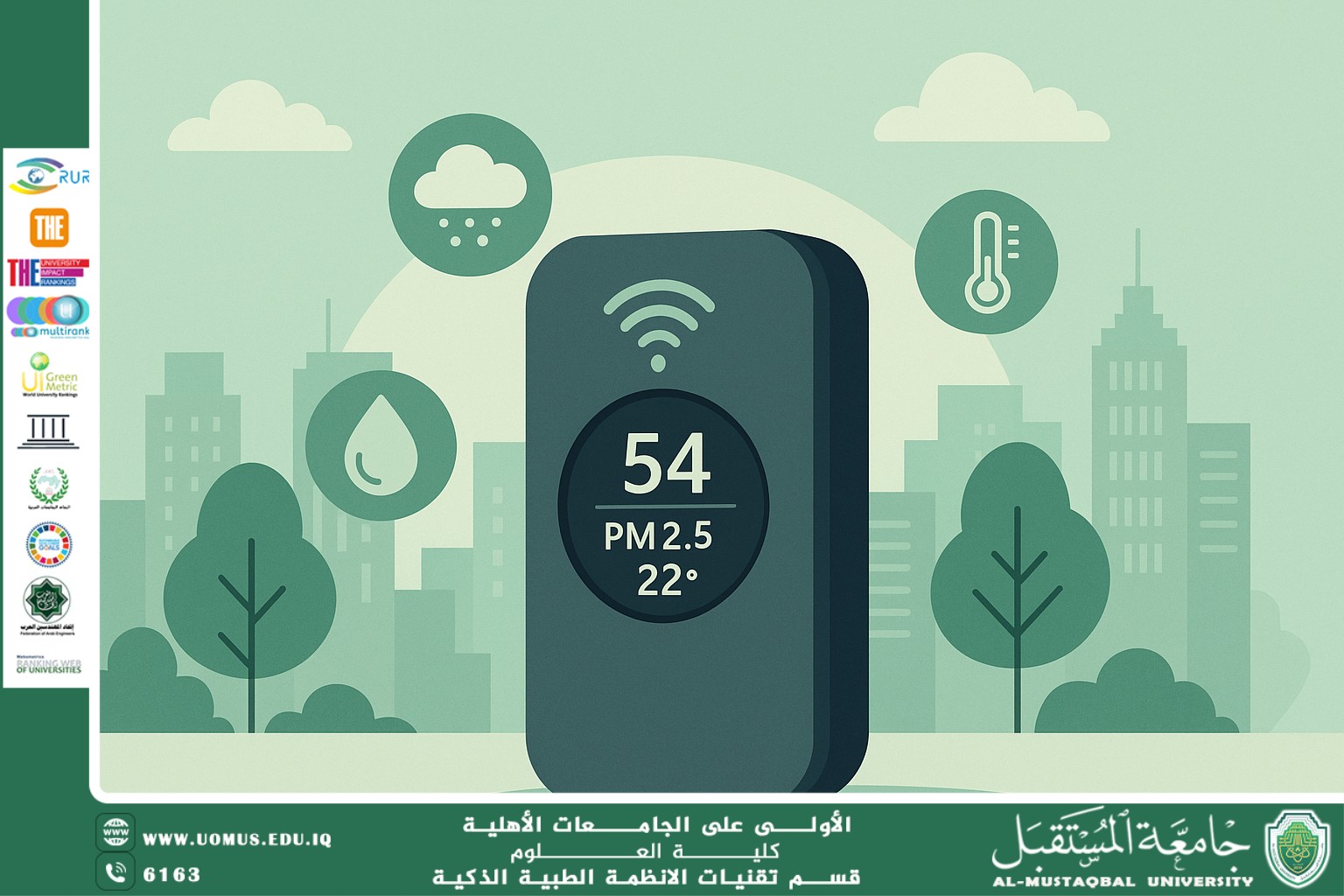
A smart environmental sensor is a small device that relies on artificial intelligence (AI) and the Internet of Things (IoT) technologies to detect harmful substances in the air, such as:
• Fine particles (PM2.5 and PM10).
• Toxic gases like carbon monoxide and nitrogen dioxide.
• Humidity and temperature levels that impact respiratory health.
These devices can continuously collect data and transmit it to analytical platforms, displaying results on smartphones or control dashboards in healthcare institutions.
Their Role in Reducing Respiratory Diseases
1. Individual Prevention:
Sensors alert individuals with asthma or allergies when pollution levels rise, helping them avoid hazardous areas or use protective tools such as masks.
2. Community Support:
Governments and municipalities can use aggregated data from thousands of sensors to develop strategies for reducing pollution sources, such as regulating traffic or improving public transportation systems.
3. Proactive Healthcare:
Hospitals and health centers can use sensor data to predict seasonal spikes in respiratory diseases, allowing them to prepare resources in advance.
4. Education and Awareness:
Sharing environmental data with the public raises awareness of the importance of a healthy environment and the role of individuals in reducing pollution.
Health and Social Impact
The use of smart environmental sensors contributes to:
• Reducing cases of asthma and chronic bronchitis.
• Lowering healthcare costs associated with treating respiratory illnesses.
• Improving quality of life by ensuring safer and healthier environments.
• Supporting Sustainable Development Goal 3 (Good Health and Well-Being) and Goal 11 (Sustainable Cities and Communities).
Smart environmental sensors represent a vital step toward integrating technology with public health. By detecting environmental risks early and providing accurate information to individuals and decision-makers, they help reduce the burden of respiratory diseases and foster the development of a healthier and more sustainable future.
Al-Mustaqbal University — The First University in Iraq.