
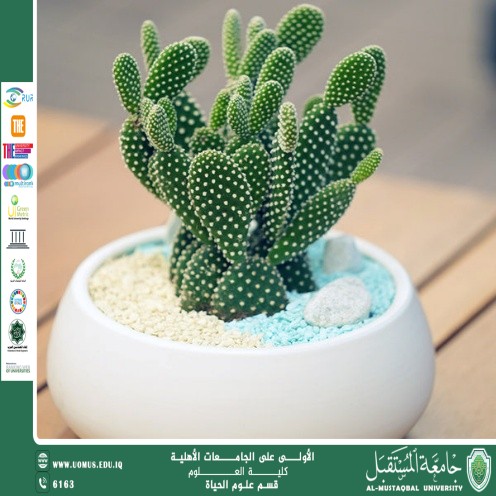
A scientific article by lecturer Zainab Nazim Aziz entitled "The Cactus Plant"
The cactus is one of the most well-known succulent plants, distinguished by its high ability to adapt to dry and desert environments. It possesses unique characteristics that enable it to store water and withstand harsh conditions. Therefore, the cactus is widely used as both an indoor and outdoor ornamental plant.
Scientific Name and Classification
Common name: Cactus
Family: Cactaceae
Botanical Description
Cactus is a perennial succulent plant characterized by its thick, fleshy stem, which functions in water storage and photosynthesis instead of leaves that have been modified into spines. These spines help reduce water loss and protect the plant from animals.
Environment and Growth Conditions
Cactus grows in:
Desert and semi-arid regions
Hot environments with low rainfall
It prefers:
Bright sunlight
Sandy, well-drained soil
Infrequent and limited watering
Propagation Methods
Cactus propagates by:
Seeds
Cuttings or offsets in some species
It is known for its ease of propagation compared to many other plants.
Uses
Indoor and outdoor ornamental plant
Decorating rock gardens
Some species are used for food or medicinal purposes
Cactus Care
Avoid excessive watering
Place in a well-lit location
Use pots with drainage holes
Protect from severe frost
Environmental Importance
Cactus contributes to soil stabilization in dry areas and represents a clear example of plant adaptation to harsh environmental conditions.
Precautions
Handle carefully due to spines
Some species may be toxic if used improperly
Conclusion
The cactus is a unique plant that combines beauty with remarkable tolerance, making it an ideal choice for those who prefer low-maintenance plants and dry environments.