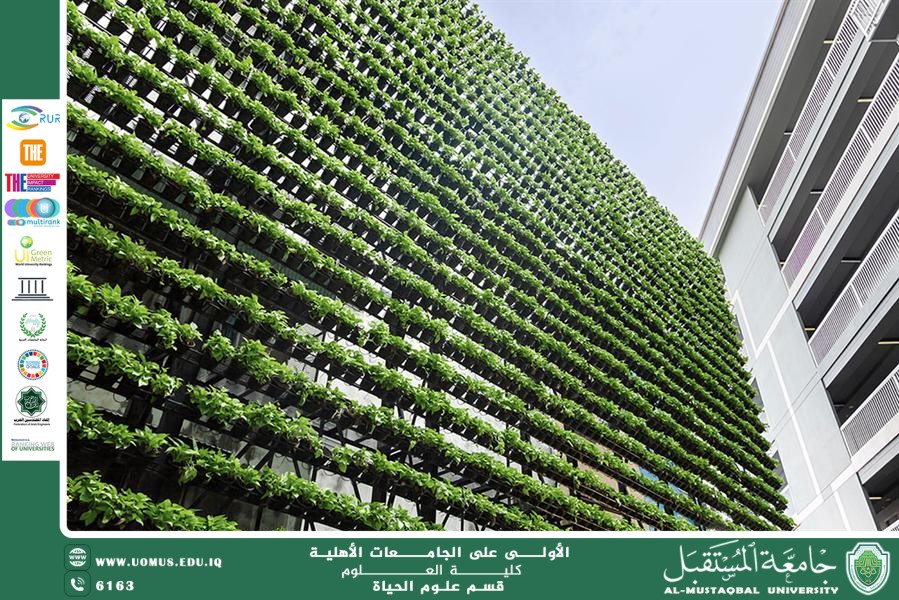
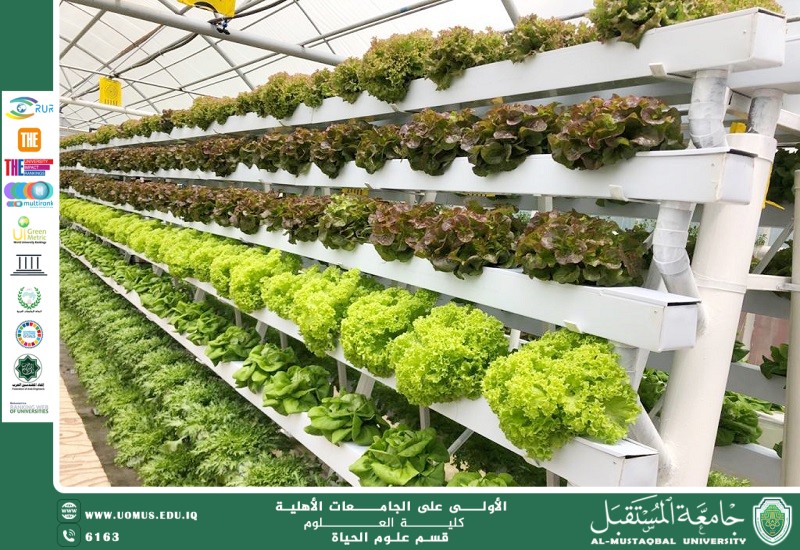
A scientific article by Ms. Nour El-Hoda Azmy Hassan entitled "Vertical Farming"
Vertical farming is a modern agricultural method where crops are grown in vertically stacked layers instead of traditional horizontal fields. This approach is especially useful in cities and areas with limited arable land. It often relies on advanced technologies such as hydroponics, aeroponics, and LED artificial lighting to provide optimal growing conditions for plants.
Advantages of Vertical Farming:
Less Land Usage: Large amounts of crops can be produced on a small area, making it suitable for urban environments.
Reduced Water Consumption: Compared to traditional farming, vertical farming requires much less water due to water recycling in closed systems.
Year-Round Production: Growth conditions such as light, temperature, and humidity can be controlled, allowing crops to be produced continuously regardless of the weather.
Reduced Pesticide Use: Thanks to the protected environment, there is less need for chemical pesticides, resulting in safer and healthier food.
Reduced Transportation: Growing crops in cities reduces the need for long-distance transport, lowering carbon emissions and costs.
Applications of Vertical Farming:
Vertical farming is mainly used for leafy vegetables such as lettuce, spinach, and basil, as well as some herbs and small fruits. Many major cities have started establishing vertical farms inside buildings or on rooftops to provide fresh produce for local residents.