White Sponge Nevus
Introduction
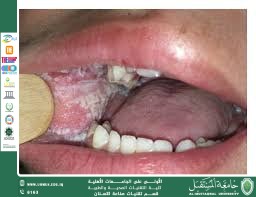
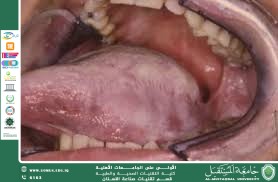
White sponge nevus is a rare, benign, hereditary disorder that affects the mucous membranes, especially the oral cavity. It is characterized by the presence of white, thick, spongy patches that appear mainly on the inside of the cheeks (buccal mucosa). The condition is usually painless and does not cause serious health problems, but it may be confused with other oral white lesions.
Etiology
White sponge nevus is caused by a genetic mutation, most commonly in the keratin 4 (KRT4) or keratin 13 (KRT13) genes. These genes are responsible for producing proteins that help maintain the normal structure of epithelial cells.
The disease is inherited in an autosomal dominant pattern, meaning only one affected parent is enough to pass the condition to the child.
Clinical Features
The condition usually appears at birth or during early childhood. The most common features include:
• White, thick, soft, and folded patches
• A spongy or velvety surface
• Bilateral and symmetrical lesions
• Commonly affects the buccal mucosa, but may also involve the tongue, lips, floor of the mouth, and soft palate
These lesions are typically painless and do not ulcerate.
Histopathology
Microscopic examination shows:
• Thickened epithelium (acanthosis)
• Parakeratosis
• Vacuolization of the superficial epithelial cells
These changes give the tissue its characteristic spongy appearance.
Diagnosis
Diagnosis is based on:
• Clinical appearance
• Family history
• Histopathological examination (biopsy if needed)
It is important to differentiate white sponge nevus from conditions such as leukoplakia, oral candidiasis, and lichen planus.
Treatment
There is no specific treatment because white sponge nevus is benign and harmless.
Treatment is usually not required unless the patient feels discomfort or cosmetic concern. In rare cases, mild topical treatments may be used, but the lesions usually persist.
Prognosis
The prognosis is excellent. White sponge nevus does not become cancerous and does not lead to serious complications. Patients can live a normal healthy life.