Dental Crowns and Bridges
Dental Crowns and Bridges
Abstract
Dental crowns and bridges are considered among the most important fixed prosthetic restorations in dentistry, as they are used to restore the form, function, and esthetics of missing or damaged teeth. This article aims to review the scientific concept of dental crowns and bridges, their types, the materials used in their fabrication, clinical indications, as well as their advantages and disadvantages, with reference to the latest technological advancements in this field.
Introduction
Tooth loss or structural damage is a common problem that directly affects masticatory function, speech, and the esthetic appearance of the patient. Advances in prosthodontics have contributed to the development of effective fixed solutions, among which dental crowns and bridges are the most prominent, as they are used to replace single or multiple teeth in a manner that closely mimics natural dentition.
First: Dental Crowns
1. Definition
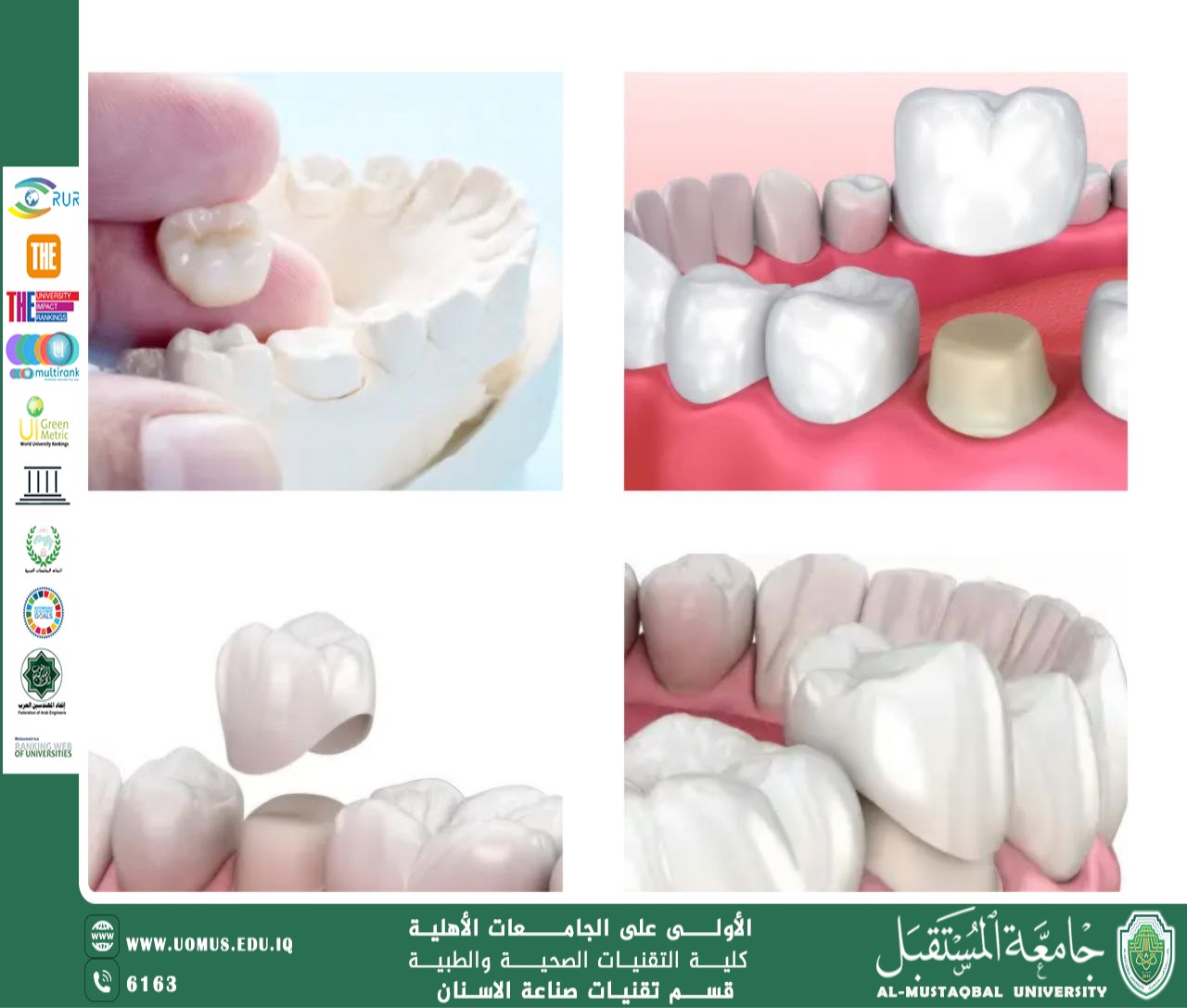
A dental crown is a fixed restoration that covers the entire tooth or part of it with the aim of protecting the tooth, strengthening its structure, and restoring its natural shape and function.
2. Indications
Severely damaged teeth due to caries or fracture.
Endodontically treated teeth (root canal–treated teeth).
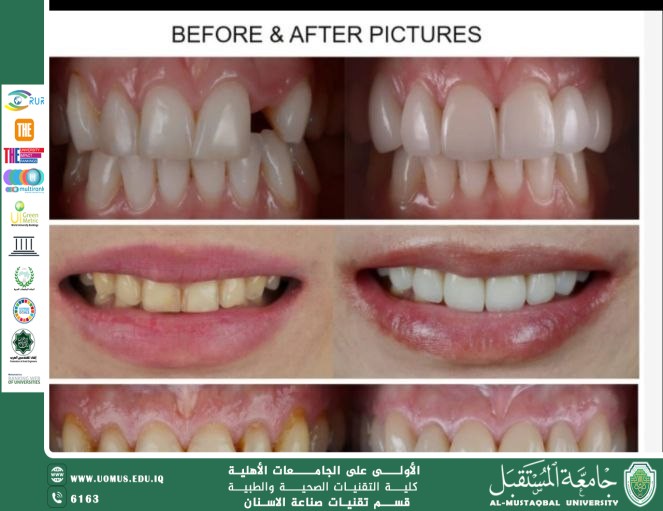
Improvement of the esthetic appearance of anterior teeth.
Support of dental bridges as abutment teeth.
3. Types of Crowns
Full Metal Crowns
Porcelain-Fused-to-Metal Crowns (PFM)
All-Ceramic Crowns (Zirconia / All Ceramic)
Temporary Crowns
Second: Dental Bridges
1. Definition
A dental bridge is a fixed prosthetic restoration used to replace one or more missing teeth and is supported by the adjacent teeth.
2. Components of a Bridge
Abutment teeth
Pontic (replacement tooth/teeth)
Dental cement
3. Types of Bridges
Conventional bridges
(Text ends here as in the original document)