
An article titled "Advanced Drug Delivery Systems" by Lecturer M.M. Abdullah Qais Hashim
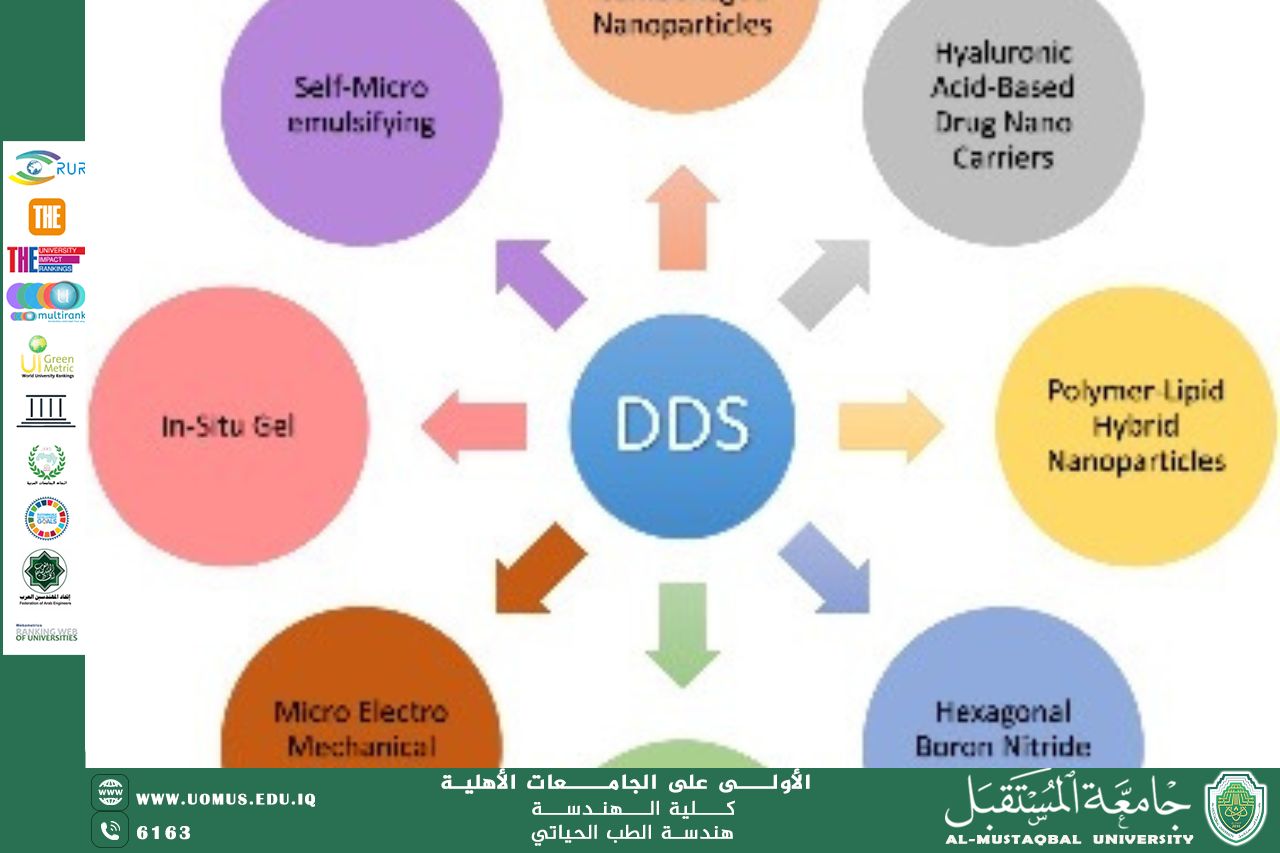
Drug delivery systems (DDS) represent a cornerstone of modern pharmaceutical and biomedical sciences. Their primary goal is to transport therapeutic agents to specific sites in the body at controlled rates while minimizing side effects and improving patient compliance. Traditional drug administration methods, such as oral or intravenous delivery, often suffer from low bioavailability, systemic toxicity, and poor targeting efficiency. Advanced drug delivery systems aim to overcome these limitations through innovative materials, nanotechnology, and biological targeting strategies.
Types of Drug Delivery Systems
Modern DDS can be broadly classified into several categories, including controlled-release systems, targeted delivery systems, and stimuli-responsive systems. Controlled-release systems are designed to release drugs at a predetermined rate over an extended period, ensuring stable therapeutic concentrations. Targeted drug delivery systems use ligands such as antibodies, peptides, or aptamers to direct drugs specifically to diseased tissues, such as cancer cells. Stimuli-responsive systems release drugs in response to environmental triggers such as pH, temperature, enzymes, or magnetic fields.
Nanotechnology in Drug Delivery
Nanotechnology has revolutionized drug delivery by enabling the development of nanoparticles, liposomes, polymeric micelles, and dendrimers. These nanocarriers can encapsulate both hydrophilic and hydrophobic drugs, protect them from degradation, and enhance their circulation time in the bloodstream. Additionally, nanoparticles can be engineered to cross biological barriers, including the blood–brain barrier, which was previously considered a major obstacle in drug therapy.
Clinical Applications
Advanced DDS have found extensive applications in cancer therapy, gene therapy, and vaccination. In oncology, targeted nanocarriers reduce damage to healthy tissues while increasing drug accumulation in tumors. In gene therapy, delivery systems protect nucleic acids such as DNA and RNA from enzymatic degradation and facilitate their entry into target cells. Similarly, modern vaccines rely on delivery platforms to enhance immune responses and improve stability.
Challenges and Future Perspectives
Despite significant progress, challenges remain in scaling up production, ensuring long-term safety, and meeting regulatory requirements. Future research is expected to focus on personalized drug delivery, multifunctional systems, and smart delivery platforms that combine diagnostics and therapy. Overall, advanced drug delivery systems continue to play a crucial role in improving therapeutic outcomes and shaping the future of medicine.