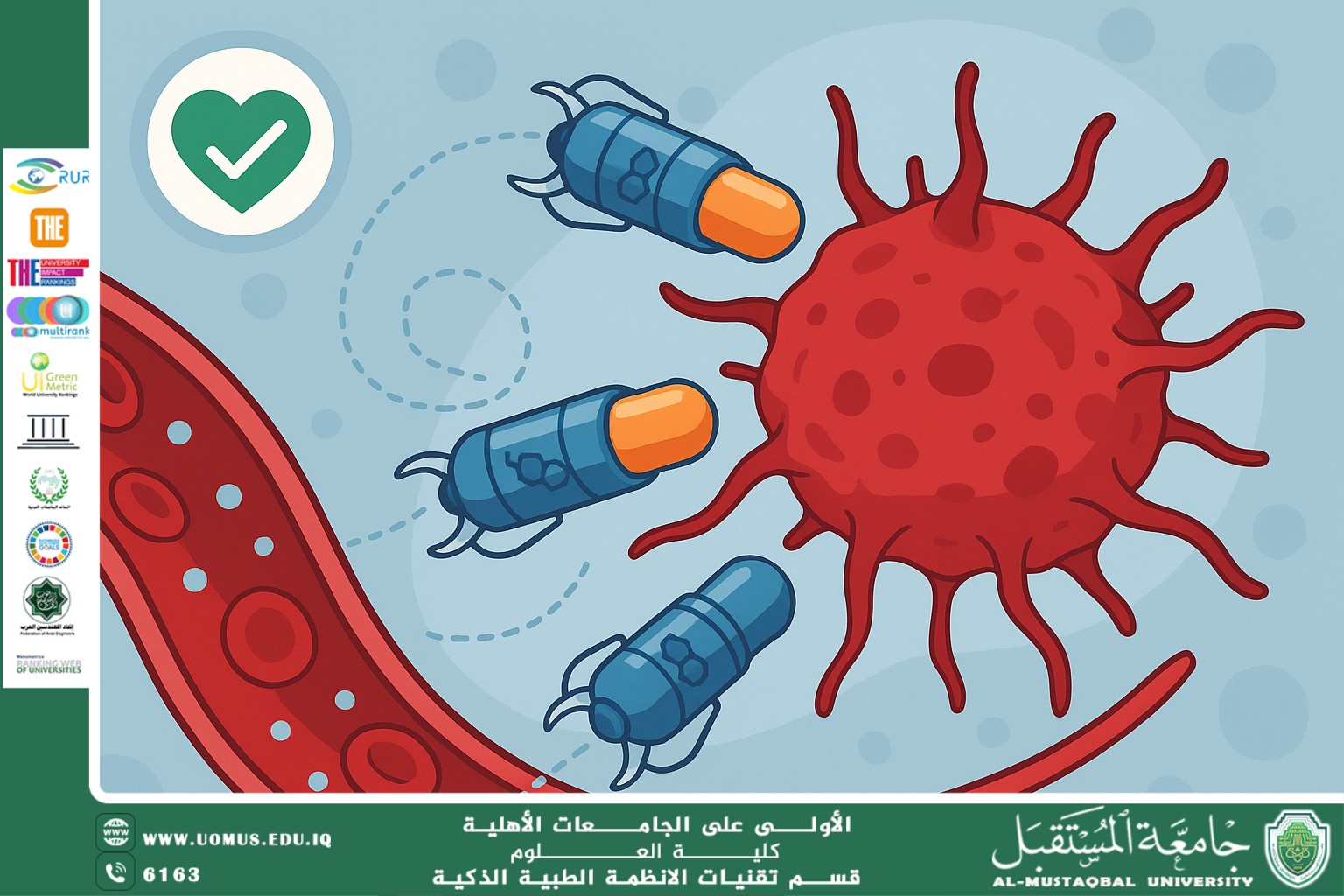

Nanorobots in Drug Delivery: A Revolution in Sustainable Medicine
Amid increasing global health challenges, such as the spread of chronic diseases and cancers, the search for more precise and effective medical solutions has become urgent. One of the most promising innovations in this field is nanorobots—microscopic devices capable of navigating inside the human body to reach targeted cells or tissues with unprecedented accuracy. This technology represents a true revolution in sustainable medicine, opening new horizons for treatments that are both more effective and less harmful.
The Role of Nanorobots in Drug Delivery
• Targeted Precision: Nanorobots can be programmed to deliver medication directly to diseased cells, such as cancer cells, minimizing damage to healthy tissues.
• Reduced Dosages and Side Effects: Thanks to precise delivery, lower doses of medication can be used, reducing side effects and improving patients’ quality of life.
• Self-Monitoring: Some nanorobots can measure the body’s response to medication and transmit real-time data to physicians, enabling quick adjustments to treatment plans.
• Treatment of Complex Diseases: This technology paves the way for new therapies for diseases that are difficult to treat with traditional methods.
Linking to the Sustainable Development Goals (Goal 3: Good Health and Well-Being)
The integration of nanorobots into medicine directly supports Goal 3 of the United Nations Sustainable Development Goals: Ensure healthy lives and promote well-being for all at all ages.
• Reducing Mortality Rates: Through early diagnosis and targeted treatment, nanorobots can help lower deaths caused by cancer and chronic diseases.
• Improving Quality of Life: Minimizing pain and drug side effects enhances patients’ overall well-being.
• Providing Cost-Effective Healthcare Solutions: By reducing the need for repeated treatments and prolonged hospital stays, nanorobots contribute to more efficient healthcare systems.
• Promoting Sustainable Medical Innovation: Introducing such advanced technologies helps build more resilient and sustainable healthcare systems capable of adapting to future challenges.
Nanorobots in drug delivery represent a medical revolution that could radically transform the future of healthcare. They not only treat diseases but do so in safer and more sustainable ways, placing them at the core of global efforts to achieve good health and well-being as one of the most vital Sustainable Development Goals. Thus, sustainable medicine is no longer a futuristic idea but a reality taking shape before our eyes.
Al-Mustaqbal University The First University in Iraq.