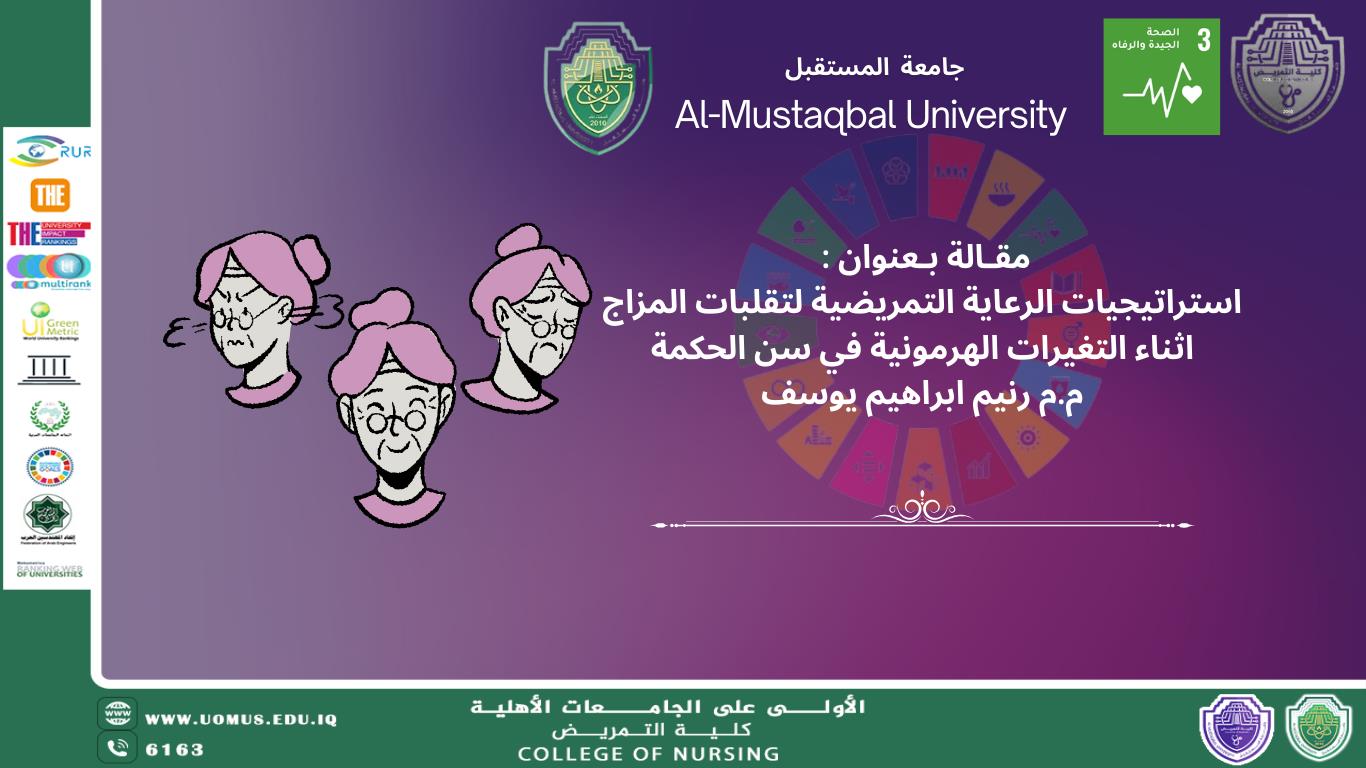

Nursing Care Strategies for Mood Swings During Hormonal Changes in the Menopause
Introduction
Women in the "Menopause" face mood swings resulting from a decrease in estrogen and progesterone levels, which affects neurotransmitters such as serotonin and dopamine. This hormonal decline often leads to symptoms such as anxiety, irritability, and sudden bouts of sadness. Nurses play a pivotal role in providing comprehensive care focused on education and psychological support to improve quality of life.
Accurate Nursing Assessment
Successful care begins with a comprehensive assessment that includes
Identifying Patterns: Helping the woman monitor when fluctuations intensify (e.g., are they related to lack of sleep or night sweats?).
using Assessment Scales: Applying clinically approved anxiety and depression measurement tools for the early detection of any disorders requiring deeper medical intervention.
Health History: Reviewing the woman's psychological history, as those who previously suffered from postpartum depression may be more susceptible to severe mood swings.
Psychological and Educational Support Strategies
Nurses explain hormonal changes and reassure the patient that these fluctuations are temporary.
Cognitive Reframing: Training the woman to understand that these fluctuations are "physiological changes" rather than a lack of self-control, which reduces feelings of guilt.
Sleep Education: Since sleep disturbances exacerbate mood deterioration, nursing staff teach techniques to improve sleep quality, such as maintaining a cool, dark room and avoiding caffeine in the evening.
Nutritional and Physical Interventions
Nursing advice regarding lifestyle is an integral part of the treatment plan:
Physical Activity: Recommending resistance exercises or brisk walking, as physical activity acts as a natural antidepressant by raising endorphin levels.
Nutritional Balance: Focusing on foods rich in Vitamin B6, B12, Magnesium, and Omega-3, which support nervous system function and reduce stress levels.
Nutritional Guidance Table:
Nutrient Benefit for Mood
Omega-3 Supports brain health and mood stability; found in fish and walnuts.
Vitamins B12 and D Deficiency is linked to an increased risk of depression and anxiety.
Magnesium Helps with muscle relaxation and improves sleep quality.
Proteins Essential for the production of neurotransmitters that regulate mood.
Pharmacological Management and Follow-up
In cases requiring hormonal or pharmacological treatment, the nursing role includes:
Hormone Replacement Therapy (HRT) Awareness: Explaining the benefits, risks, and closely monitoring for any side effects.
Promoting Medication Adherence: Ensuring the patient understands how and when to take prescribed medications.
Building Social Support Networks
Nurses encourage women to join specialized support groups. Sharing experiences with others facing similar challenges reduces feelings of isolation and provides practical, proven coping strategies.
Conclusion
Nursing care strategies are a vital tool for managing mood swings during hormonal changes in the Age of Wisdom, enhancing women's quality of life through education and comprehensive support. Nurses emerge as essential partners in preventive and therapeutic care, focusing on non-pharmacological interventions to reduce health risk. It is recommended to strengthen nursing training programs and future research to develop more personalized protocols, contributing to a healthier and more aware society.
Al-Mustaqbal University, the first university in Iraq
الهدف الثالث من اهداف التنمية المستدامة -الصحة الجيدة والرفاه
The Third Goal of the Sustainable Development Goals – Good Health and Well-being