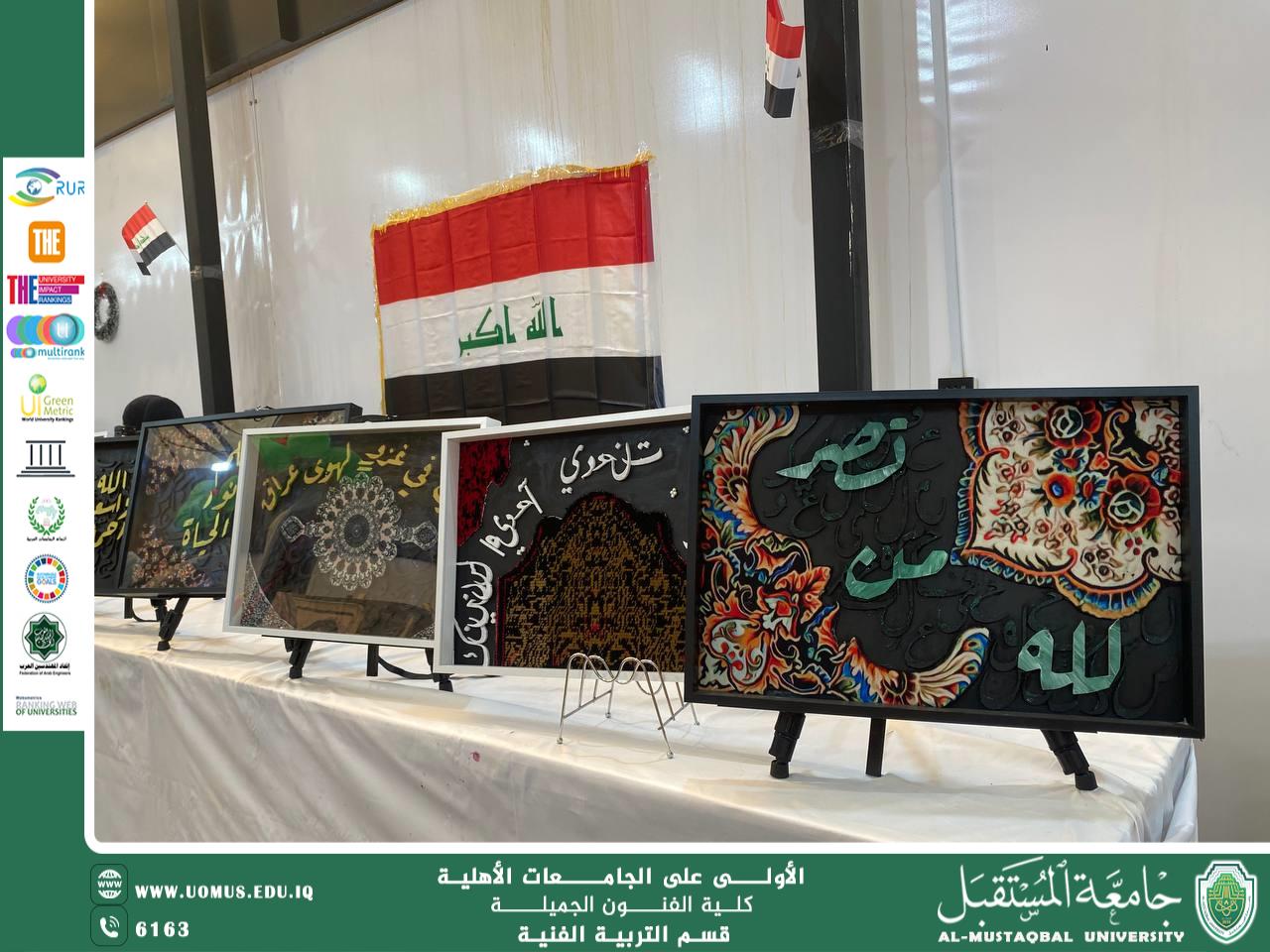
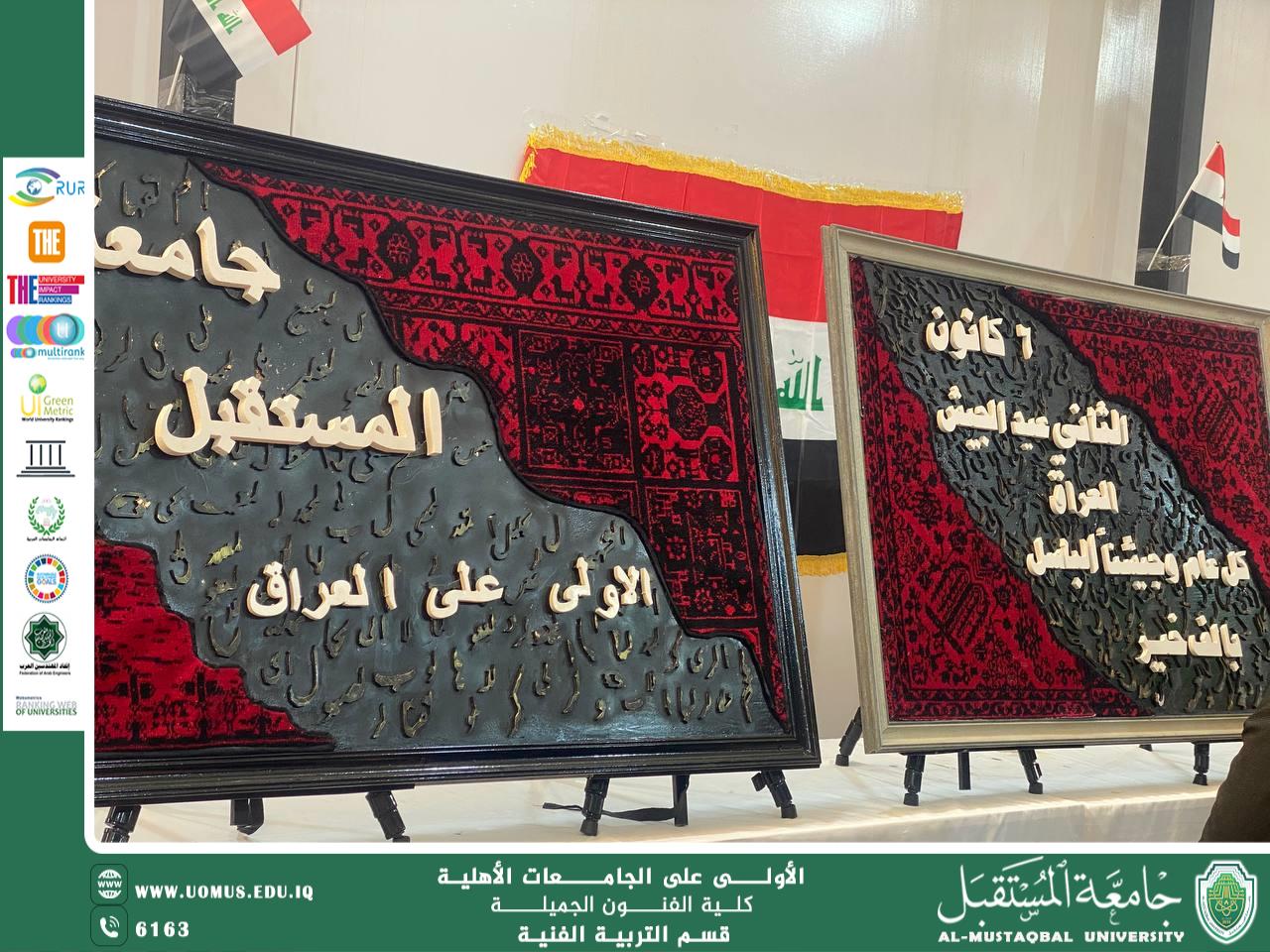
Article Title "The Role of Painting in Promoting Global Peace: An Aesthetic–Intellectual Reading of the Function of Contemporary Art" By: Dr. Mustafa Sahib.
In the contemporary world, peace is no longer merely a political or diplomatic concept; it has become a profound cultural and aesthetic issue, where collective memory, conflicting identities, and accumulated images of violence intersect in human consciousness. In this context, painting emerges as one of the most powerful forms of human expression, capable of transcending spoken language and geographical boundaries, playing a central role in reconstructing shared human meaning and in establishing peace as an ethical and aesthetic choice before being a political project.
Throughout its long history, painting has not been merely a tool for visual representation; it has always served as a space for critical reflection on human existence. A painting can encompass major contradictions: pain and hope, destruction and life, memory and forgetting. Thus, the role of painting in promoting peace is not realized through direct slogans or superficial moralizing images, but through its ability to reshape human sensitivity toward others and challenge entrenched patterns of violent thinking in collective consciousness.
Global artistic experiences, particularly in post-conflict societies, have demonstrated that painting can function as a visual medium for collective healing. Paintings documenting the effects of war do more than condemn violence; they create a space for empathy that transcends identities, transforming the victim from a mere statistic or fleeting news item into a human being capable of understanding and emotional engagement. In this sense, painting helps dismantle narratives of hatred and replace them with human-centered narratives based on the recognition of shared suffering.
Painting also possesses a unique ability to create a universal visual language that transcends the limitations of translation or cultural differences. Color, line, composition, and visual rhythm interact directly with the viewer’s sensory perception, eliciting an emotional response that goes beyond political or religious affiliations. Consequently, a painting becomes a silent dialogue space between diverse cultures, where human beings meet one another beyond the logic of conflict.
In contemporary art specifically, peace is no longer presented as an ideal state or distant utopia but as an ongoing critical process. Many artists deconstruct symbols of power and repurpose images of violence—not to reinforce them, but to reveal the mechanisms of their visual and psychological operation. In doing so, painting becomes an act of aesthetic resistance, opposing normalization of violence and calling for accountability of the structures that produce and recycle it.
The educational and cognitive role of painting in promoting a culture of peace cannot be overlooked, particularly when integrated into curricula and community projects. Teaching painting is not limited to developing technical skill; it also instills values of dialogue, respect for diversity, and peaceful expression of internal and external conflicts. Here, the artist becomes a cultural agent, participating in shaping a new social awareness grounded in beauty as an alternative to violence.
In conclusion, painting does not promote peace as a ready-made message but as an open human experience that restores the capacity for feeling, reflection, and empathy. In a world increasingly dominated by visual and media noise, an authentic painting remains an act of profound silence, reminding humans of their humanity and opening new horizons for coexistence and global peace..Almustaqbal University, The First University in Iraq.