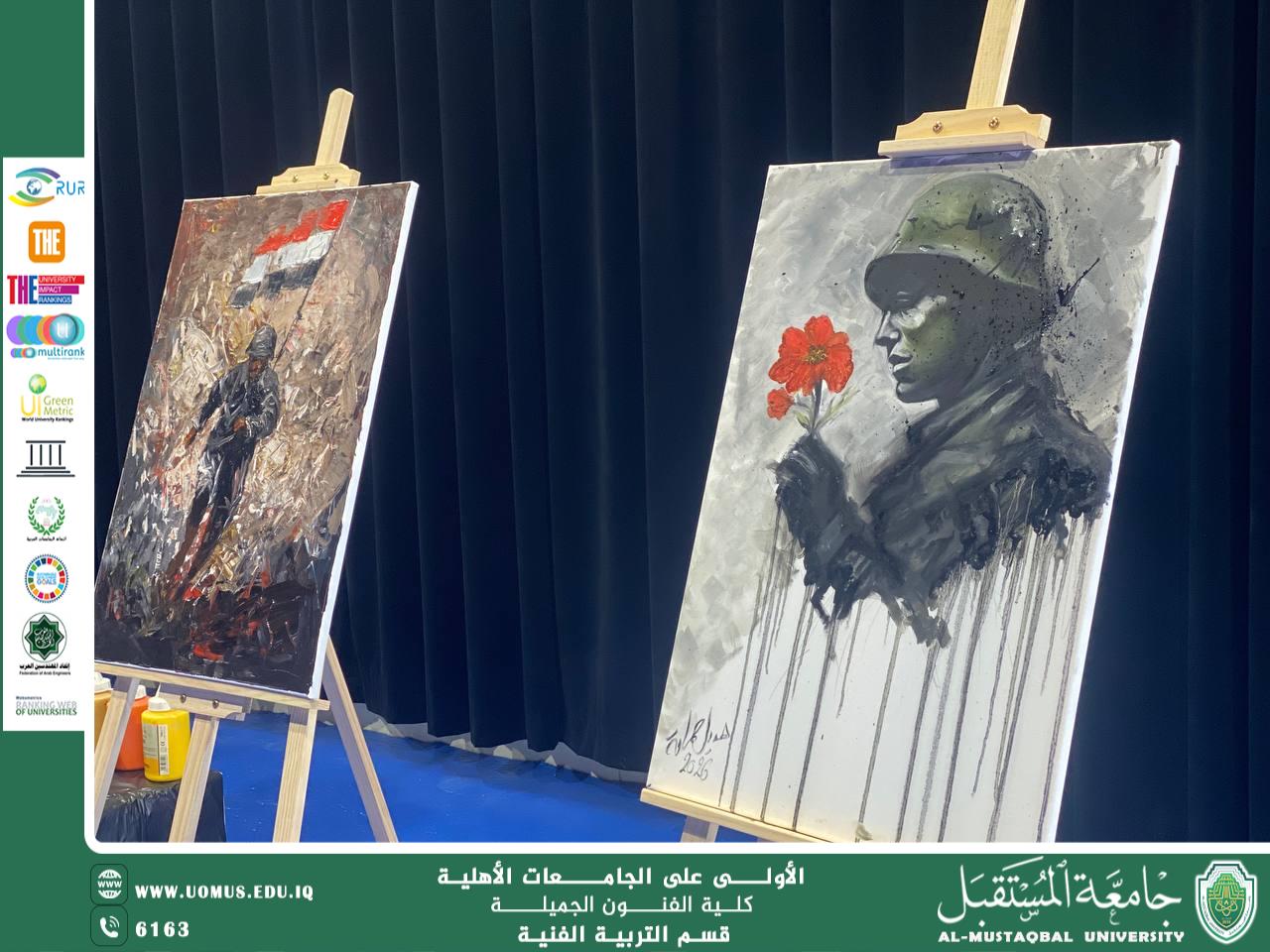
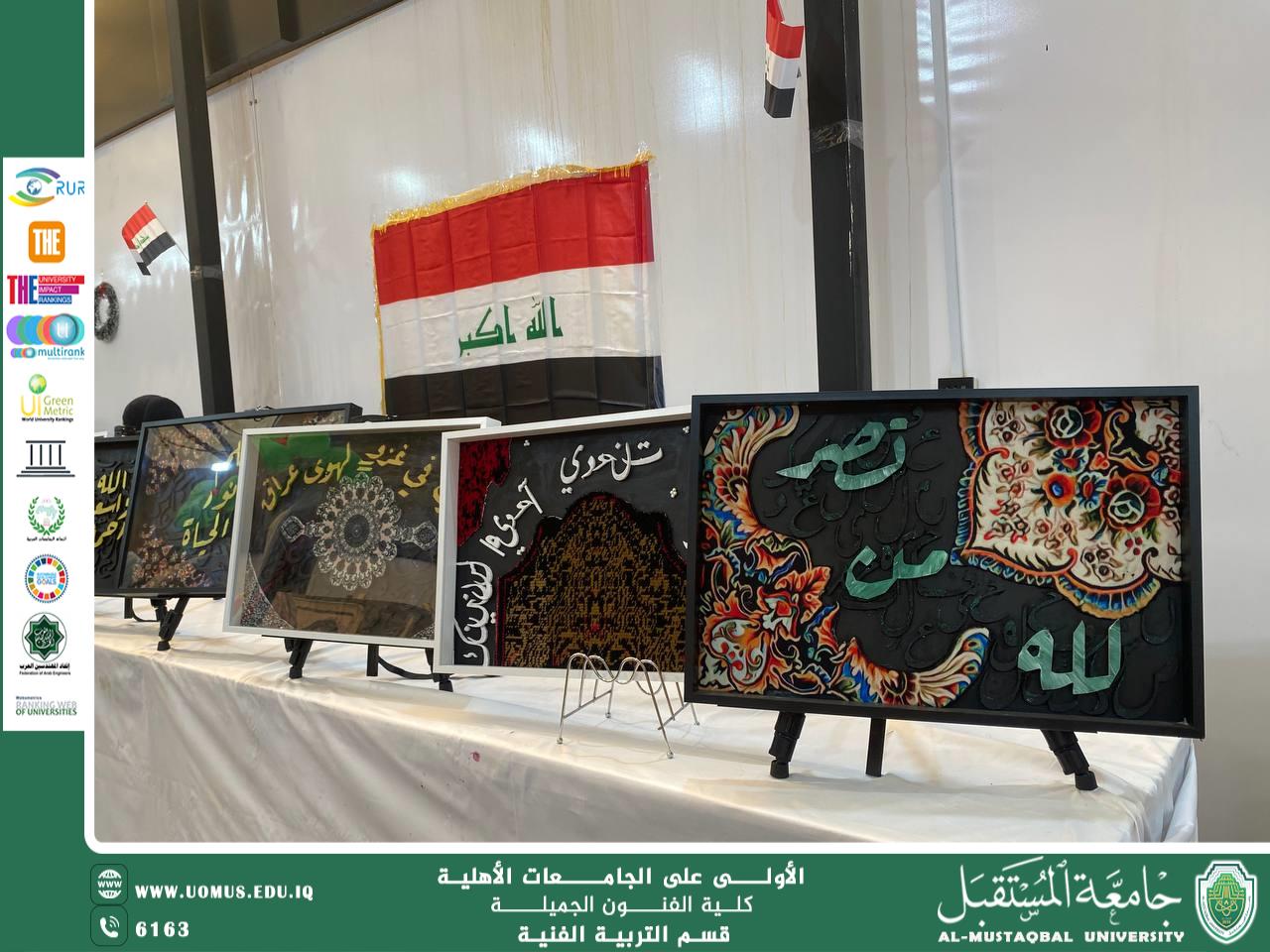
**Article Title:** "Art under the Political Context in Iraq" **By:** Lecturer Dr. Mustafa Sahib
The responsibility of the artist in Iraq today is distributed among documentation, critique, and innovation, amid a political climate full of challenges—from weak institutions to external influence, intermittent protests, and social contradictions. This article explores how art can serve as a space for reflection on collective memory and as a meeting point between aspiration and reality—not merely as an expression of suffering or protest, but also as a construction of alternative worlds under unstable conditions.
1. Political Framework and Social Reality
Since the post-2003 period, Iraq has attracted international attention due to political and security transformations. International organizations have observed a decline in political and civil freedoms, alongside the presence of suspicious or extralegal roles for non-governmental forces. Freedom House’s 2024 report indicates that Iraq suffers from restrictions on freedoms despite the existence of elections, with militia influence and weak official institutions.
Meanwhile, Human Rights Watch has noted the persistence of divisions, protests, and the impact of corruption, despite some positive steps.
This political reality establishes a highly contradictory creative context:
Freedom of expression is limited, yet the desire to express is strong.
Considerable pain and alienation coexist with youth and communities seeking a modern identity.
A deep cultural heritage exists alongside a political system oscillating between relative stability and tension.
2. Art as a Project of Vision and Imagination
In this context, art becomes more than a reflection of violence or corruption; it is an attempt to produce alternative visions:
Re-establishing human presence:
Art creates spaces that allow individuals to redefine themselves after the trauma of war or turmoil. Paintings, films, or literature focusing on personal stories avoid reducing human experience to mere statistics about conflict.
Constructive critique rather than mere protest:
Instead of superficial repetition of protest slogans, art can pose structural questions about the implications of political decisions on society, infrastructure, education, and memory. Such critique requires a new architectural or narrative language, avoiding conventional clichés.
Imagination as a strategy for the future:
Art does not only capture the present; it shapes visions of an alternative future, whether through narrative scenarios, architectural designs, or visual installations. These works allow audiences to step back from reality into possible moments, inspiring reflection on practical or symbolic alternatives.
3. Productive Spaces and Distribution
The Iraqi artist today operates in overlapping spaces:
Local limited space: exhibitions, workshops, and cultural activities in cities, universities, or cultural buildings, often exposed to censorship or pressure.
Digital/global space: use of social networks and online platforms to share work and build external audiences, which is simultaneously a challenge and a source of strength.
Collaboration with external entities: roles for international organizations or museums through joint projects, which raise questions about artistic independence and considerations of funding or messaging.
This intersection of the local and global generates dilemmas:
How can the artist maintain local sensitivity without oversimplifying or generalizing to please an external audience?
How to manage funding or participation in international exhibitions while the internal reality remains challenging?
4. Creative and Technical Challenges
Resources and capabilities:
The scarcity of stable cultural infrastructure or financial support pushes artists to recycle materials or seek technical alternatives. This creates a space for new artistic experiments: installation art from reused materials, limited photography, low-cost digital work, or live performance in informal spaces.
Professional sustainability:
It is difficult for artists to survive without direct support or training programs, placing them under severe economic pressure. Thinking about self-funding models or collective projects becomes necessary for survival.
Changing political time:
The reality shifts from year to year; artists need to adapt quickly to events without losing analytical depth. Avoiding merely reactive enthusiasm in favor of long-term work allows for re-reading events later with greater awareness.
5. Theoretical and Interpretive Stakes
From a theoretical perspective, Iraqi art can be viewed as a form of self-alienation or continuous mapping of memory. It tempts superficial interpretations, but a deep reading focuses on the question: How does art expand the boundaries of conventional political discourse...Almustaqbal University, The First University in Iraq
.