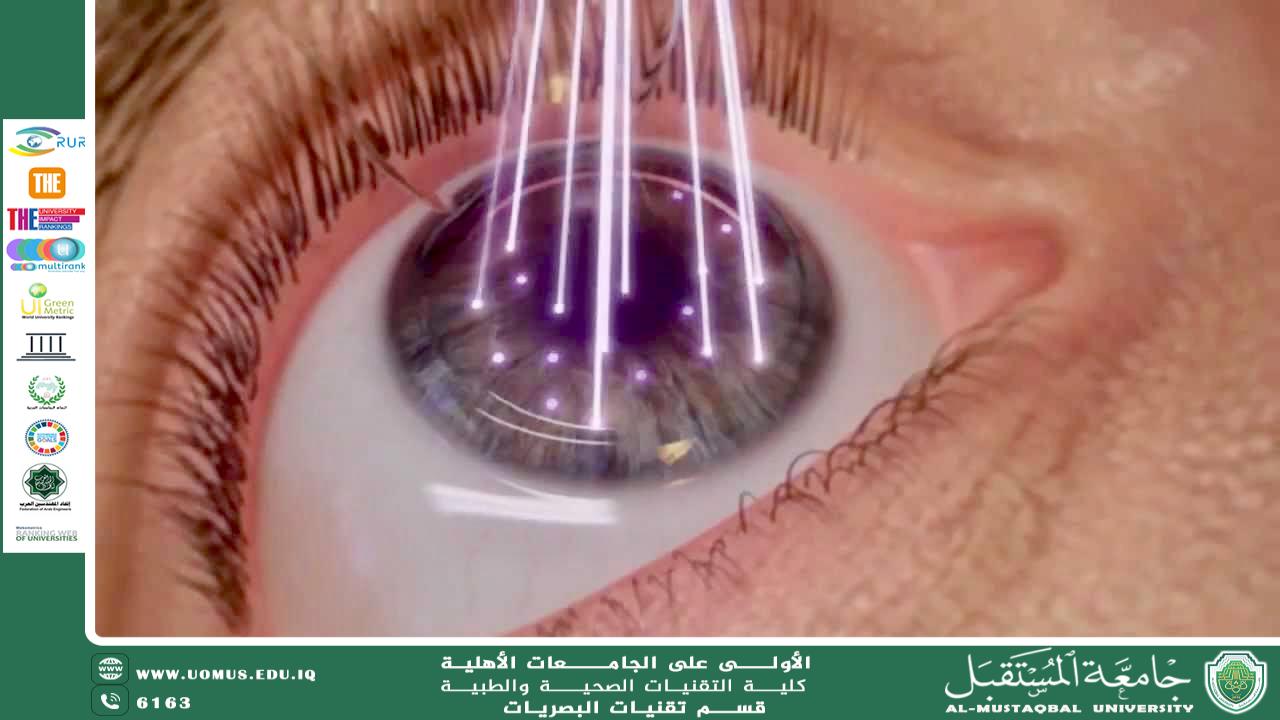
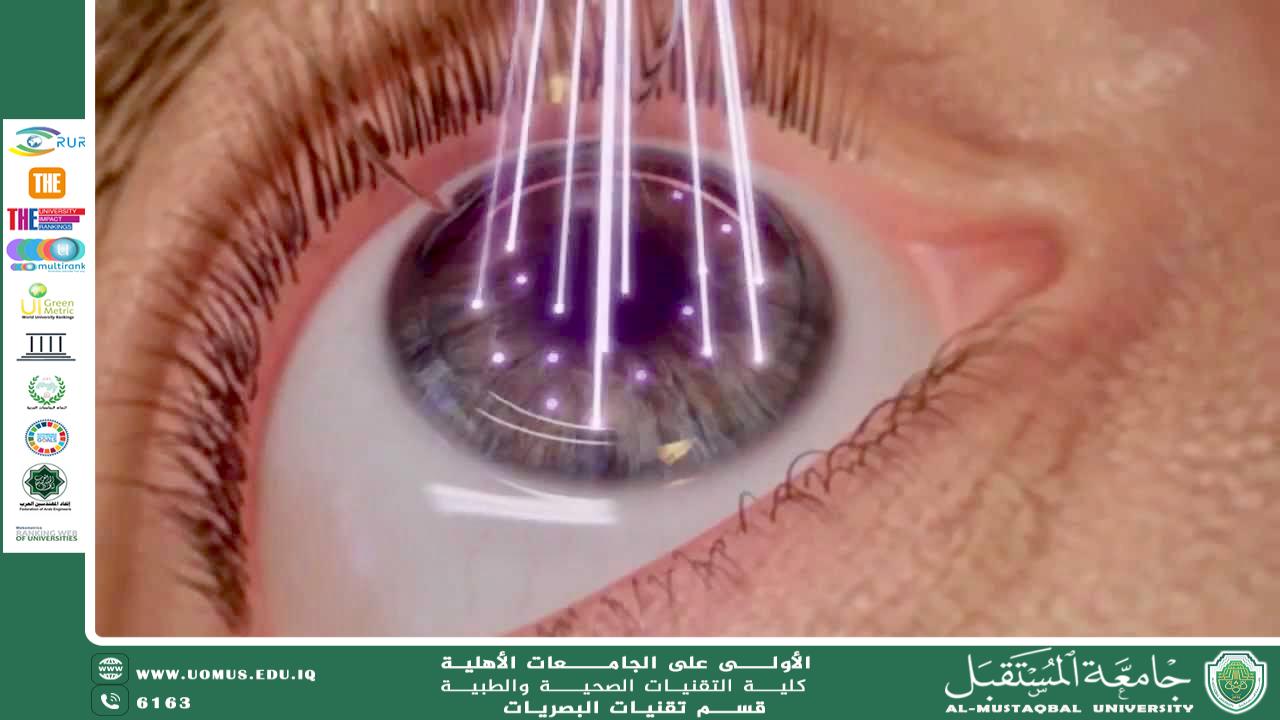
A scientific article by Ms. Islam Fadel Mousa entitled: The Use of Laser Technology in Treating Corneal Problems.
1. What Is Laser Treatment for the Cornea?
Laser treatment for the cornea involves medical procedures that use precise laser beams to reshape the corneal surface or improve its visual function. The most common laser techniques include:
• LASIK (Laser-Assisted In Situ Keratomileusis): To correct refractive errors such as myopia, hyperopia, and astigmatism.
• PRK (Photorefractive Keratectomy): To correct vision problems when corneal thickness is insufficient for LASIK.
• PTK (Phototherapeutic Keratectomy): To treat corneal scars, superficial ulcers, and certain surface corneal diseases.
2. Conditions Benefiting from Laser Treatment
• Refractive vision problems (myopia, hyperopia, astigmatism)
• Early-stage keratoconus
• Corneal scars or superficial ulcers
• Surface irregularities following injuries
3. Advantages of Laser Use
1. High precision in reshaping the cornea
2. Reduced need for conventional surgery
3. Rapid recovery with restored vision within days or weeks
4. Lower risk of complications compared to traditional surgical methods
4. Potential Risks and Precautions
• Temporary dry eye
• Temporary changes in visual acuity or light sensitivity
• Rare cases of infection post-procedure
• Proper evaluation of corneal thickness and overall eye health before surgery
5. The Future of Laser Treatment for the Cornea
With ongoing advancements in laser technology, newer devices such as wavefront-guided lasers and 3D corneal mapping-guided lasers allow for higher precision, minimizing errors and significantly improving treatment outcomes.
Conclusion
The use of laser in treating corneal disorders represents a revolution in ophthalmology, offering a safe, precise, and highly effective solution for various vision problems, with faster recovery and fewer complications. As technology continues to evolve, laser procedures are expected to become increasingly personalized, providing better visual outcomes for patients.
University of Al-Mustaqbal – The First and Leading Private University