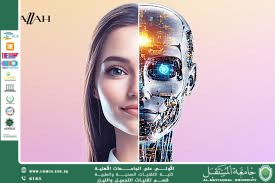
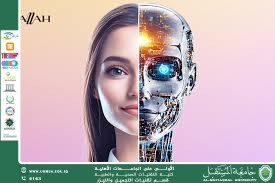
Artificial Intelligence and Its Applications in the Field of Aesthetics
Introduction
In recent years, the field of aesthetics and cosmetic medicine has witnessed remarkable advancements driven by the rapid development of Artificial Intelligence (AI) technologies. Artificial intelligence has become an essential tool in improving diagnostic accuracy, treatment planning, and clinical outcomes in aesthetic procedures. By integrating computational algorithms with medical expertise, AI has transformed traditional cosmetic practices into more precise, personalized, and data-driven approaches.
Concept of Artificial Intelligence
Artificial intelligence is a branch of computer science concerned with the development of systems capable of performing tasks that typically require human intelligence, such as learning, reasoning, pattern recognition, and decision-making. In aesthetic medicine, AI relies heavily on Machine Learning (ML), Deep Learning (DL), and Computer Vision to analyze facial features, skin conditions, and treatment responses.
Applications of Artificial Intelligence in Aesthetics
1. Skin Analysis and Diagnosis
AI-powered systems are widely used for advanced skin analysis by processing high-resolution images. These systems can accurately detect skin concerns such as wrinkles, hyperpigmentation, acne, enlarged pores, erythema, and hydration levels. Compared to conventional visual assessment, AI provides objective, reproducible, and highly precise diagnostic results.
2. Facial Mapping and Treatment Planning
Artificial intelligence enables detailed facial mapping by analyzing anatomical landmarks, symmetry, and proportions. This technology assists clinicians in planning aesthetic procedures such as dermal fillers, botulinum toxin injections, and facial contouring, ensuring balanced and natural-looking outcomes while minimizing procedural risks.
3. Personalized Aesthetic Treatments
Through the analysis of patient-specific data—including skin type, age, lifestyle, and medical history—AI systems can generate personalized treatment protocols. This level of customization enhances treatment efficacy, improves patient satisfaction, and reduces adverse effects associated with generalized treatment approaches.
4. AI-Integrated Aesthetic Devices
Modern aesthetic devices, including laser systems, radiofrequency (RF) devices, and ultrasound-based technologies, increasingly incorporate artificial intelligence. These devices can automatically adjust parameters such as energy fluence, pulse duration, and treatment depth according to tissue characteristics, thereby optimizing safety and therapeutic outcomes.
5. Monitoring and Outcome Evaluation
Artificial intelligence plays a critical role in evaluating treatment effectiveness by comparing pre- and post-treatment images using quantitative analysis. This allows clinicians to objectively assess improvements, monitor healing processes, and modify treatment plans when necessary.
Advantages of Artificial Intelligence in Aesthetic Medicine
The integration of AI in aesthetics significantly reduces human error, enhances diagnostic accuracy, and improves procedural consistency. Additionally, it increases operational efficiency, supports evidence-based decision-making, and elevates the overall quality of patient care.
Challenges and Ethical Considerations
Despite its numerous benefits, the application of artificial intelligence in aesthetics presents challenges related to data privacy, algorithm reliability, and ethical responsibility. The use of AI must comply with medical standards and ethical guidelines, emphasizing that AI serves as a supportive tool rather than a replacement for clinical expertise.
Conclusion
Artificial intelligence has become a transformative force in the field of aesthetics, offering advanced solutions for diagnosis, treatment planning, and outcome evaluation. As technology continues to evolve, AI is expected to play an increasingly significant role in aesthetic medicine. However, the successful implementation of AI depends on maintaining a balanced integration between technological innovation and professional clinical judgment.
Al-Mustaqbal University – The First University in Iraq.