A Scientific Article By: Ms. Huda Rafid Abdulkhaliq Title: Vaccinations and Their Role in the Prevention of Infectious Diseases I
Introduction
Infectious diseases are among the most serious health challenges humanity has faced throughout history, causing millions of deaths and significantly affecting societies and economies. With the advancement of medical sciences, vaccinations have emerged as one of the most important achievements in reducing the spread of these diseases and protecting human health.
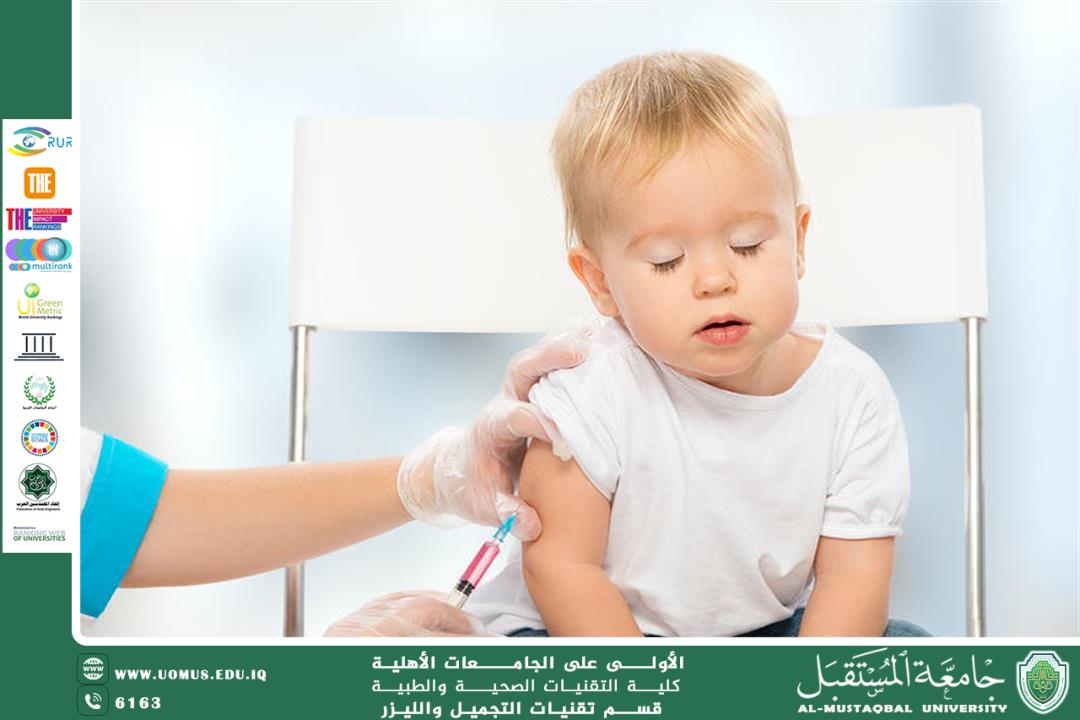
Vaccination is the process of introducing a biological substance (a vaccine) into the human body in order to stimulate the immune system to produce antibodies against a specific disease-causing agent, without causing the actual disease. Thus, the body becomes able to resist infection if exposed in the future.
Mechanism of Action of Vaccines
Vaccines work by presenting a weakened or inactivated form of the microorganism, or a part of it, which enables the immune system to recognize it and develop immune memory. When real exposure occurs, the immune system responds quickly and effectively, preventing the disease or reducing its severity.
Importance of Vaccinations in Public Health
Vaccinations play a vital role in:
Reducing infection and mortality rates.
Limiting the spread of epidemics.
Protecting vulnerable groups such as children and the elderly.
Reducing the economic burden on healthcare systems.
Vaccines have contributed to the eradication of some diseases, such as smallpox, and to the significant reduction of others, such as polio and measles.
Vaccination and Herd Immunit
Herd immunity is achieved when a large proportion of the community is vaccinated, which reduces the chances of disease transmission and protects even those who are not vaccinated. This phenomenon is essential in controlling infectious diseases and preventing outbreaks.
Challenges Associated with Vaccination
Despite the great benefits of vaccines, several challenges exist, including:
The spread of misinformation about vaccine safety.
Vaccine hesitancy among some individuals.
Limited access to vaccines in some developing countries.
Conclusion
Vaccinations are a safe and effective means of preventing infectious diseases and represent a cornerstone of modern preventive medicine. Adherence to vaccination programs contributes to building healthier and safer societies for present and future generations.
AL_mustaqbal University is the first university in Iraq