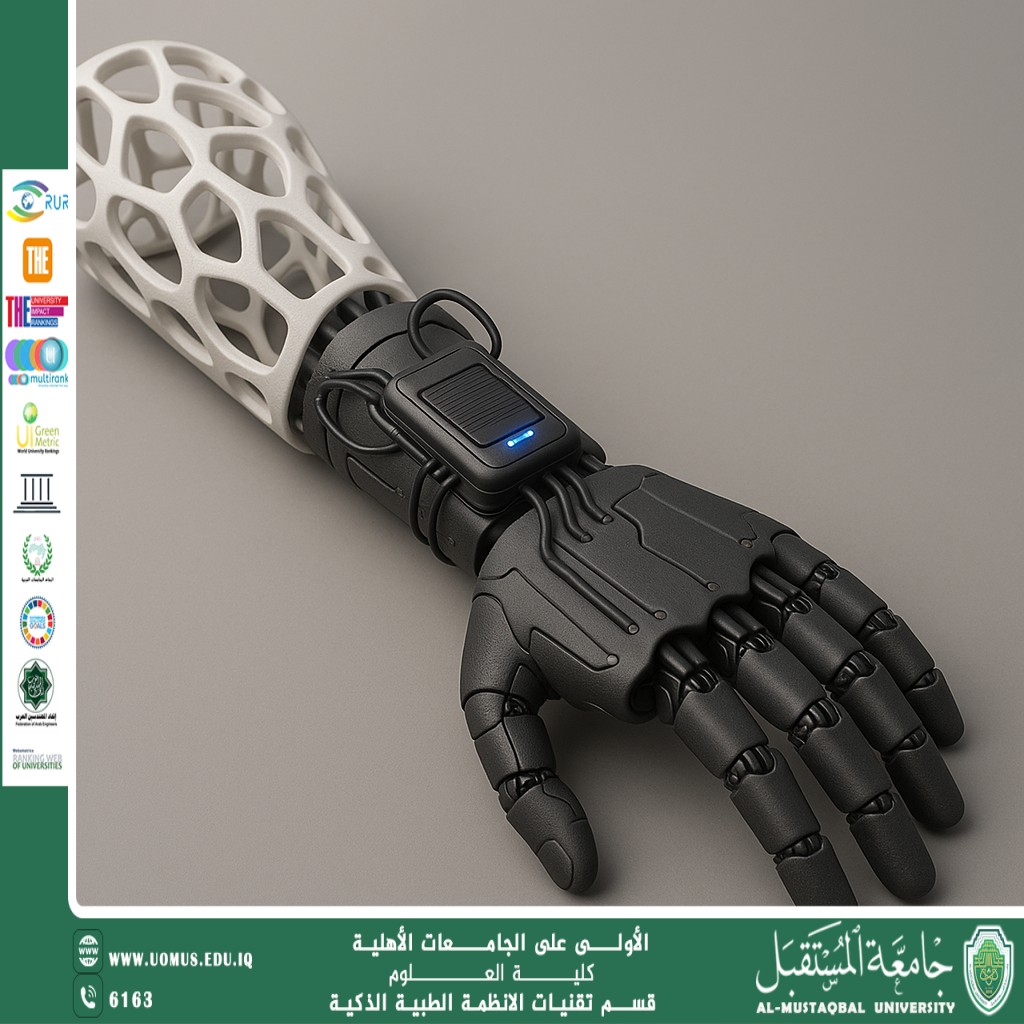
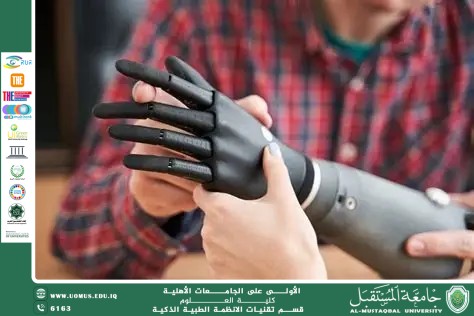
3D-Printed Prosthetics with Smart Adaptive Systems (Prof. Dr. Mehdi Ebady Manaa)
In recent years, the field of prosthetics has witnessed remarkable technological advancement through the integration of 3D printing and smart technologies, leading to a qualitative shift in prosthetic design and functionality. 3D printing enables the precise customization of prosthetic limbs to match each patient’s physical dimensions and individual needs, while reducing production costs and manufacturing time. This has made advanced prosthetic solutions more accessible, particularly in developing countries, contributing to greater equity in healthcare.
Furthermore, the incorporation of smart systems—such as sensors, artificial intelligence, and machine learning algorithms—has significantly enhanced prosthetic performance. These technologies allow prosthetic limbs to interpret muscle signals, adapt to users’ movement patterns over time, and provide sensory feedback that closely mimics natural sensation. As a result, prosthetic devices not only restore mobility but also improve overall quality of life by enhancing independence and self-confidence.
This technological progress is closely aligned with Sustainable Development Goal 3: Good Health and Well-being, as it supports improved physical and psychological health for individuals with mobility impairments, reduces health disparities, and facilitates social integration and active participation in education and employment. Consequently, smart, 3D-printed prosthetics represent more than a technological innovation; they are a powerful tool for achieving health equity and promoting human well-being.
Al-Mustaqbal University – The Leading University in Iraq