Article Title: "The Artist and Ceramics: How Ideas Transform into Tangible Forms" Author: Lecturer M.Sc. Noor Ali Raji
Ceramics is one of the oldest human arts, combining artistic creativity with craftsmanship. Ceramics is not merely a means of making tools; it serves as a way to express ideas and emotions, turning imagination into tangible forms that can be touched and interacted with.
Transforming Ideas into Ceramic Pieces
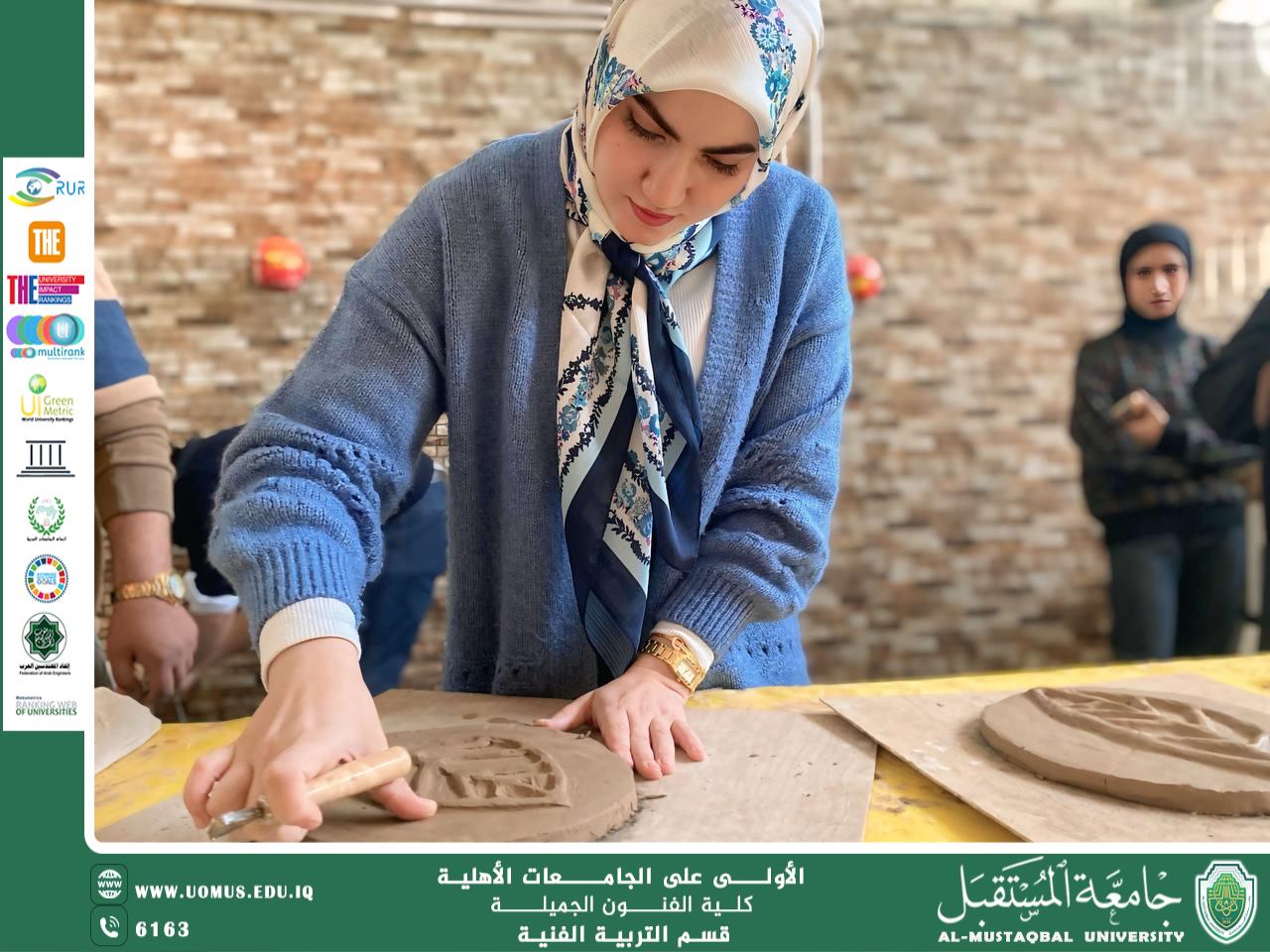
The process of creating ceramics involves several precise stages, starting with the artist's idea or mental design, followed by sketching or creating initial models. Then, suitable materials such as clay or ceramic are selected, and the process of hand-shaping or using molds begins. This stage relies on skill and precision, as the artist translates internal lines and forms into a physical, tangible piece.
Coloring and Decoration
After shaping the piece, coloring and decorating are applied using different glazes and paints to add aesthetic value and reflect the artist’s personality. Both traditional techniques and modern innovations, such as digital printing on ceramics, can be used, giving the artist full freedom to express their creative vision.
Firing and Final Transformation
The piece is then placed in a kiln and fired at specific temperatures, transforming raw clay into a solid, durable ceramic object. This stage is critical, as the quality of the final piece depends on precise control of temperature and time.
Art and Ceramics: Skill Development and Problem Solving
Working with ceramics requires patience and accuracy and enhances critical thinking and problem-solving skills, as the artist encounters challenges at every stage of production. Ceramics also develops visual communication skills and personal creativity and boosts self-confidence when ideas take tangible form.
Ceramics and Sustainable Development
Ceramics contributes to supporting Sustainable Development Goal 4: Quality Education by teaching students and artists practical and artistic skills, while encouraging creativity and innovation. Additionally, using eco-friendly materials in ceramic production supports Goal 12: Responsible Consumption and Production.
Conclusion
The journey of the artist and ceramics is a continuous process from idea to reality, where imagination is transformed into tangible forms bearing the artist’s personal touch. Mastering this craft enhances creativity, develops artistic and personal skills, and allows the artist to express themselves in a unique and compelling way.Almustaqbal University, The First University in Iraq