An article titled "Development of Magnetic Resonance Imaging (MRI) Devices" by Engineer Nour Al-Huda Razzaq
Magnetic Resonance Imaging (MRI) is one of the most advanced medical imaging techniques that provides high-resolution images of body tissues without using ionizing radiation. During the last decades, MRI systems have undergone significant development in magnet design, radiofrequency coils, image reconstruction algorithms, and artificial intelligence integration. This article reviews the main engineering approaches used in developing MRI devices, their clinical applications, and the future challenges facing this technology.
Introduction
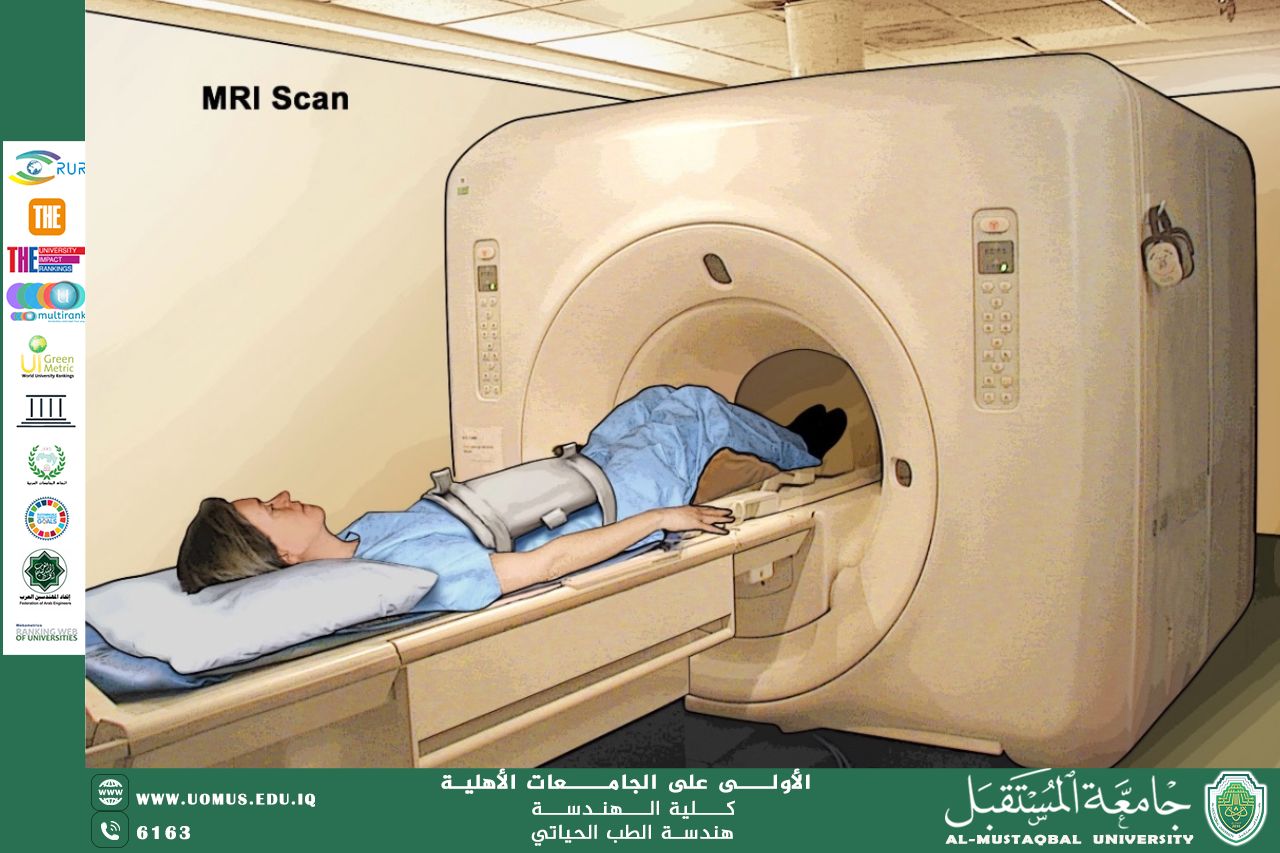
Since the introduction of the first MRI scanner in the 1970s, this technology has become an essential diagnostic tool in modern medicine. MRI is based on the interaction between hydrogen protons in the human body and a strong magnetic field combined with radiofrequency pulses. The emitted signals are processed by computers to generate detailed cross-sectional images.
The continuous development of MRI devices aims to improve image quality, reduce scanning time, increase patient safety, and expand clinical applications. Advances in electronics, superconducting materials, and digital signal processing have transformed MRI from a slow and complex system into a fast and intelligent imaging modality.
Methods of MRI Development
1. Enhancement of Magnetic Field Strength
Modern MRI systems moved from 0.5 Tesla to 1.5T and 3T, and recently to 7T in research centers. Higher field strength resulted in:
• Improved signal-to-noise ratio (SNR)
• Better visualization of small anatomical structures
• Advanced spectroscopic imaging
2. Development of RF Coils
Multi-channel radiofrequency coils were designed to:
• Increase sensitivity of signal reception
• Reduce artifacts and noise
• Support parallel imaging techniques
3. Image Reconstruction Techniques
Advanced computational methods were introduced, such as:
• Parallel Imaging
• Compressed Sensing
• Deep Learning algorithms
These methods significantly reduced acquisition time while maintaining high image quality.
4. Patient Comfort and Noise Reduction
Engineering improvements included:
• Quiet gradient systems
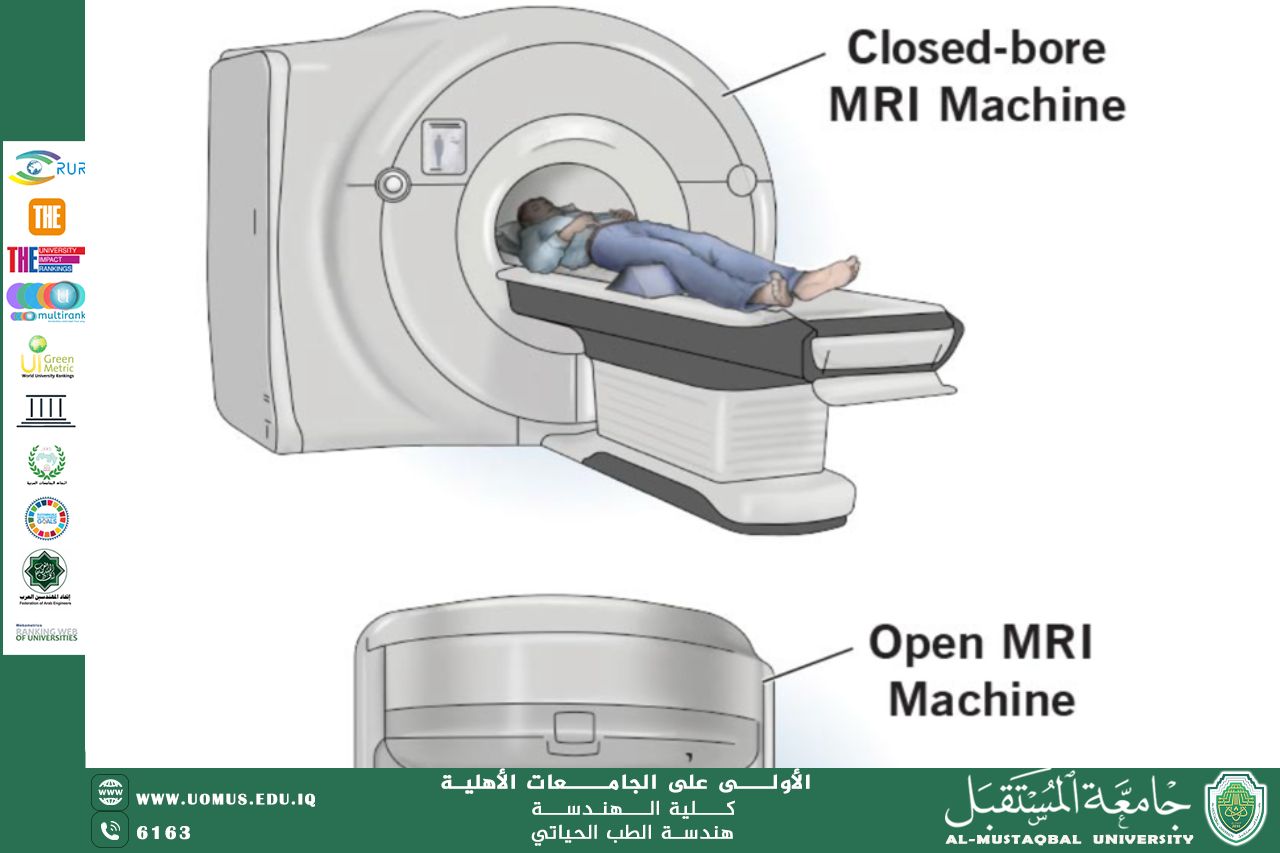
• Open MRI designs for claustrophobic patients
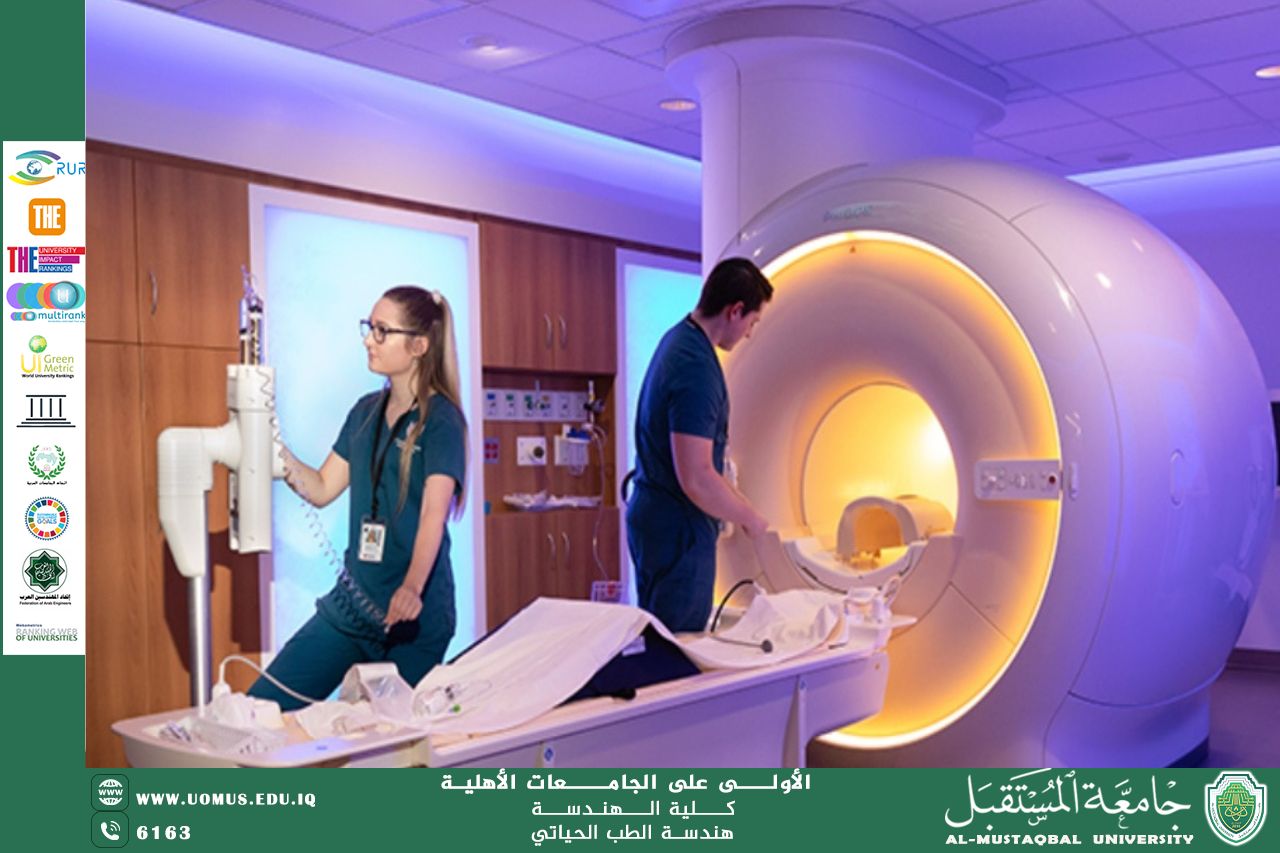
• Real-time monitoring and communication systems
5. Cooling and Power Systems
New superconducting materials and helium-saving technologies were developed to reduce operational cost and maintain magnet stability.
Applications of MRI
1. Neurology
o Detection of brain tumors and stroke
o Functional MRI (fMRI) to study brain activity
o Diffusion Tensor Imaging for nerve fibers
2. Cardiology
o Assessment of heart function
o Non-invasive angiography (MRA)
o Measurement of blood flow
3. Musculoskeletal System
o Diagnosis of ligament and cartilage injuries
o Spine and joint evaluation
4. Oncology
o Tumor localization and staging
o Monitoring response to therapy
5. Research Applications
o Metabolic spectroscopy
o MRI-guided surgery and augmented reality integration
Conclusion
The development of MRI devices has revolutionized medical diagnosis by providing safe and highly detailed imaging. Biomedical engineering played a crucial role in improving magnets, electronics, software, and signal processing. Although challenges such as high cost and energy consumption still exist, ongoing research in artificial intelligence and superconducting technology promises more compact, affordable, and intelligent MRI systems in the near future.