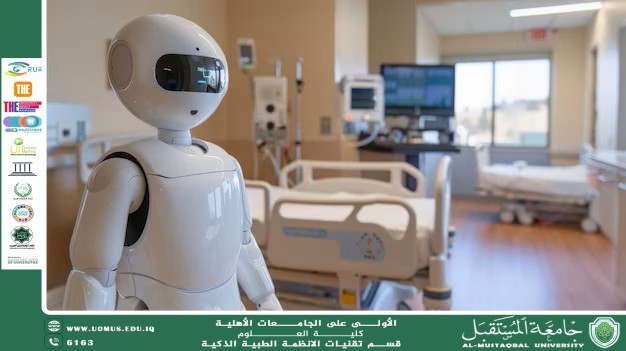
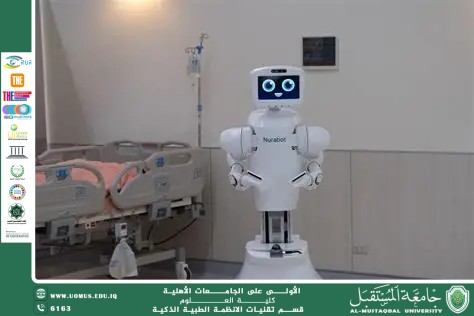
Intelligent Nursing Robots as a Sustainable Solution to the Shortage of Medical Staff (Programmer Huda Khudair Hani)
In light of the increasing challenges facing healthcare systems worldwide, the shortage of medical and nursing staff has become one of the major obstacles to delivering comprehensive and effective healthcare services. With the continuous growth of the global population, rising rates of aging, and the spread of chronic diseases, there is an urgent need to adopt innovative solutions to bridge this gap. In this context, intelligent nursing robots emerge as a strategic option that is closely aligned with the objectives of sustainable development, particularly Sustainable Development Goal 3: Good Health and Well-being.
Intelligent nursing robots contribute significantly to supporting healthcare systems by reducing the burden on human staff through performing routine tasks such as monitoring patients’ vital signs and assisting in medication distribution. This allows nurses and physicians to focus more on critical cases that require direct human intervention. In addition, these robots are characterized by high accuracy, which helps minimize medical errors and enhance the overall quality of healthcare services. Their use also improves the capacity of hospitals and healthcare centers, thereby increasing access to medical services.
Moreover, intelligent robots play an important role in enhancing efficiency and reducing resource waste, which is a fundamental principle of sustainable development. By automating certain tasks, healthcare institutions can make better use of time and human resources, contributing to the long-term sustainability of healthcare systems. This approach also supports the sustainability of the healthcare workforce by reducing job-related stress and burnout among healthcare professionals, ensuring continuity and high performance.
The impact of nursing robots extends beyond health and economic aspects to include the environmental dimension. Many modern robotic systems are designed according to environmentally friendly standards, such as energy-efficient operation, long-lasting batteries, and recyclability. This aligns with broader sustainable development goals related to environmental protection and responsible consumption.
Therefore, the adoption of intelligent nursing robots is not merely a technical solution to the shortage of healthcare staff; rather, it represents a strategic pathway toward sustainable healthcare development. It ensures high-quality care, efficient resource utilization, and the protection of both the healthcare workforce and the environment, embodying the integration of technological innovation with sustainable development goals.
Al-Mustaqbal University – The Leading University in Iraq