The Plasma Membrane: Structure and Biological Functions Prepared by: Lect. Abbas Hamza Khudhair
The plasma membrane is a fundamental structure of the cell that surrounds and protects its contents and acts as a selectively permeable barrier controlling the movement of substances between the cell and its external environment. It plays a vital role in maintaining cellular homeostasis and regulating many essential cellular activities.
Molecular Structure of the Plasma Membrane
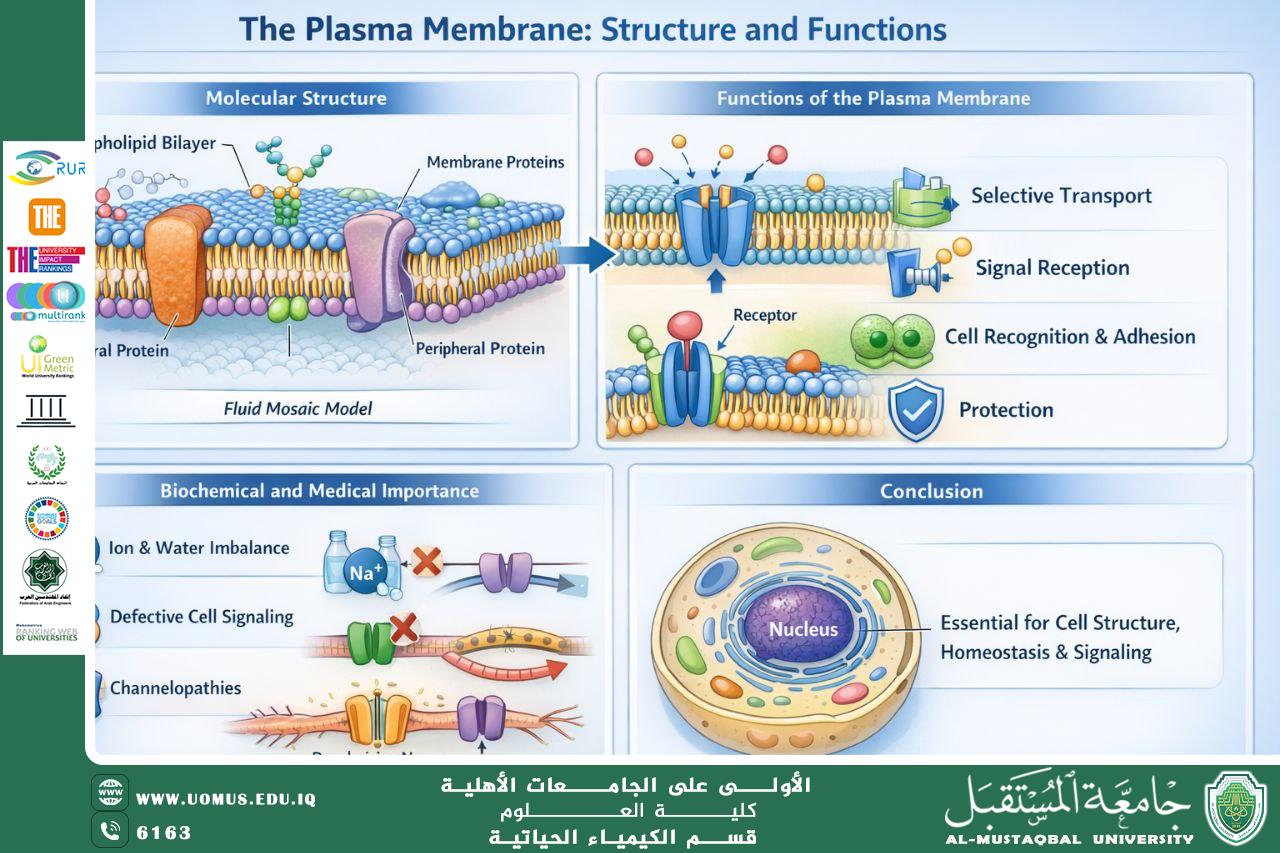
The plasma membrane is mainly composed of:
A phospholipid bilayer
Membrane proteins (integral and peripheral)
Cholesterol (in animal cells)
Carbohydrate chains attached to proteins and lipids (glycoproteins and glycolipids)
This structure is described by the Fluid Mosaic Model, in which lipids and proteins can move laterally within the membrane, giving it dynamic properties.
Biological Functions of the Plasma Membrane
The plasma membrane performs several essential functions, including:
Regulation of substance transport into and out of the cell
Membrane transport mechanisms, such as simple diffusion, facilitated diffusion, and active transport
Reception of cellular signals through membrane receptors
Cell recognition and cell-to-cell adhesion
Protection of cellular components from the external environment
Biochemical and Medical Importance
Any defect in the structure or function of the plasma membrane may lead to:
Disturbances in ion and water balance
Impaired cell signaling
The development of certain genetic or acquired diseases, such as channelopathies
Conclusion
The plasma membrane is a highly organized and dynamic structure that plays both structural and regulatory roles in the cell. Understanding its composition and functions is fundamental to the study of cell biology, biochemistry, and molecular medicine.