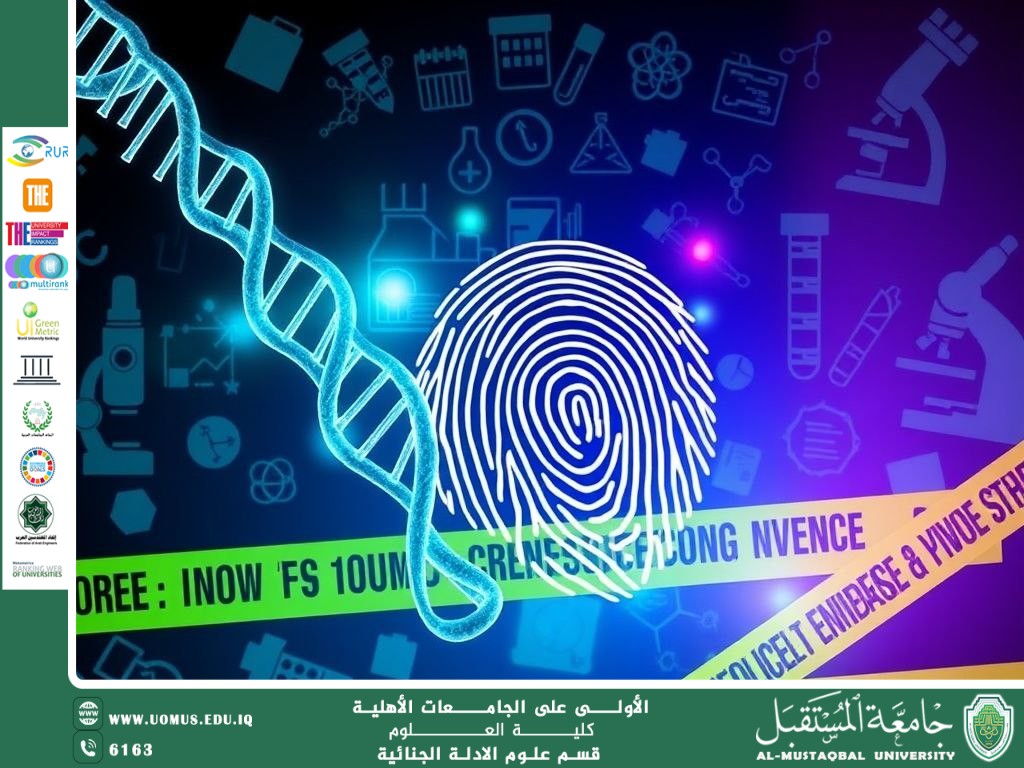

(The Role of DNA in Identifying Perpetrators: The Intersection of Life Sciences and Forensic Evidence (Asst. Lecturer Howaida Nazzal Hussein
DNA analysis is considered one of the most significant scientific advancements that has revolutionized forensic science. It represents a direct connection between life sciences and criminal justice. DNA is present in almost all human cells and is unique to each individual, making it a powerful tool for personal identification.
At crime scenes, biological evidence such as blood, hair, saliva, or skin cells can be collected. These samples contain DNA that forensic experts analyze using advanced laboratory techniques. The resulting genetic profile is then compared with suspects’ DNA or databases.
DNA evidence plays a crucial role in identifying criminals, excluding innocent individuals, and linking suspects to crime scenes with high accuracy. This demonstrates the strong integration between genetics, a core branch of life sciences, and modern forensic investigations.
Al-Mustaqbal University – the first university in Iraq.
SDG4