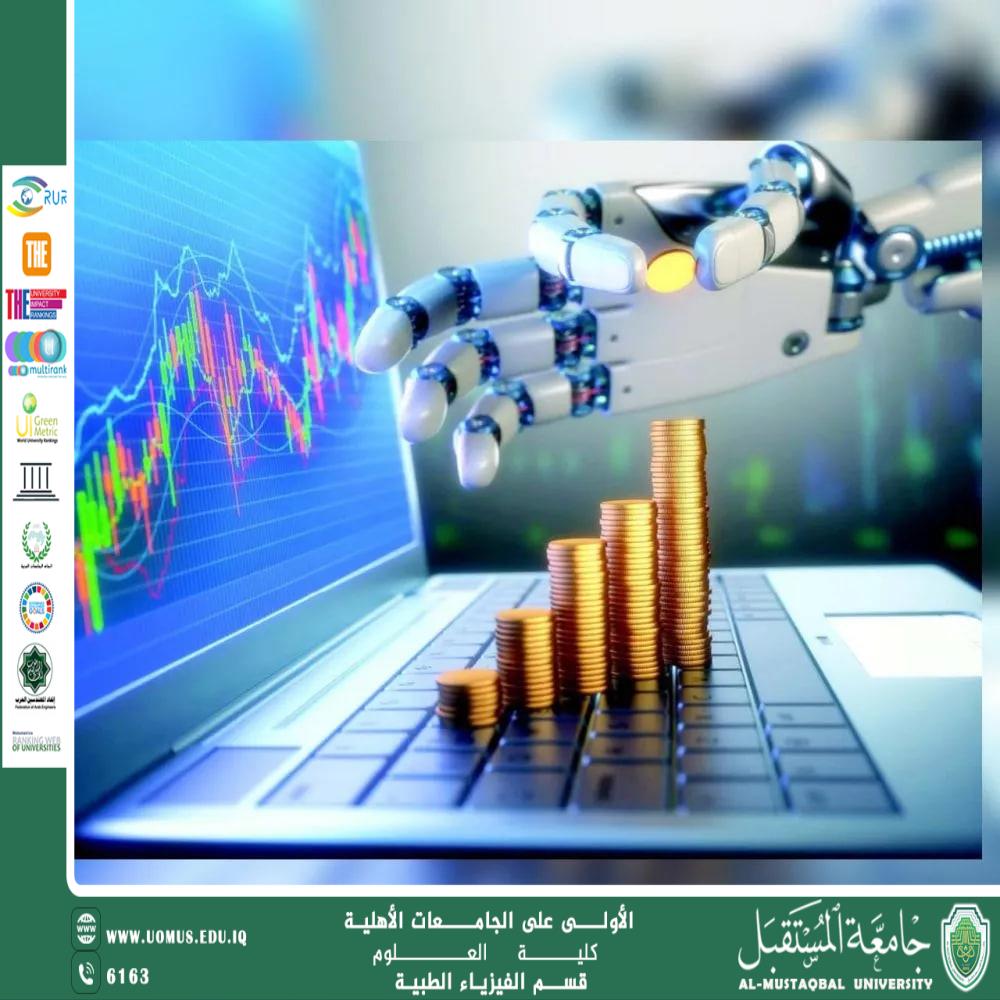

Financial Management in the Era of Artificial Intelligence: Toward a Strategic and Future-Oriented Approac artical by Msc al-shaymaa Firs
Introduction
The contemporary world is witnessing profound transformations across administrative and economic fields due to the rapid advancement of artificial intelligence. Financial management, in particular, has undergone a significant shift, as it is no longer limited to recording historical data and analyzing past performance. Instead, it has become a strategic function that plays a central role in shaping future financial policies and supporting proactive decision-making. This transformation has redefined financial management from merely accounting for the past to actively shaping the future.
Traditional Financial Management
Traditional financial management relied heavily on post-event financial analysis, focusing on preparing financial statements, accounting reports, and ensuring compliance with regulations. While these tasks are essential for maintaining financial discipline and transparency, they are largely reactive in nature and lack the ability to anticipate future risks or identify emerging investment opportunities. As a result, financial decisions were often backward-looking rather than forward-oriented.
Artificial Intelligence and the Transformation of Financial Functions
Artificial intelligence has introduced a qualitative shift in financial management by enabling the rapid and accurate analysis of vast volumes of financial and non-financial data. Machine learning and big data analytics have provided advanced insights that support forecasting and strategic planning rather than merely explaining historical figures. Consequently, financial management has evolved into a forward-looking function that supports long-term organizational objectives and sustainable financial development.
From Financial Analysis to Decision-Making
With the integration of intelligent systems, financial management has moved beyond traditional reporting to become an active contributor to organizational decision-making. Artificial intelligence technologies allow institutions to simulate multiple financial scenarios and evaluate the potential impact of different strategic options before implementation. This capability enhances the efficiency of resource allocation, reduces financial uncertainty, and strengthens the role of financial management as a strategic partner in achieving sustainable growth.
Artificial Intelligence and Financial Governance
Artificial intelligence plays a vital role in enhancing financial governance by increasing transparency, reducing human error, and accelerating auditing and monitoring processes. Intelligent systems are capable of detecting abnormal financial patterns that may indicate fraud or mismanagement, thereby improving regulatory compliance and strengthening institutional trust. This contributes to more resilient and accountable financial systems aligned with global governance standards.
Challenges of Digital Transformation
Despite its significant advantages, the transition toward AI-driven financial management presents several challenges. These include the need for advanced technological infrastructure, the availability of skilled financial professionals with strong analytical and technological competencies, and growing concerns related to data security and privacy. Furthermore, the increasing reliance on intelligent systems raises ethical and regulatory questions that require clear frameworks and responsible implementation.
The Role of Human Expertise
Despite technological advancements, human expertise remains indispensable in modern financial management. Artificial intelligence serves as a supportive tool that enhances the quality of financial decisions but cannot replace professional judgment, ethical reasoning, and strategic insight. Therefore, continuous development of financial professionals’ skills in strategic thinking, critical analysis, and technological awareness is essential to effectively integrate AI into financial practices.
Conclusion
In conclusion, the future of financial management in the age of artificial intelligence represents a fundamental shift from a traditional, backward-looking function to a strategic role that actively contributes to shaping the financial future of organizations. Achieving this transformation requires an integrated approach that combines technological innovation with human expertise to ensure financial sustainability, resilience, and competitiveness in an increasingly complex economic environment.
Almustaqbal University is the first university in Iraq