
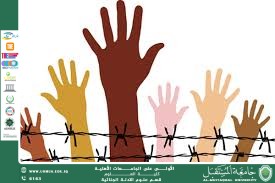
Iraqi Criminal Policy in the Protection of Women’s Rights: An Analytical Study in Light of Contemporary Challenges (Asst. Lect. Raed Jawad Kazem)
Introduction
Criminal law represents the most decisive instrument available to the state for protecting the fundamental values of society, foremost among them the dignity of women and their legal status. In Iraq, the criminal legislator faces a dual challenge: the need to uphold constitutional principles that guarantee equality, while simultaneously confronting emerging patterns of crime that specifically target women. This study sheds light on the gaps and prospects within Iraqi punitive policy.
First: Substantive Criminal Protection in the Iraqi Penal Code
Although the Iraqi Penal Code No. 111 of 1969 has allocated provisions for the protection of women (as seen in Chapter One of Part Eight concerning crimes against honor), new developments require reconsideration of certain legal classifications:
Aggravating circumstances:
The need to expand the recognition of the status of the victim as an aggravating circumstance in crimes against persons, beyond the limits of the current provisions.
The issue of “honor crimes”:
An analysis of Article 409 of the Iraqi Penal Code and a discussion of the extent to which the mitigating excuse conflicts with Iraq’s international obligations to protect the right to life. This issue is among the most widely debated topics in contemporary global criminal law research.
Second: Protection from Domestic Violence between Legal Texts and Legislative Deficiency
Protecting women from violence within the family sphere represents one of the most important new prospects. In the absence of a specific law to combat domestic violence (currently under legislative consideration), Iraqi courts rely on the general rules of the Penal Code (such as Article 413 concerning intentional injury).
Legal critique:
Reliance on general rules overlooks the criminal specificity of domestic violence, which necessitates the adoption of a special criminal policy that moves the issue from the realm of tribal reconciliation to that of public order.
Third: Criminal Confrontation of Cybercrimes (Blackmail as a Model)
In the absence of a specialized law on information technology crimes, electronic blackmail is legally classified under Articles 430 and subsequent provisions concerning threats.
Legal perspective:
New prospects require the criminalization of digital violence through specific provisions that take into account the rapid disappearance of digital evidence and the difficulty of proving it, as well as the imposition of harsher penalties when the criminal intent is to defame women in order to undermine their social standing.
Fourth: Procedural Guarantees in the Iraqi Code of Criminal Procedure
Protection is incomplete without procedures that take gender sensitivity into account. This study proposes activating innovative mechanisms within the Iraqi Code of Criminal Procedure No. 23 of 1971, including:
Specialized investigation:
Establishing investigative units that include female personnel to deal with victims in sensitive crimes.
Criminal protection of witnesses and victims:
Activating witness protection programs to ensure that women are not subjected to social pressures that compel them to relinquish their criminal complaints.
Conclusion and Recommendations
Advancing women’s rights in Iraq requires a legislative revolution in criminal law, shifting it from the stage of post-offense punishment to that of proactive prevention.
Recommendations:
Expediting the enactment of a Domestic Violence Prevention Law to complement the Penal Code.
Amending or repealing legal provisions that may grant justifications or mitigating excuses for intentional homicide under the pretext of “honor.”
Organizing specialized training courses for judges and law enforcement officers on methodologies for dealing with gender-based crimes.
Al-Mustaqbal University, the first university in Iraq
SDG5