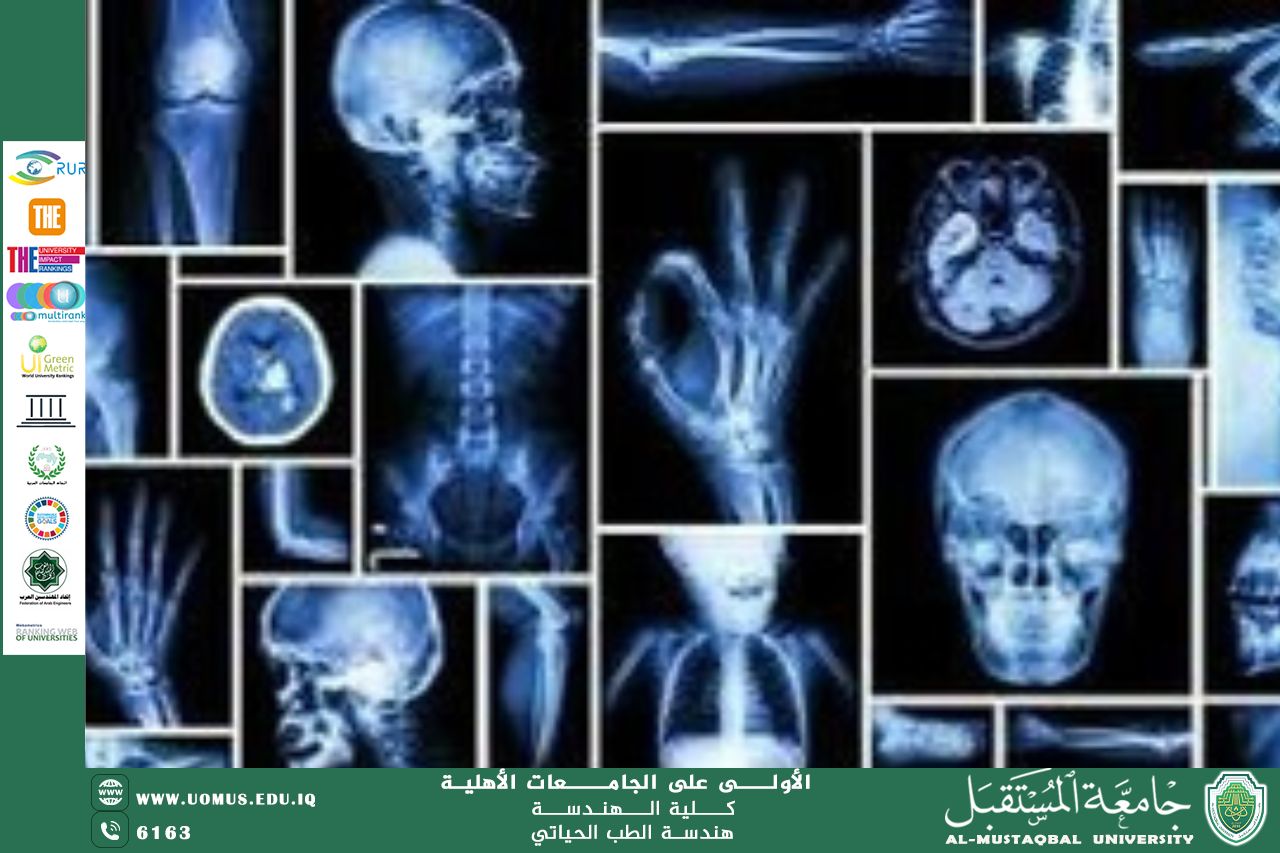

An article titled "Challenges in Developing Medical Imaging Technologies" by Engineer Baraa Mahdi Saleh
Medical imaging techniques are fundamental to diagnosis and treatment, enabling physicians to visualize internal tissues and organs with high precision. However, with continuous advancements in this field, several challenges arise that affect image quality, diagnostic accuracy, and patient safety.
One of the most significant challenges is improving image quality while minimizing noise, which can obscure fine details. In some cases, vital signs are weak or obscured by environmental interference, making it difficult to extract accurate information. Developing advanced algorithms to process and clarify images without compromising vital information is a key challenge.
Furthermore, reducing radiation doses is a major challenge in X-ray and computed tomography (CT) imaging. While these techniques are crucial for rapid and accurate diagnosis, repeated radiation exposure can pose health risks. Therefore, researchers are working to develop low-radiation imaging techniques that maintain image quality while minimizing potential harm.
In magnetic resonance imaging (MRI), the long scan time is a significant obstacle that impacts patient comfort and limits the efficiency of examinations in emergency situations. Reducing imaging time requires improving data capture and processing algorithms to be faster, which presents a complex engineering challenge.
The challenges extend beyond the technical aspects to include processing the massive amounts of data generated by these devices. Modern imaging technologies produce enormous quantities of data that require accurate and rapid analysis to extract useful medical information. Therefore, artificial intelligence and machine learning have become crucial tools for improving medical image analysis and guiding diagnostic decisions.
Finally, there are challenges related to the economic cost of these advanced technologies. As medical devices advance, their price and maintenance costs increase, placing a burden on healthcare institutions in some regions.
Despite these challenges, researchers continue to develop more accurate and safer medical imaging technologies, contributing to improved early disease detection and enhanced quality of healthcare in the future.