
Cyber Risk Management in Educational Institutions
With the rapid digital transformation and the increasing reliance of educational institutions on electronic systems and online learning platforms, cyber risks have become one of the major challenges threatening information security and the continuity of the educational process. Therefore, cyber risk management has emerged as a critical component in ensuring a secure learning environment.
Concept of Cyber Risks in Educational Institutions
Cyber risks refer to threats targeting digital systems, such as cyberattacks, malware, and data breaches. Educational institutions are particularly vulnerable due to the sensitive data they store, including student and staff information.
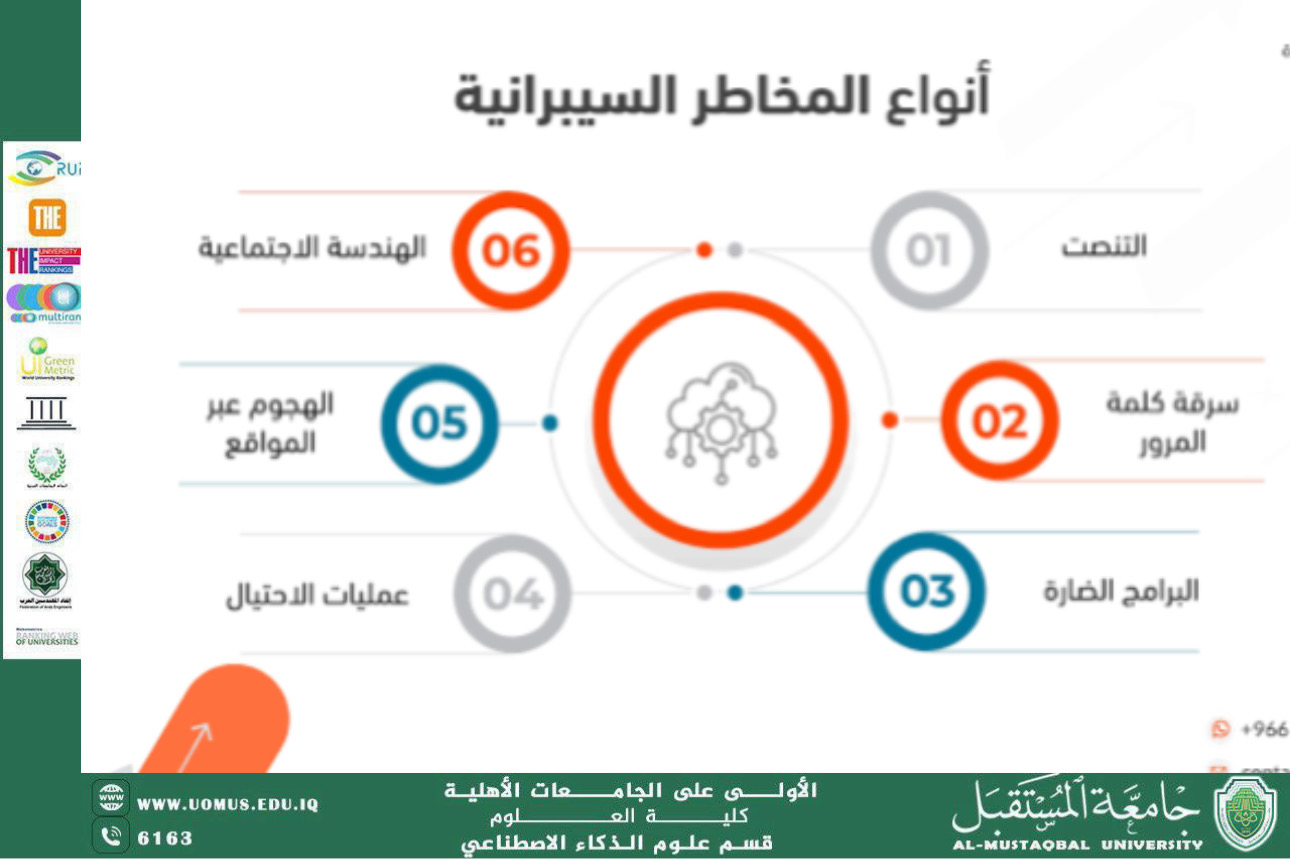
Types of Cyber Risks
Cyber risks in educational institutions include:
1. Cyberattacks such as phishing attacks and malware.
2. Database breaches and theft of personal and academic data.
3. Weak security systems due to insufficient updates or poor infrastructure.
4. Human errors caused by a lack of cybersecurity awareness.
Cyber Risk Management in Educational Institutions
Effective cyber risk management involves several key practices:
1. Risk identification through assessment of systems and sensitive data.
2. Risk analysis to evaluate the likelihood and impact of potential threats.
3. Implementation of security controls such as firewalls and intrusion detection systems.
4. Awareness and training programs for students and staff.
5. Incident response plans to ensure rapid and effective reaction to cyber incidents.