"A Scientific Article by Assistant Lecturer Zainab Nazim Aziz Entitled “Romanesco
Romanesco is a distinctive vegetable in both shape and nutritional value. It belongs to the cruciferous family (Brassicaceae) and is considered a hybrid between cauliflower and broccoli in terms of flavor and nutritional composition.
Botanical Description
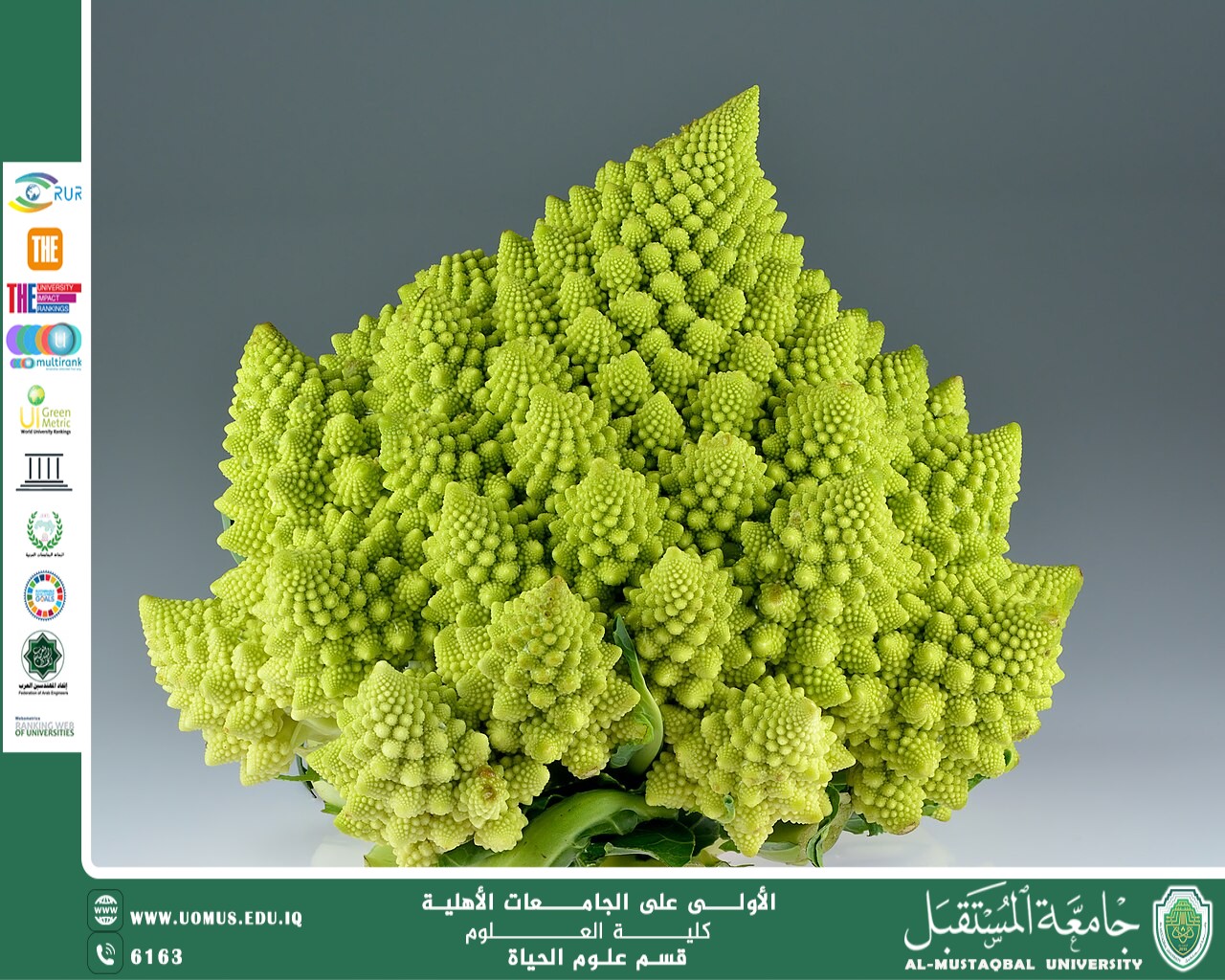
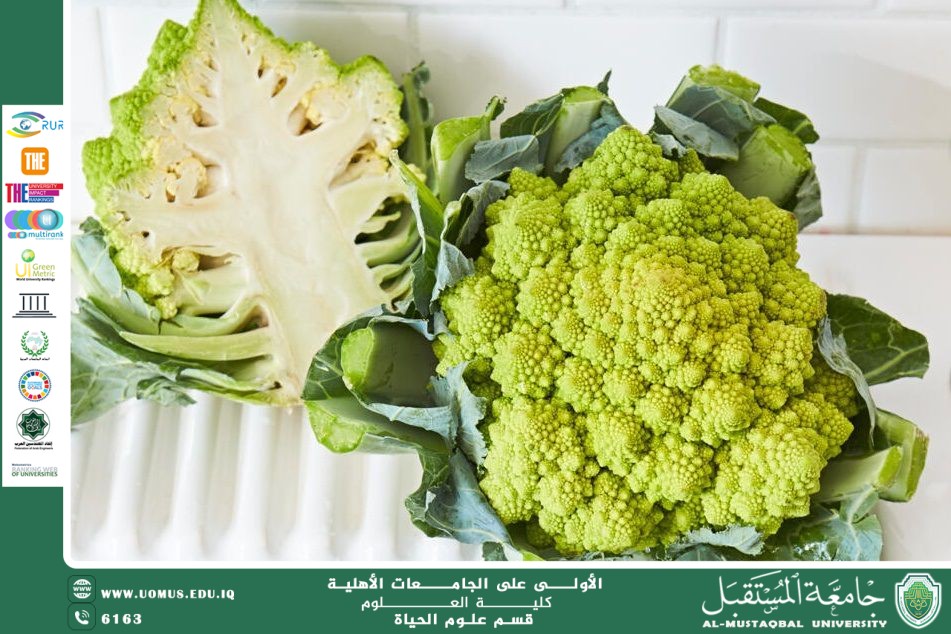
Romanesco is characterized by its light green color and unique geometric appearance. Its florets are composed of repeated cone-shaped units arranged in a precise spiral pattern, representing a natural example of what is known as fractals. The head consists of compact flower buds surrounded by thick green leaves that protect it during growth.
Nutritional Value
Romanesco is rich in essential nutrients, including:
Vitamins: C, K, A, and B6
Minerals: potassium, magnesium, and iron
Dietary fiber
Antioxidant compounds
It is also low in calories, making it suitable for healthy and balanced diets.
Health Benefits
Supports the immune system due to its high vitamin C content
Contributes to improving digestive health
Promotes cardiovascular health
Helps prevent certain chronic diseases
Assists in regulating blood sugar levels
Cultivation and Environmental Requirements
Romanesco grows best in mild to relatively cool climates and requires:
Fertile, well-drained soil
Moderate temperatures (15–20°C)
Regular irrigation without excess
Adequate exposure to sunlight
The growth period typically ranges from 75 to 100 days until harvest.
Uses
Romanesco is used in a variety of dishes, such as:
Boiling or steaming
Light frying
Adding to salads and pasta
Preparing with different sauces
It has a mild flavor similar to cauliflower, with a lighter and more delicate taste.
Conclusion
Romanesco is a unique edible plant that combines natural beauty with high nutritional value, making it an excellent choice for cultivation and consumption, whether in healthy cuisine or as a remarkable example of nature’s creativity.
Al-Mustaqbal University is the first university in Iraq.
الهدف الرابع : التعليم الجيد