Virtual Reality Technologies in University Education
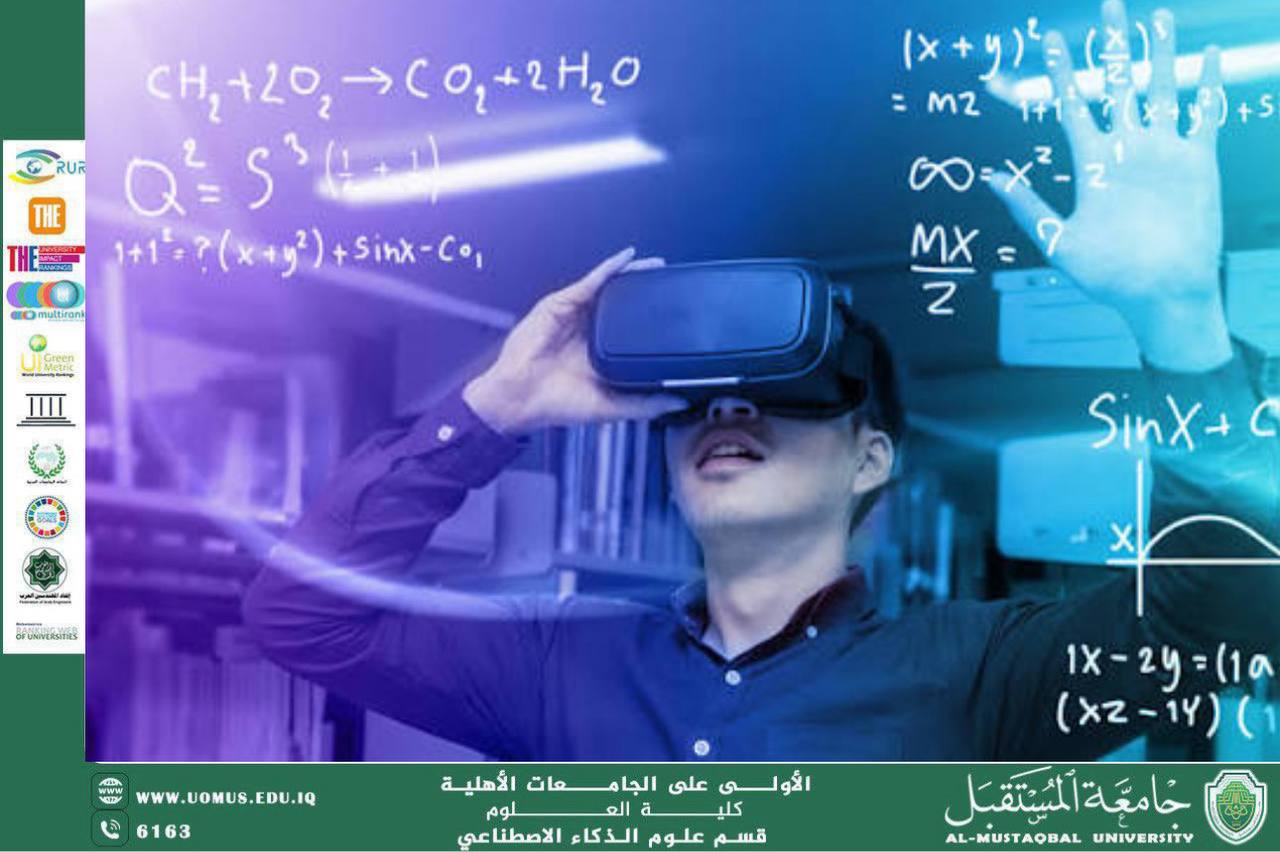
University education has witnessed significant advancement with the integration of Virtual Reality (VR) technologies, which have become a modern tool for enhancing educational quality and improving learning methods. These technologies create immersive and interactive virtual environments that allow students to engage with educational content in a way that closely simulates real-life experiences.
VR technologies help enhance understanding and comprehension, especially in scientific, medical, and engineering disciplines, where students can conduct virtual experiments, explore three-dimensional models, and practice practical skills without any physical risks. Additionally, VR contributes to reducing costs associated with traditional laboratories.
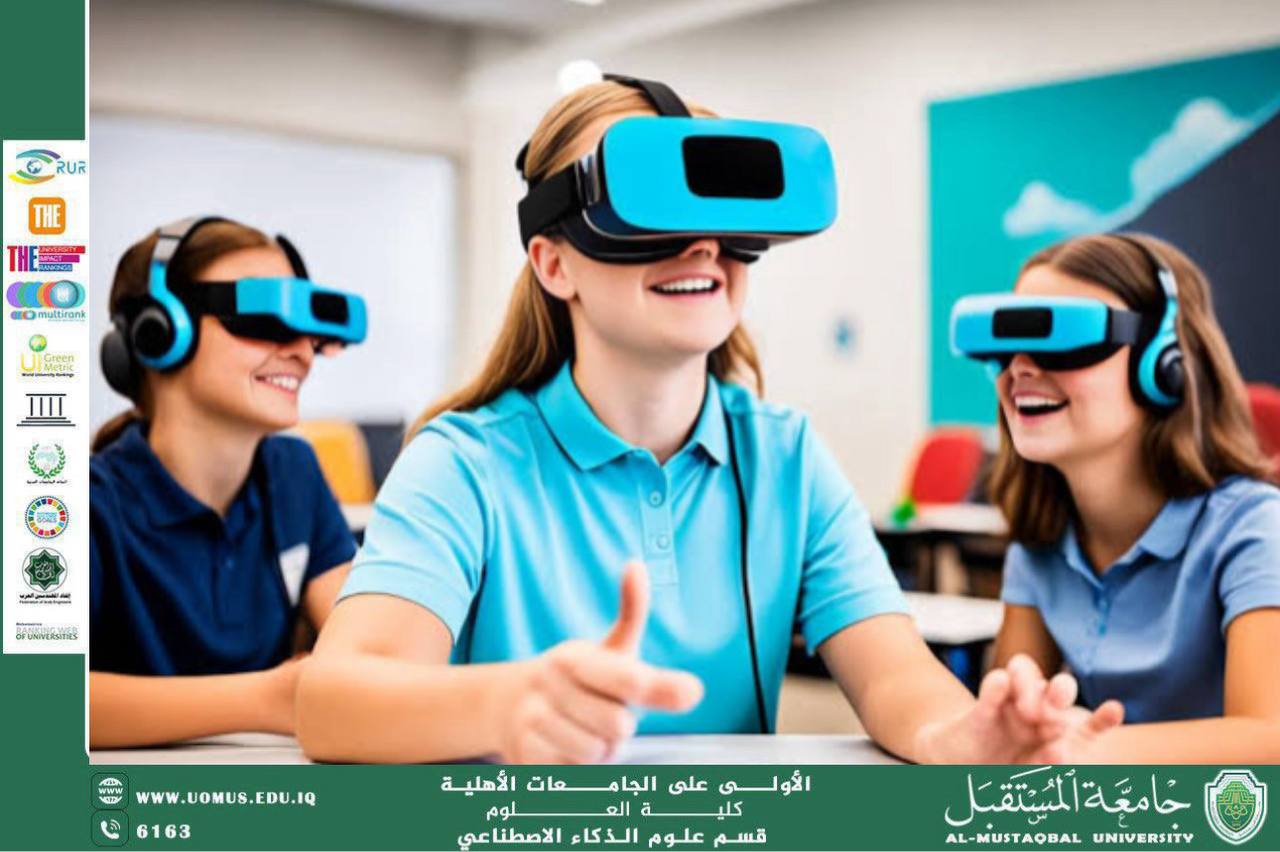
Another key advantage of virtual reality is its role in increasing student engagement and participation, transforming students from passive recipients into active participants in the learning process. It also promotes self-directed learning and encourages exploration and experimentation.
Furthermore, VR technologies provide new opportunities for distance learning by simulating virtual classrooms and laboratories, offering an educational experience comparable to face-to-face learning. Despite its many benefits, VR implementation faces challenges related to equipment costs, the need for appropriate technical infrastructure, and training academic staff to use these technologies effectively.
In conclusion, virtual reality technologies represent a promising educational solution in university education, playing a significant role in curriculum development, skill enhancement, and the creation of a modern learning environment aligned with technological advancements.