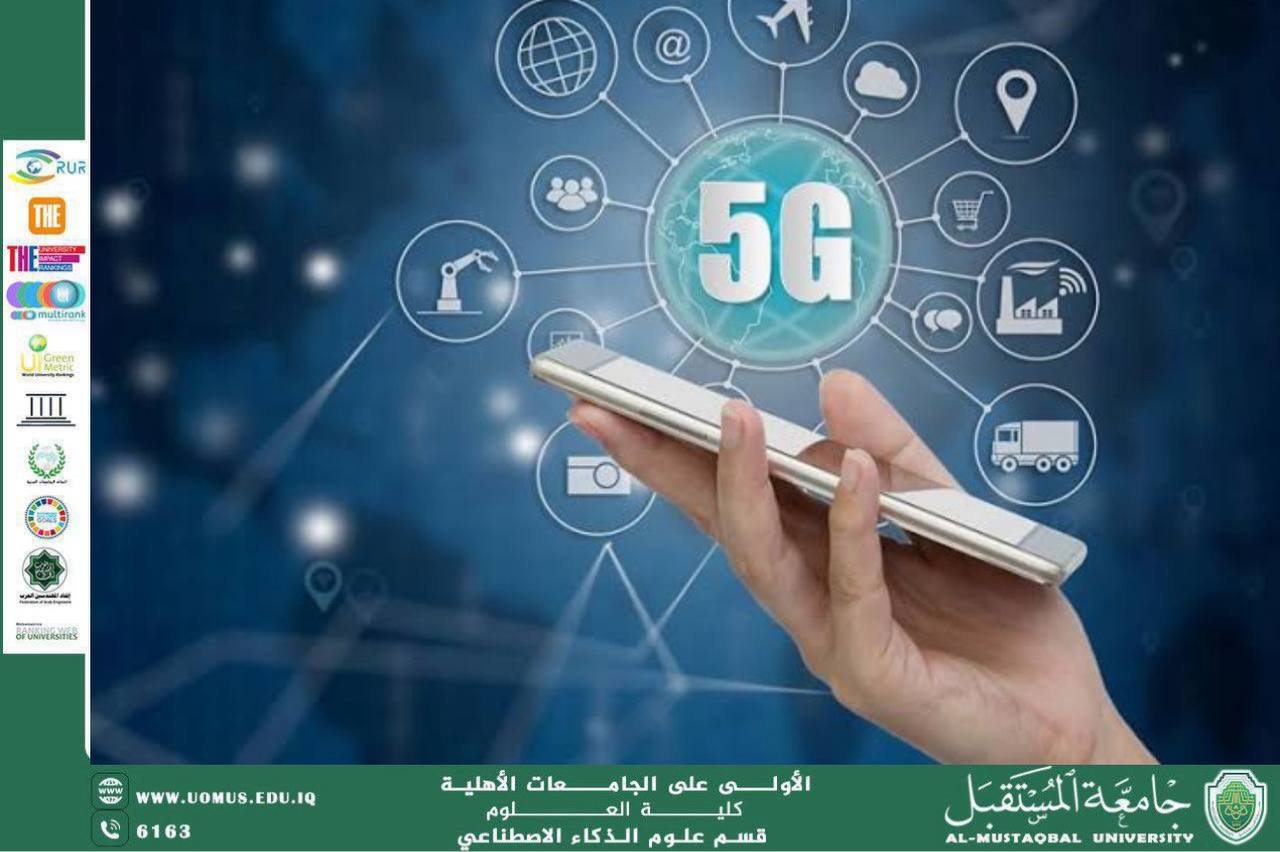

Modern Technologies in Fifth Generation (5G) Networks
The telecommunications sector has witnessed significant advancement with the emergence of Fifth Generation (5G) networks, which represent a major leap in wireless communication compared to previous generations. These networks are characterized by ultra-high data speeds, low latency, and the ability to connect a massive number of devices simultaneously, opening new horizons for advanced technological applications.
5G networks rely on a set of modern technologies, most notably millimeter wave (mmWave) technology, which enables extremely fast data transmission, and Massive Multiple-Input Multiple-Output (Massive MIMO) systems that enhance network efficiency and capacity. Additionally, network slicing is used to create virtual networks tailored to different requirements in terms of speed, latency, and quality of service.
5G plays a vital role in supporting Internet of Things (IoT), artificial intelligence, virtual and augmented reality, as well as enabling smart cities, autonomous vehicles, and remote healthcare applications. These capabilities contribute to improving digital services and fostering innovation across various sectors.
Despite its numerous advantages, 5G networks face challenges related to infrastructure costs, extensive coverage requirements, and network security concerns. Therefore, deploying 5G requires advanced technical planning and collaboration among stakeholders.
In conclusion, 5G networks represent the future of modern communications, offering advanced technological capabilities that support digital transformation and contribute to societal and economic development.