An article titled "The Role of Biomedical Engineering in Developing Early Diagnostic Systems for Chronic Diseases" by Lecturer M.M. Zainab Sattar Jabbar
Chronic diseases are the leading cause of death worldwide, with World Health Organization statistics indicating that they account for approximately 71% of global deaths annually. These diseases include diabetes, heart disease, and cancer.
Chronic diseases are responsible for approximately 71% of deaths annually.
Chronic diseases are responsible for approximately 71% of deaths annually.
These diseases include cardiovascular diseases, cancer, chronic respiratory diseases, and kidney diseases, all of which develop slowly over years before clear symptoms appear.
The main challenge is that most chronic diseases do not show symptoms in their early stages, leading to delayed diagnosis, difficult treatment, and high costs. This is where biomedical engineering comes in as an innovative solution, contributing to the development of advanced diagnostic systems capable of detecting early biomarkers of diseases before they worsen.
The Concept of Biomedical Engineering 2
Definition and Scope
2.1
Biomedical engineering is an engineering discipline that applies engineering principles and techniques to biological and medical problems. It combines engineering knowledge in electronics, mechanics, chemistry, and software with a deep understanding of human biological and physiological systems. Multidisciplinary Biomedical Engineering
The figure above illustrates the major disciplines of biomedical engineering and how they are integrated into a comprehensive approach to early disease detection.
These disciplines include medical imaging, biomaterials, medical devices, tissue engineering, biosignals, clinical engineering, bioinformatics, and rehabilitation engineering.
Each discipline contributes uniquely to the development of early diagnostic technologies.
Key Objectives
2.2
Developing advanced medical devices and systems for diagnosis and treatment
• Designing non-invasive or minimally invasive technologies for monitoring and diagnosis
• Improving the accuracy and speed of medical diagnosis
• Reducing healthcare costs through prevention and early diagnosis
• Early diagnostic systems for chronic diseases.
3
The Concept of Early Diagnosis
3.1
Early diagnosis means detecting disease in its early stages before the appearance of obvious clinical symptoms. This approach relies on:
Monitoring vital signs, molecular changes, and subtle functional disturbances that precede the full-blown disease.
The earlier the disease is detected, the greater the chances of successful treatment and the better the patient's quality of life. The figure above illustrates the basic structure of an early diagnosis system, which consists of three main layers: a data acquisition layer that gathers information from multiple sources (sensors, imaging, laboratory tests, wearable devices, and electronic health records); a processing and analysis layer that uses artificial intelligence and signal processing to identify patterns; and finally, a decision support layer that provides risk assessment, clinical alerts, and treatment plans. This includes a continuous feedback loop to improve system accuracy.
Components of Early Diagnostic Systems
3.2
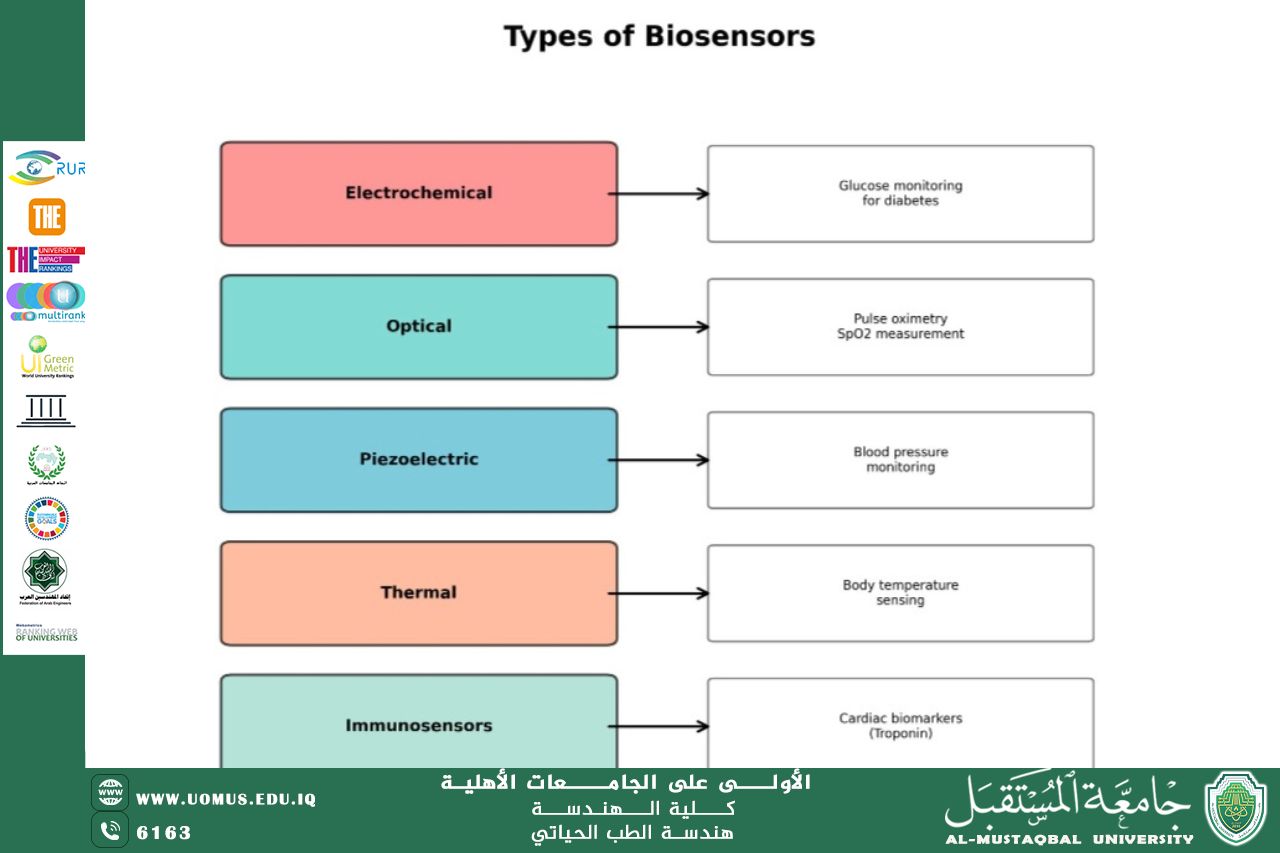
A. Sensors and Wearable Devices: These continuously monitor vital signs such as heart rate, blood pressure, blood glucose levels, and respiratory rate. They are characterized by their ability to collect data in real time without invasive procedures.
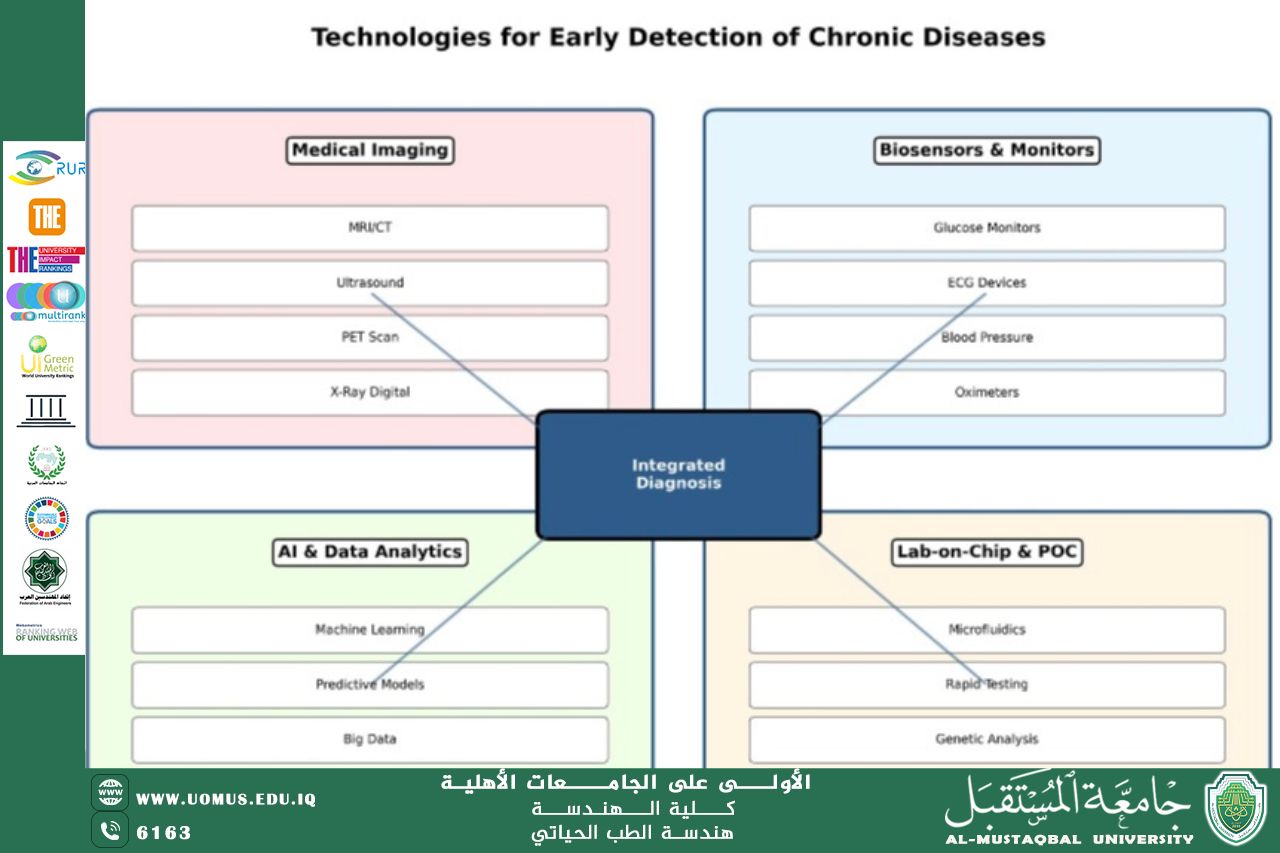
B. Advanced Medical Imaging Systems: These include magnetic resonance imaging (MRI), computed tomography (CT), positron emission tomography (PET), and high-resolution ultrasound. These technologies provide detailed images of internal organs and help detect subtle structural changes. Artificial Intelligence and Machine Learning: Advanced algorithms are used to analyze massive amounts of medical data, recognize patterns invisible to the human eye, and predict disease progression. The accuracy of these systems improves continuously as more data becomes available. Genetic and Molecular Analysis: This helps identify genetic predispositions to chronic diseases and detect early molecular biomarkers. Techniques such as whole-genome sequencing and proteomics provide valuable information about individual health risks. Modern techniques in early diagnosis. 4. Main Technologies for Early Detection of Chronic Diseases: Figure 3
The figure above shows four main categories of technologies used in early diagnosis: Medical Imaging, including devices such as MRI, CT, ultrasound, and digital X-ray; Monitoring, including glucose meters, ECG devices, blood pressure monitors, and pulse oximeters; Artificial Intelligence and Data Analysis, including machine learning, predictive models, big data, and deep learning; and finally, Lab-on-a-Chip and Point-of-Care technologies, including microfluidics, rapid assays, genetic analysis, and protein assays.
All these technologies are integrated to provide a comprehensive diagnostic system.
4.1 Continuous Monitoring Systems
Wearable devices and implanted systems provide continuous monitoring of physiological parameters. For example, continuous glucose monitoring measures blood sugar levels every few minutes, helping to detect abnormal patterns before they develop into serious complications. Predictive Analysis with Artificial Intelligence 4.2
Deep learning algorithms are used to analyze complex medical data and identify early signs of disease.
For example, AI systems can analyze chest X-ray images and detect early signs of cancer with an accuracy that sometimes surpasses that of human physicians.
4.3
Lab-on-a-Chip Technologies
These technologies enable complex tests to be performed using very small samples of blood or other body fluids, providing fast and accurate results at the point of care. This reduces the need for central laboratories and accelerates the diagnostic process.