
E-Governance in Higher Education
E-governance is one of the most important modern developments in higher education, aiming to improve the management of universities and colleges through digital technology. E-governance provides effective tools to organize administrative and academic processes, including electronic student registration, management of academic records, and automated lecture scheduling.
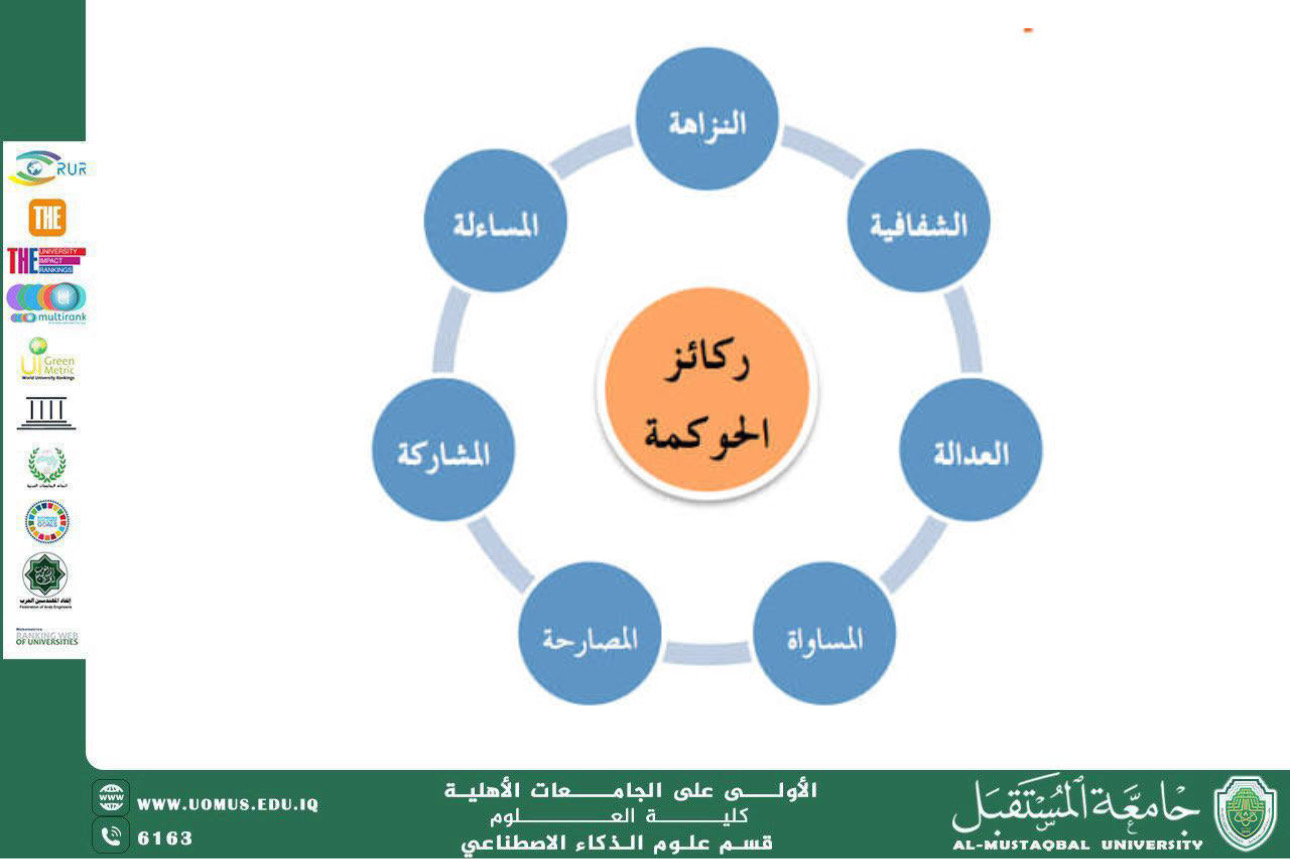
E-governance enhances transparency and accountability within educational institutions, allowing precise and efficient monitoring of administrative procedures and decisions. It also helps reduce bureaucracy and speeds up administrative transactions, saving time and effort for both students and faculty members.
E-governance also provides an integrated platform for information exchange among all university departments, including students, teachers, and administrators, contributing to improved education quality and data-driven decision-making.
Additionally, e-governance supports scientific research by facilitating access to digital databases, academic resources, and electronic libraries, as well as monitoring the progress of research projects.
In summary, e-governance represents a crucial step toward improving higher education management, increasing efficiency, enhancing transparency, and providing a more interactive and convenient learning experience for all stakeholders.