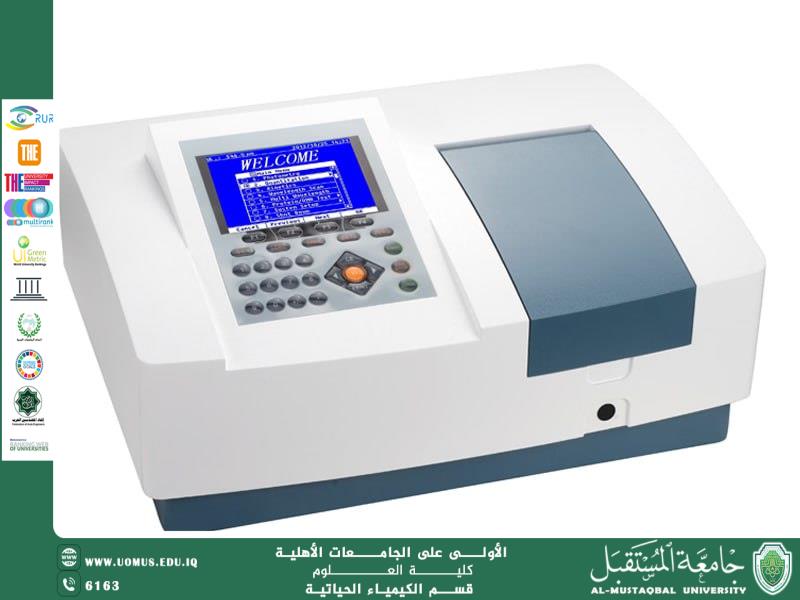

Smart Laboratory Education: The Role of Fuji Devices and Mini-Spectrophotometers in Improving Learning Outcomes
University education has witnessed rapid development in its methods and technologies, particularly in applied scientific disciplines that rely heavily on laboratory work, such as the Department of Biochemistry. Smart laboratory education is considered one of the modern approaches that contributes to enhancing educational quality and improving learning outcomes through the integration of advanced analytical instruments.
The use of Fuji devices and Mini-Spectrophotometers in teaching laboratories represents a qualitative shift in practical instruction, as these instruments provide high accuracy, rapid results, ease of operation, and reduced experimental errors. This enables students to effectively link theoretical concepts with hands-on applications, thereby promoting deeper understanding of scientific principles.
Impact of Modern Instruments on Learning Outcomes (CLOs)
Integrating Fuji devices and Mini-Spectrophotometers into laboratory teaching contributes to achieving several intended learning outcomes, including:
1. Developing students’ practical skills in operating modern analytical instruments in accordance with approved scientific standards.
2. Enhancing analytical and interpretative skills through working with real experimental data and accurate results.
3. Promoting critical thinking and problem-solving skills by comparing and scientifically discussing experimental outcomes.
4. Ensuring adherence to laboratory safety and quality standards during practical sessions.
5. Preparing students for the labor market by training them on technologies commonly used in research, medical, and industrial laboratories.
Role of Modern Instruments in Supporting Quality Assurance and Academic Accreditation
The adoption of advanced analytical instruments aligns with quality assurance and academic accreditation requirements, as it contributes to:
* Improving the efficiency of laboratory teaching and learning processes.
* Enhancing students’ practical performance and competencies.
* Standardizing laboratory procedures and minimizing experimental errors.
* Increasing the reliability of practical learning outcomes.
Moreover, this approach supports the institution’s strategy to modernize laboratory infrastructure and implement technology-based teaching methods.
The integration of Fuji devices and Mini-Spectrophotometers in the laboratories of the Department of Biochemistry represents a strategic step toward implementing smart laboratory education. This integration has a clear impact on improving educational quality, achieving learning outcomes, and supporting quality assurance and academic accreditation standards, in line with contemporary scientific and technological advancements.
Al-Mustaqbal University
Ranked First Among Private Universities in Iraq