

Alopecia Areata
Alopecia areata is a relatively common autoimmune disease characterized by non-scarring hair loss, most often affecting the scalp, and sometimes extending to the eyebrows, eyelashes, or all body hair. The disease has an unpredictable course, with sudden hair loss that may regrow spontaneously or following treatment. This article aims to review the scientific aspects of alopecia areata, including its definition, epidemiology, pathophysiology, clinical features, diagnosis, and treatment.
Introduction
Hair is an important element of physical appearance and personal identity, and its loss can lead to significant psychological and social impact. Alopecia areata is one of the most common causes of non-scarring hair loss, affecting both males and females of all ages, including children.
Definition
Alopecia areata is an autoimmune disorder in which the immune system attacks hair follicles, leading to hair growth cessation and hair loss. The disease does not cause permanent follicle destruction, so hair regrowth remains possible.
Epidemiology
• The global prevalence of alopecia areata is approximately 1–2% of the population.
• It can occur at any age, but most cases begin before the age of 40.
• There is no significant difference in prevalence between males and females.
• It may be associated with a family history, indicating a genetic predisposition.
Pathophysiology
Alopecia areata is believed to result from a dysfunction of the cellular immune system, where T lymphocytes attack hair follicles, particularly during the anagen (growth) phase. Genetic and environmental factors, such as psychological stress and infections, may trigger the disease in genetically susceptible individuals.
Clinical Features
The severity and presentation of alopecia areata vary among patients and may include:
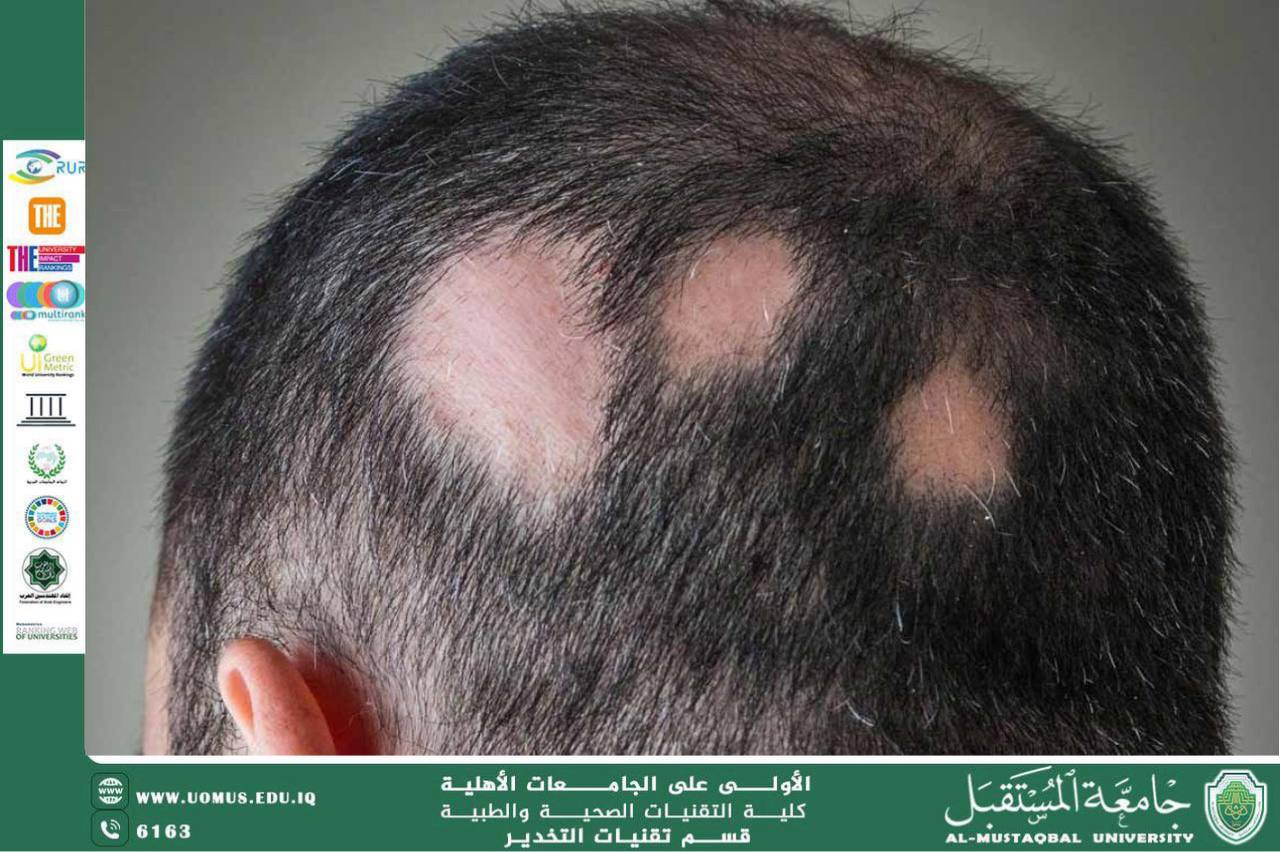
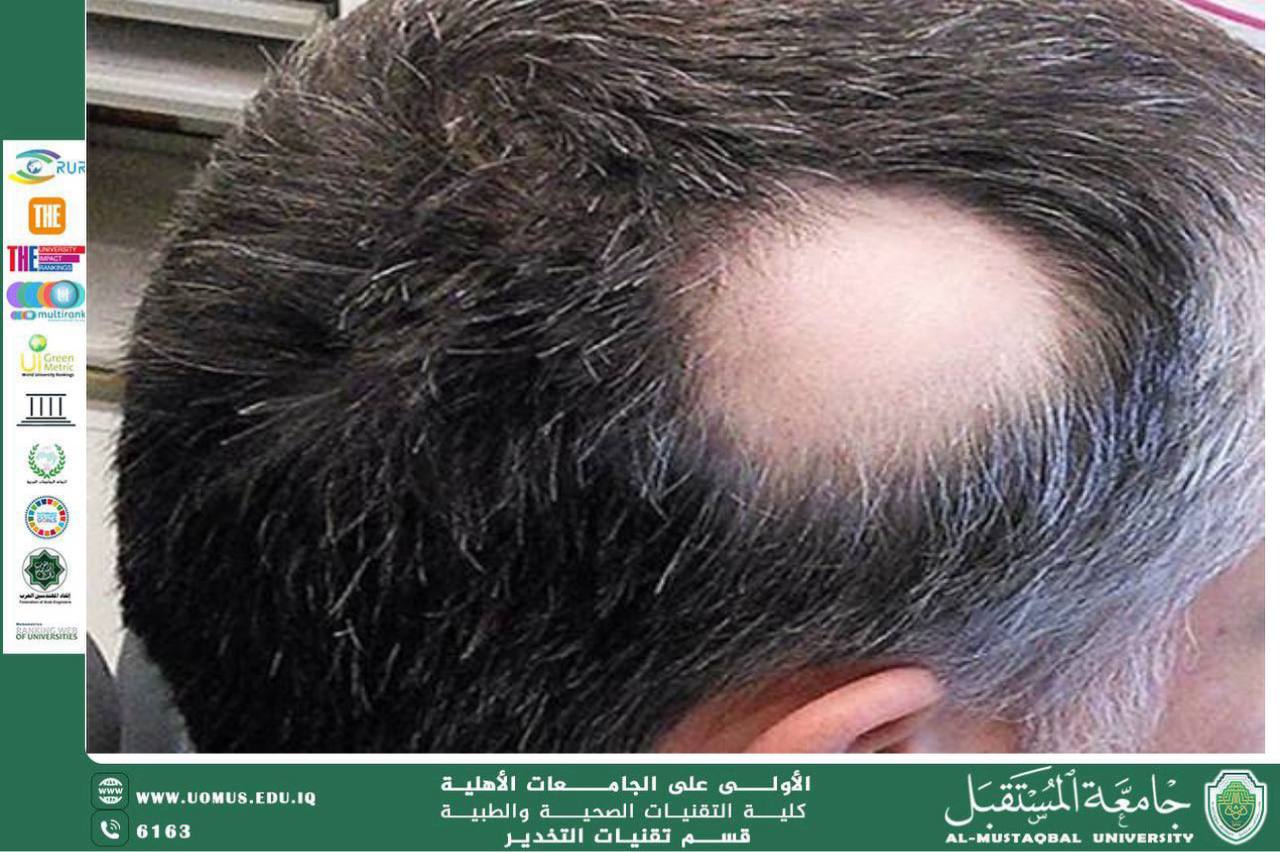
• Patchy alopecia: Circular or oval bald patches on the scalp.
• Total alopecia: Complete loss of scalp hair.
• Universal alopecia: Loss of all scalp and body hair.
• Nail changes, such as pitting or roughness, may also be observed.
Diagnosis
Diagnosis is primarily based on:
• Clinical examination and the pattern of hair loss.
• Hair pull test.
• In some cases, dermoscopy or scalp biopsy may be performed to confirm the diagnosis and rule out other conditions.
Treatment
There is currently no definitive cure for alopecia areata, but several therapeutic options aim to stimulate hair growth and reduce disease activity, including:
• Topical or intralesional corticosteroids.
• Topical immunotherapy such as diphenylcyclopropenone (DPCP).
• Topical minoxidil as an adjunct therapy.
• Systemic treatments for severe cases, such as oral corticosteroids or immunosuppressants.
• In recent years, JAK inhibitors have shown promising results in some patients.
Psychological and Social Impact
Alopecia areata may lead to anxiety, depression, and low self-esteem, particularly in children and women. Psychological support and health education are therefore recommended as an essential part of the treatment plan.
Conclusion
Alopecia areata is a common autoimmune disorder characterized by non-scarring hair loss and an unpredictable course. Although there is no definitive cure, increasing understanding of its pathophysiology has led to the development of new and improved treatment options. Early diagnosis, regular follow-up, and psychological support remain key elements in improving patients’ quality of life.
Ahmed Neama
Al-Mustaqbal University
The First University in Iraq.