
"Intellectual Pollution and Its Impact on the Environment"
Prepared by: Prof. Dr. Thanaa Bahaa El-Din Abdullah
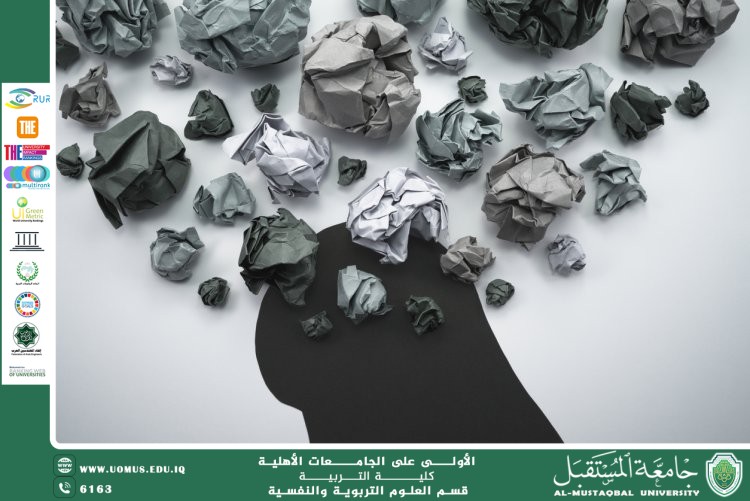
Intellectual pollution is the spread of negative or harmful ideas, cultures, and concepts that weaken human awareness, distort moral and social values, and hinder civilizational progress. Examples include media that promotes excessive consumption and ideas that diminish the value of environmental conservation.
Forms of intellectual pollution related to the environment include:
1. Distortion of environmental concepts: such as spreading misinformation about the climate crisis (e.g., climate change denial) and portraying environmental conservation as a luxury rather than a necessity.
2. Consumer culture: such as promoting the idea that "buying equals happiness," leading to resource depletion and waste accumulation, as well as advertisements that encourage the use of environmentally unfriendly products.
3. Detachment from nature: such as the culture of isolation in modern cities, the loss of connection with the natural environment, and the perception that natural resources are solely for human use without limits.
We ask: How does intellectual pollution affect the environment? 1. Direct impact: such as increased irresponsible consumption (like fast fashion, which generates millions of tons of waste) and neglect of environmental issues due to individuals being preoccupied with superficial entertainment culture.
2. Indirect impact: such as declining public support for environmental policies due to skepticism about their importance and a lack of awareness about the importance of individual participation (such as recycling or energy conservation).
Let's explore the causes of the spread of environmental intellectual pollution:
- Irresponsible media: disseminating content that marginalizes environmental issues.
- Weak educational systems: failing to integrate sustainability concepts into curricula.
- Cultural globalization: imposing cultures that prioritize material values over environmental values.
- Greedy economic policies: encouraging companies to pursue quick profits without considering their environmental footprint.
So, what are the solutions to combat environmental intellectual pollution?
1. Strengthening environmental education: such as integrating sustainability concepts into school curricula and media, and encouraging community dialogues about the ethics of interacting with nature.
2. Reforming media discourse: such as banning misleading advertisements that encourage excessive consumption and producing films and series that highlight the importance of the environment.
3. Empowering individual initiatives: such as encouraging projects that connect culture and the environment (like recycled art), and sharing local success stories in resource conservation.
4. Smart legislation: such as imposing restrictions on environmentally harmful advertising and supporting institutions that promote environmental arts and sciences. (Clean thinking, clean environment).
It is clear from the above that the relationship between thought and the environment is reciprocal; that is, intellectual pollution destroys the environment, and a damaged environment produces unhealthy societies. Cleansing minds of harmful ideas is the first step to saving the planet.
The University of the ِAL_Mustaqbal… where knowledge is built and hope is forged.