Beyond the Socket: The Revolution of Osseointegration and Sensory Feedback
The greatest dilemma in prosthetic engineering has rarely been the design of the limb itself, but rather its interface with the human body. The traditional reliance on a "socket" is akin to wearing a tight shoe all day; it leads to skin issues, perspiration, and volume fluctuation in the residual limb, often turning the prosthesis into a burden rather than an aid. However, the scientific landscape is shifting radically with the advent of Osseointegration.
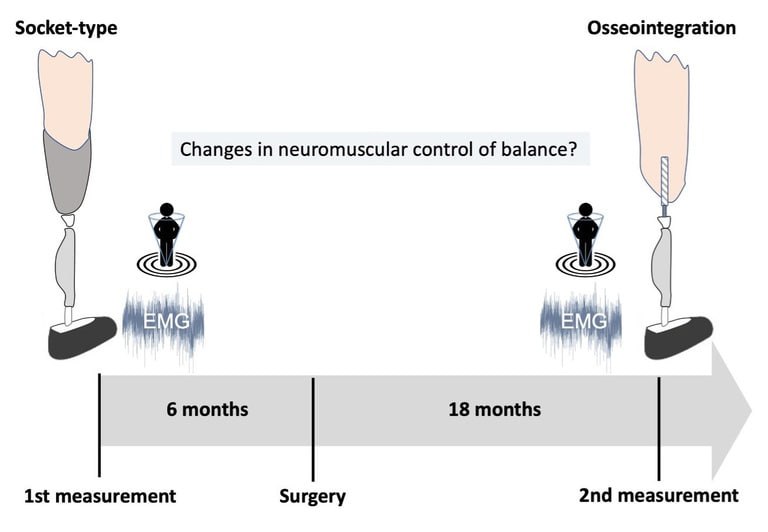
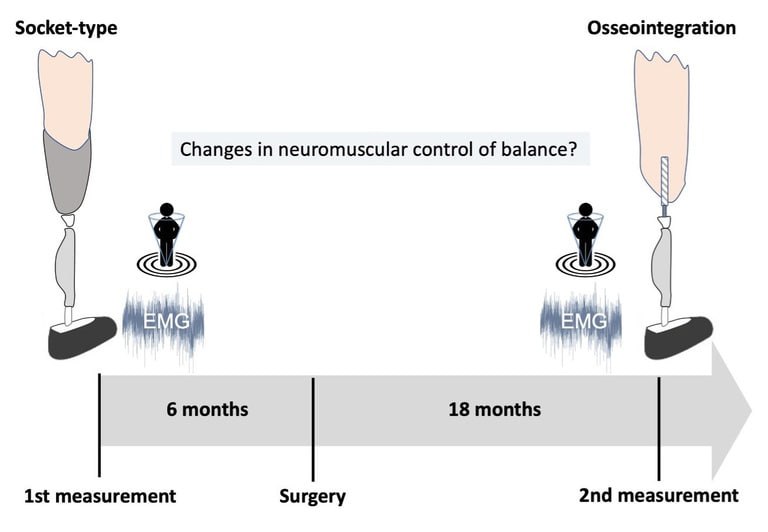
This technique involves anchoring a titanium implant directly into the patient's bone, effectively making the prosthetic limb a physical extension of the skeleton, much like dental implants. By bypassing the traditional socket, this method not only affords the patient a greater range of motion and relief from skin-related pain but also unlocks a fascinating phenomenon known as "Osseoperception."
When a patient walks using an osseointegrated limb, vibrations travel from the ground through the metal implant directly to the natural bone. This allows the brain to sense the type of terrain (concrete, sand, grass) without visual confirmation. Here, we are not merely discussing the restoration of "mobility"; we are witnessing the recovery of a lost sense of "feeling." This advancement represents the pinnacle of bioengineering, where the goal is no longer just to replace the form of a missing limb, but to integrate the machine until it becomes an inseparable part of human biology.