A scientific article by Lecturer Msc. Sakina Taleb entitled The Psychology of Digital Addiction: How do screens manipulate the dopamine hormone?
1. Introduction: The Hooked Generation
Digital addiction isn’t an accident; it is a result of "Persuasive Design." Tech giants employ neuroscientists and psychologists to create interfaces that maximize "time spent" by tapping into our most primal biological urges.
2. The Dopamine Loop
Dopamine is often called the "motivation molecule." It thrives on novelty and anticipation. Social media platforms exploit this through:
Intermittent Reinforcement: Similar to a slot machine, the "Infinite Scroll" provides unpredictable rewards. You don't know if the next post will be a funny meme or a boring ad. This uncertainty triggers a massive dopamine surge every time you refresh your feed.
Social Validation: "Likes" and "Comments" act as digital symbols of social status. Our brains evolved to crave social acceptance for survival, so every notification feels like a biological win.
3. The "Cravings" and Withdrawal
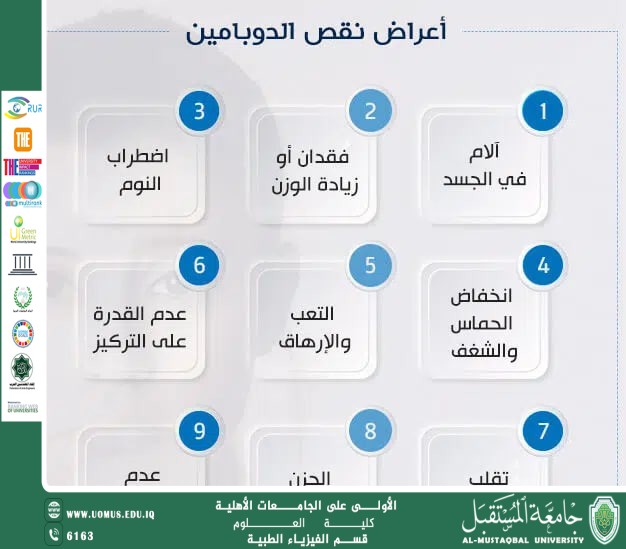
Over time, the brain develops a tolerance to high dopamine levels. This leads to "Downregulation," where everyday activities (like reading a book or walking in nature) no longer feel stimulating. When a user tries to disconnect, they often experience "Phantom Vibration Syndrome" or genuine anxiety—symptoms of digital withdrawal.
4. Cognitive Impact
Digital addiction reduces our "Attentional Control." Constant context-switching (jumping from TikTok to Instagram to Email) trains the brain to have a shorter attention span, making it difficult to engage in long-term goals or critical thinking.
"AL_mustaqbal University is the first university in Iraq"