An Analytical Study on the Breeding of the Peregrine Falcon (Falco peregrinus) and the Art of Falconry
Prepared by: Dr. Thamer Karim Khudair
The breeding of birds of prey—particularly the Peregrine Falcon (Falco peregrinus)—is considered one of the heritage-based and scientific practices that require profound knowledge of the biological and behavioral characteristics of this unique raptor. This article aims to present a comprehensive academic analysis of the biological attributes of the Peregrine Falcon, its significance in human heritage, and the methodologies adopted for its training and breeding in accordance with the established principles of falconry. It highlights the extraordinary speed of the Peregrine Falcon, which makes it the fastest living creature on Earth, in addition to the systematic stages of its training, from acclimatization to aerial hunting.
⸻
1. The Peregrine Falcon: Biological and Environmental Characteristics
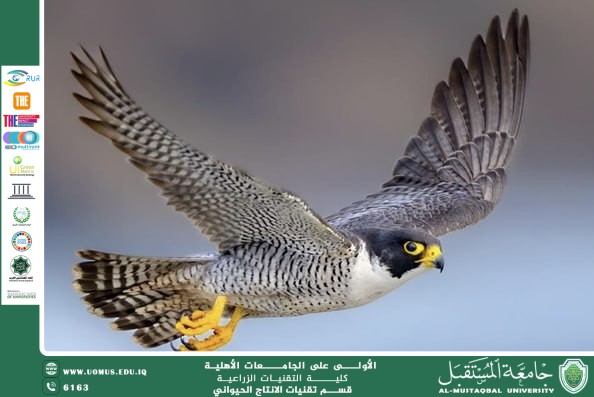
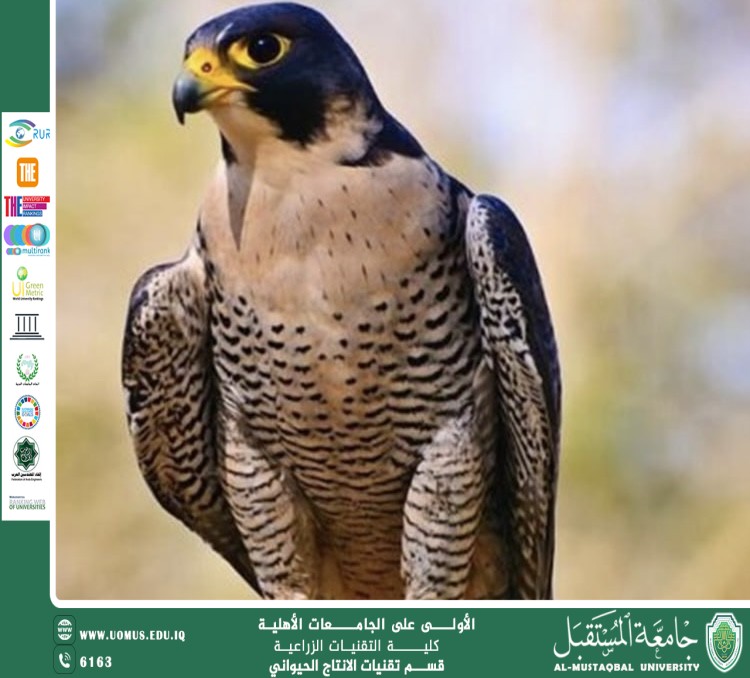
The Peregrine Falcon belongs to the family Falconidae and is a widely distributed bird of prey found across most continents of the world, reflecting its high adaptability to diverse environments. The Peregrine Falcon is distinguished by exceptional biological traits, most notably its remarkable speed, which exceeds 320 kilometers per hour (200 miles per hour) during its hunting stoop, making it the fastest member of the animal kingdom.
The species is also endowed with extremely sharp eyesight, enabling it to detect prey from heights reaching approximately 300 meters. Although the Peregrine Falcon is currently classified as a species of “Least Concern” by the International Union for Conservation of Nature (IUCN), it still faces several environmental challenges, including illegal hunting, habitat destruction, and poisoning. International conservation efforts—such as the Sheikh Zayed Falcon Release Program—have been implemented to protect this species and reintroduce it into its natural habitats.
2. Falconry and Systematic Breeding Practices
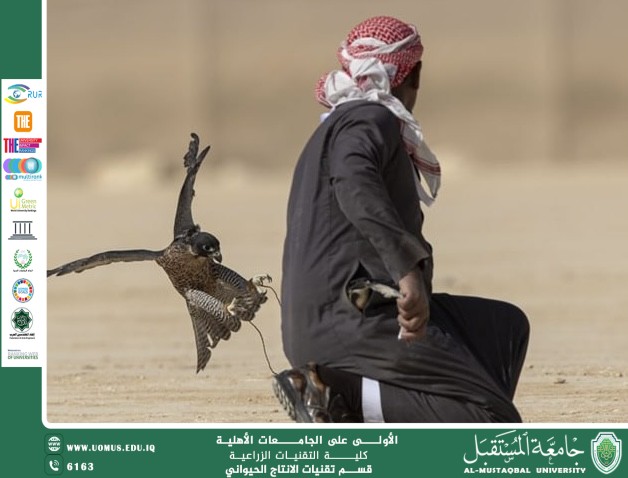
Falconry is regarded as an ancient traditional sport that establishes a unique relationship between humans and birds of prey. This practice requires extensive expertise and a thorough understanding of the falcon’s needs. The breeding and training of the Peregrine Falcon rely on a rigorous, systematic methodology aimed at transforming a wild bird into a reliable hunting partner. A range of specialized tools is employed throughout the training process.
2.1. Fundamental Training Stages
The training of the Peregrine Falcon passes through several sequential stages, beginning with acclimatization and culminating in free aerial hunting:
A. Acclimatization Stage (Tadhil)
This stage is crucial for familiarizing the falcon with its new environment and overcoming the fear barrier between the bird and the trainer. Initially, the falcon is kept indoors with its head covered by a hood, then gradually exposed to human sounds and the surrounding environment. The falcon’s behavior is closely observed; once signs of relaxation appear, the hood is permanently removed, and extended time is spent with the bird to strengthen trust.
B. Hand and Food Training
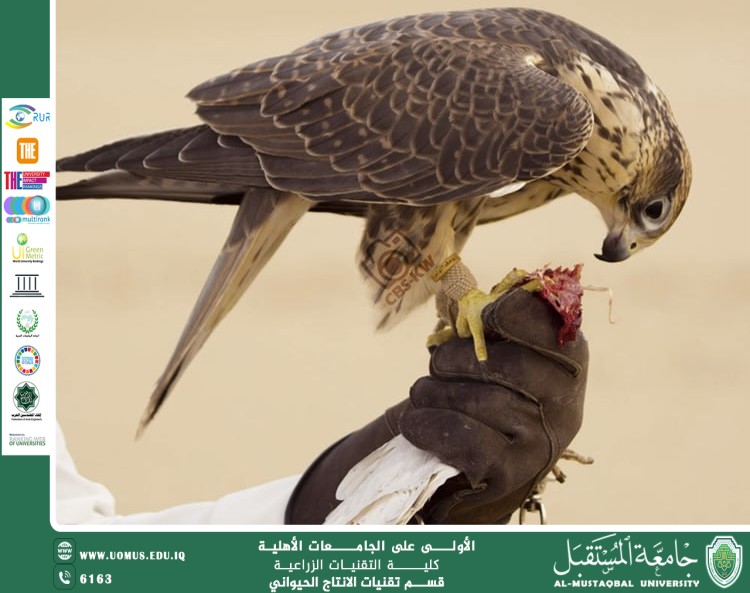
Following acclimatization, the falcon is trained to feed from the trainer’s hand. A small piece of meat is placed on the glove, and the trainer produces a specific auditory signal (such as a click or whistle) before offering the food. The objective is to associate the sound signal with food, while gradually increasing the distance between the falcon and the trainer until the bird becomes accustomed to flying toward the glove.
C. Aerial Hunting Training (Lure Training)
At this stage, a lure is used to train the falcon to strike moving prey. A bait resembling natural prey (such as quail or duck) is employed and moved over increasing distances. The falcon is trained to disengage after catching the prey and return to the trainer’s glove in exchange for a reward, thereby preventing the association of hunting solely with hunger.
D. Outdoor Training and Free Hunting
In advanced stages, the falcon is trained outdoors.
Training initially begins with the falcon tethered to a long line to prevent escape, after which free-flight training is introduced. A radio transmitter is attached to the falcon as a precautionary measure. Modern tools, such as drones, may also be used to increase hunting distances and simulate complex hunting environments.
The breeding of the Peregrine Falcon and the practice of falconry demonstrate a unique intersection between biological science and cultural heritage. Understanding the falcon’s biological characteristics—such as its extraordinary speed and keen eyesight—forms the foundation upon which the training methodology is built. The systematic training process, progressing from acclimatization to free hunting, reflects the complex and well-regulated relationship between humans and falcons, ensuring the continuity of this ancient art while preserving the bird’s well-being and its ability to perform effectively in its natural environment.
Al-Mustaqbal University… the leading private university in Iraq.