The Relationship Between Hypertension and Increased Body Fat Percentage
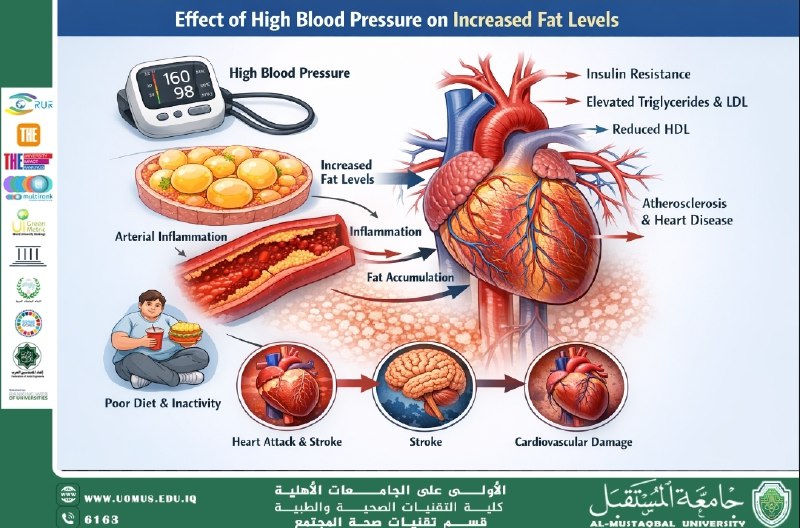
The Relationship Between Hypertension and Increased Body Fat Hypertension contributes to dysfunction in vascular performance, which leads to reduced cellular responsiveness to insulin, resulting in increased fat storage in the body. In addition, elevated blood pressure stimulates chronic low-grade inflammation, which plays a significant role in disrupting lipid metabolism and promoting fat accumulation within body tissues.
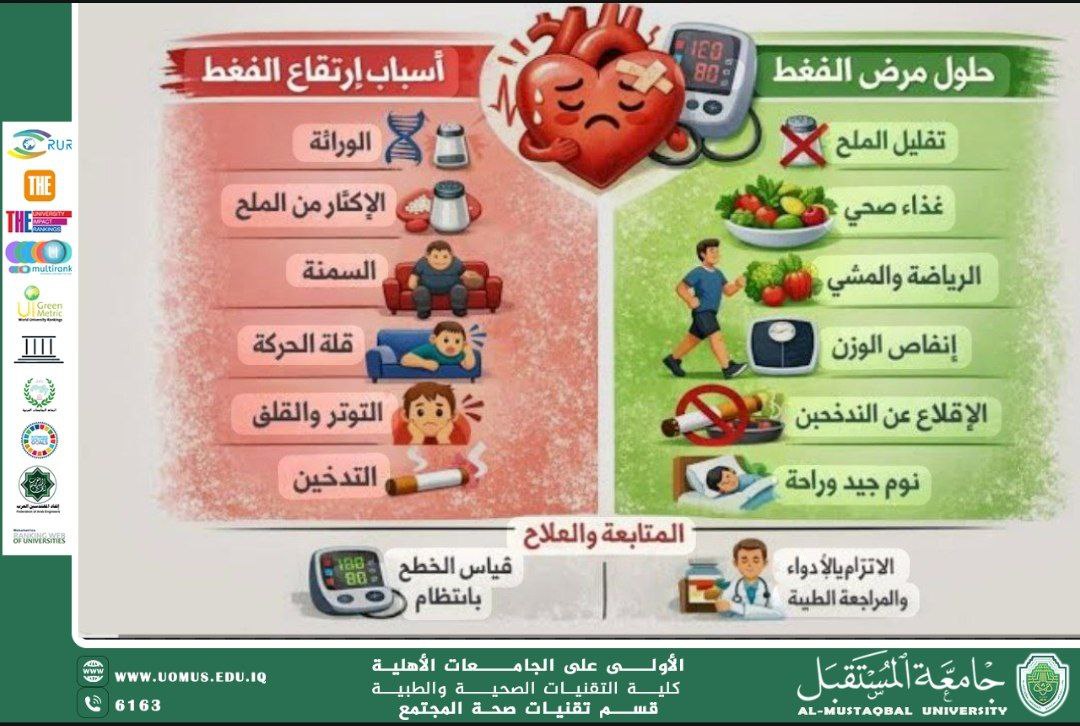
Moreover, hypertension is often associated with physical inactivity and unhealthy dietary patterns rich in saturated fats and sodium. These factors further increase fat accumulation and exacerbate the overall health condition. This interaction creates a vicious cycle in which each factor contributes to the worsening of the other.
Associated Health Effects
The coexistence of hypertension and increased body fat significantly elevates the risk of coronary heart disease, stroke, and atherosclerosis. It also increases the workload on the heart muscle and reduces vascular elasticity, which negatively affects the efficiency of the circulatory system as a whole.
These effects are not limited to physical health alone; they also include decreased physical capacity, increased fatigue, and a higher risk of developing metabolic syndrome, which is considered one of the most serious chronic health conditions in the modern era.
Early Diagnosis and the Importance of Follow-Up
Early diagnosis of hypertension and lipid disorders is a fundamental step in preventing complications. This includes regular blood pressure monitoring, periodic laboratory testing of lipid levels, as well as assessment of lifestyle patterns and genetic factors.
Continuous medical follow-up and adherence to therapeutic recommendations—whether pharmacological or behavioral—play a crucial role in controlling both conditions and improving long-term health outcomes.
Diagnosis of Hypertension and Lipid Disorders
Hypertension is diagnosed when systolic blood pressure readings exceed 140 mmHg or diastolic blood pressure exceeds 90 mmHg on repeated measurements. Lipid disorders are diagnosed through laboratory tests that measure total cholesterol, low-density lipoprotein cholesterol (LDL), high-density lipoprotein cholesterol (HDL), and triglycerides.
Hypertension is often accompanied by elevated triglyceride levels, increased LDL, and decreased HDL, all of which are considered major risk indicators for the development of atherosclerosis.
University of Al-Mustaqbal
The First University in iraq