The Role of Smart Systems in Enhancing the Efficiency of Public and Academic Facilities
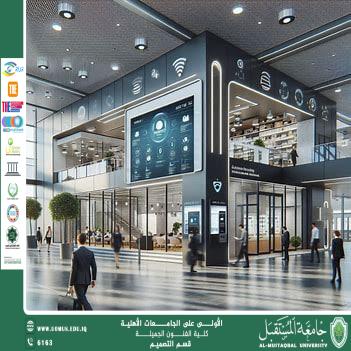
Smart systems represent one of the most significant technological advancements that have contributed to enhancing the performance of public and academic facilities by integrating artificial intelligence, the Internet of Things, and intelligent monitoring and control systems. These systems enable efficient resource management, enhance safety and security, and improve user experiences in universities as well as government and service institutions.
In public facilities, smart systems improve services for citizens by optimizing traffic management, controlling lighting and energy usage, monitoring air and water quality, and increasing security through intelligent surveillance systems and rapid emergency response.
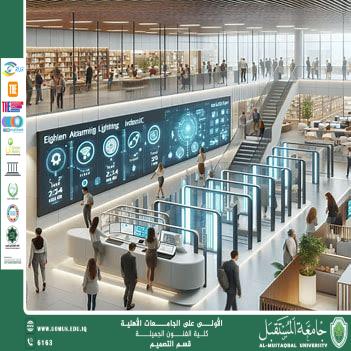
In academic facilities, smart systems enhance the learning environment by efficiently managing classrooms, laboratories, and libraries, monitoring attendance, providing technical support to students and faculty, and facilitating access to digital educational resources.
The significance of these systems lies in their ability to enhance operational efficiency, reduce waste, improve service quality, increase user satisfaction, and support data-driven decision-making through accurate analysis. Therefore, smart systems serve as a strategic tool to improve institutional performance, develop services, and achieve sustainability in both public and academic facilities.
Almustaqbal University, The First University in Iraq.
الهدف الرابع (التعليم الجيد)