Artificial Intelligence and the Prediction of Chemical Reactions By: Dr. Karrar Majid Ubaid
In recent decades, chemistry has witnessed remarkable progress due to advancements in computation and data analysis. Artificial Intelligence (AI) has played a pivotal role in this transformation. One of the most important applications of AI in chemistry is the prediction of chemical reactions, their products, and optimal reaction conditions. Traditionally, this field relied heavily on trial-and-error approaches and accumulated human expertise. Today, intelligent algorithms make it possible to reduce time and cost while improving the accuracy of predictions.
Concept of Chemical Reaction Prediction
Predicting chemical reactions involves the ability to answer fundamental questions before performing an experiment, such as:
Will a reaction occur between these substances or not?
What are the possible reaction products?
What is the reaction mechanism and the most likely pathway?
What are the optimal conditions (temperature, solvent, catalyst)?
These questions represent a major challenge due to the immense complexity of chemical reactions and the large number of influencing variables.
Role of Artificial Intelligence in Chemistry
Artificial intelligence in chemistry relies on analyzing massive datasets extracted from:
Published chemical reaction databases
Scientific research articles and patents
Previous experimental results
Through machine learning and deep learning techniques, intelligent models can identify hidden patterns and relationships that are difficult to detect using traditional methods.
Mechanisms of AI-Based Reaction Prediction
1. Molecular Representation as Digital Data
AI systems convert chemical structures into numerical forms such as:
Chemical descriptors
Molecular fingerprints
Graph-based representations (molecules represented as networks)
2. Model Training
Algorithms are trained using thousands or even millions of known chemical reactions, enabling them to learn the relationships between reactants and products.
3. Prediction and Decision-Making
After training, the model can:
Predict the likelihood of a reaction occurring
Suggest the most probable reaction product
Estimate the expected success rate of the reaction
Applications of Artificial Intelligence in Chemical Reactions
Organic chemistry: Predicting the outcomes of complex organic synthesis reactions.
Pharmaceutical industries: Accelerating drug discovery by proposing efficient synthetic pathways.
Catalytic chemistry: Designing new catalysts with higher efficiency.
Green chemistry: Selecting reactions that consume less energy and are more environmentally friendly.
Advantages of Using Artificial Intelligence
Reducing the number of failed experiments
Saving time and cost
Accelerating scientific research
Supporting researchers in decision-making
Discovering new and unexpected reaction pathways
Challenges and Limitations
Despite its significant benefits, AI in chemistry faces several challenges, including:
The quality and accuracy of training data
The difficulty of interpreting decisions made by some models (the “black box” problem)
The need to integrate theoretical chemical knowledge with intelligent models
Future Perspectives
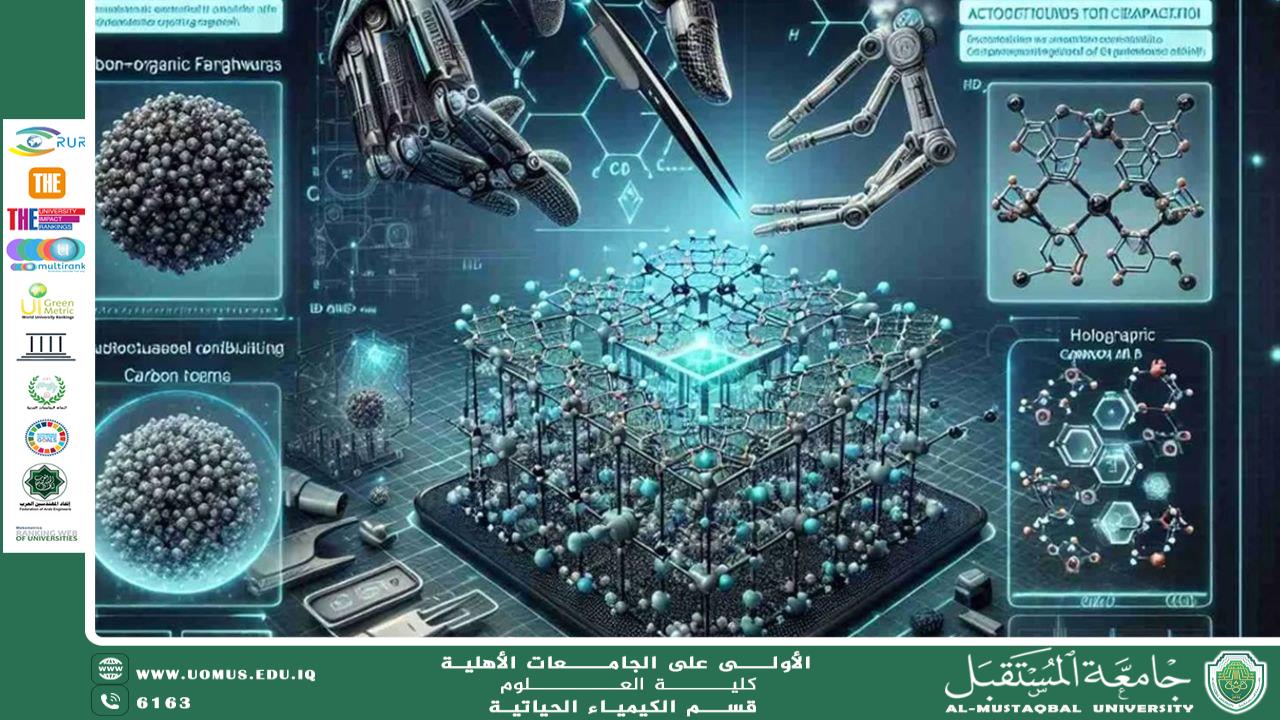
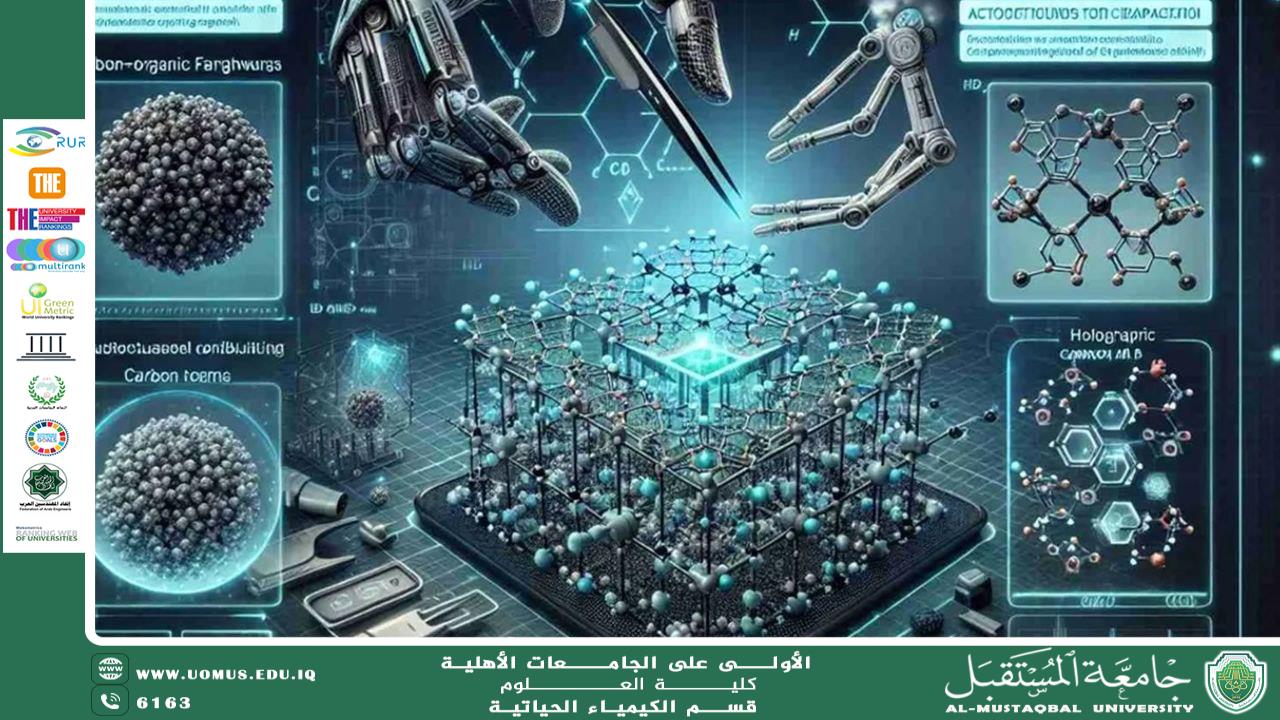
The future is moving toward integrating artificial intelligence with automated laboratories (self-driving labs), where the system predicts reactions, performs experiments, analyzes results, and continuously improves its models autonomously. This integration may lead to a true revolution in chemistry and scientific research.
Artificial intelligence has become an essential tool in predicting chemical reactions—not a replacement for the chemist, but a smart partner that supports decision-making and expands the horizons of scientific discovery. With the continued development of algorithms and the availability of high-quality data, AI is expected to play an increasingly influential role in the future of chemistry.
Al-Mustaqbal University
Ranked first among Iraqi private universities