"A scientific article by Lecturer Assistant Zainab Nazim Aziz entitled: “Luffa (Sponge Gourd)
Luffa, also known as sponge gourd, is a versatile cucurbit plant. Its genus is scientifically known as Luffa, with the most common species being Luffa aegyptiaca and Luffa acutangula. It belongs to the cucurbit family (Cucurbitaceae). Luffa is distinguished by its dual use: it can be consumed as a food when the fruits are young, and used industrially when the fruits reach full maturity.
Botanical Description
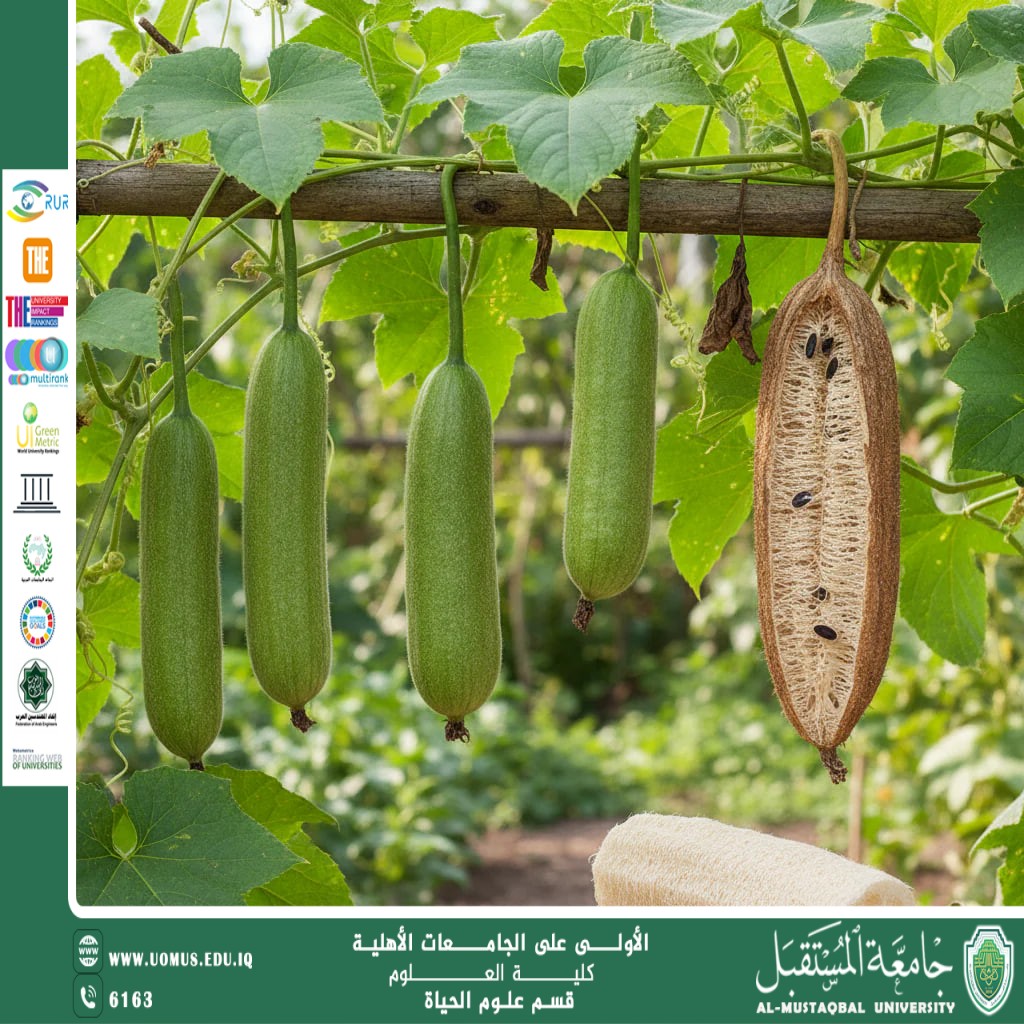
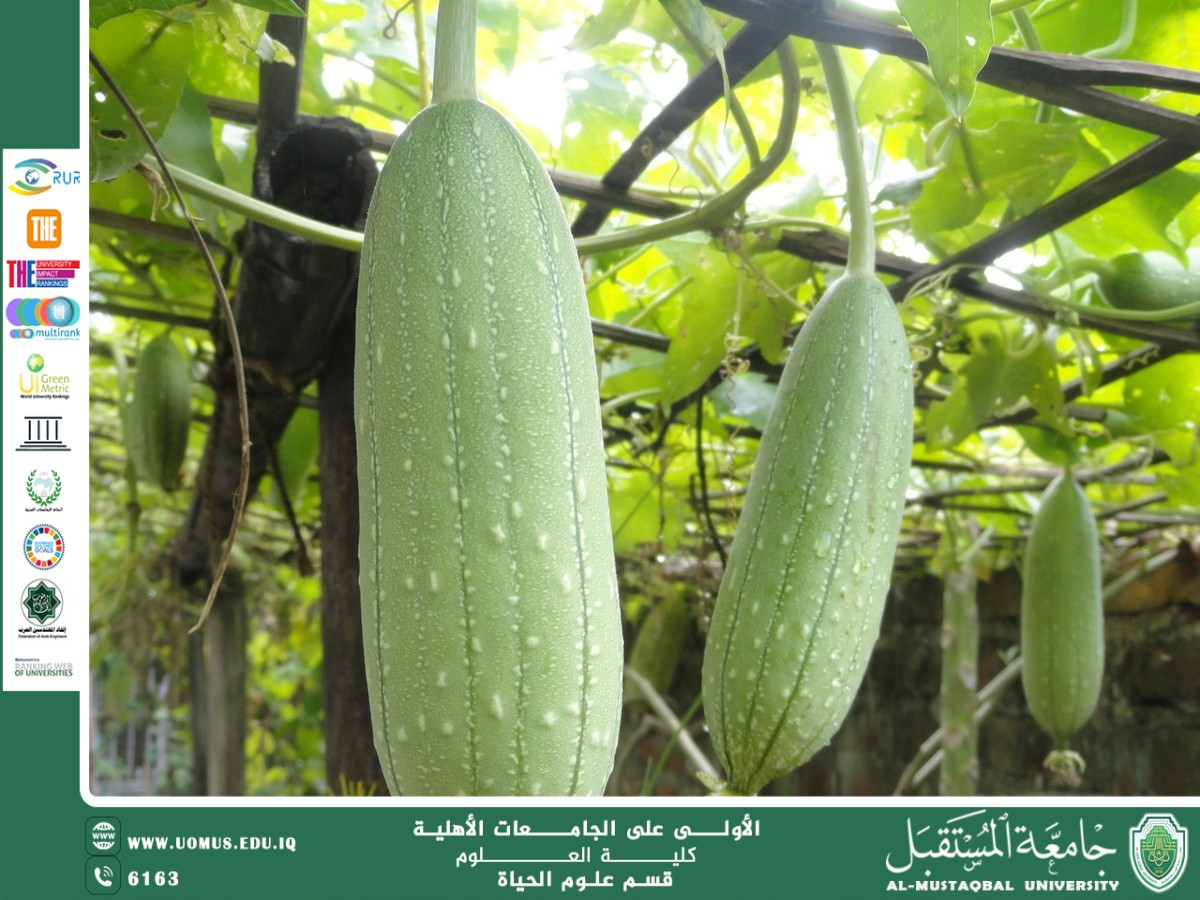
Luffa is an annual climbing herbaceous plant with long stems equipped with tendrils that help it climb. Its leaves are large and lobed, and its flowers are yellow. The fruits are long and cylindrical, resembling cucumbers; when fully mature, they become dry and brown, forming a distinctive fibrous, sponge-like network inside.
Nutritional Value (When Consumed Fresh)
Young luffa fruits contain:
Vitamins: C, A, and B-complex
Minerals: potassium, calcium, and magnesium
Dietary fiber
A high water content
They are also low in calories.
Health Benefits
Helps improve digestion
Contributes to body hydration
Supports immune system health
Suitable for low-calorie diets
Traditionally used in some cultures for simple medicinal purposes
Cultivation and Environmental Requirements
Luffa grows well in warm and temperate regions and requires:
Fertile, well-drained soil
Warm temperatures
Regular irrigation
Supports or trellises for climbing
Fruits usually begin to appear approximately 60–80 days after planting.
Uses
Culinary: Young fruits are cooked and eaten similarly to zucchini
Industrial: Dried mature fruits are used as natural sponges for cleaning and personal care
Environmental: An eco-friendly alternative to synthetic sponges
Decorative: Used in some handicrafts
Conclusion
Luffa is a distinctive plant that combines nutritional value, industrial applications, and environmental benefits, making it a multi-purpose crop that is relatively easy to cultivate.
Al-Mustaqbal University is the first university in Iraq.
الهدف الرابع : التعليم الجيد