Modern Chemistry Techniques: Analytical Tools and Applications in Science and Industry Scientific Article by: Asst. Prof. Dr. Karrar Majid Ubaid
With the advancement of chemistry, it is no longer limited to the study of matter and its reactions; rather, it has become an applied science that relies on advanced techniques enabling researchers to understand matter at the atomic and molecular levels, accurately analyze its composition, and design new compounds that meet the needs of industry, medicine, and agriculture.
First: Chemical Analysis Techniques
Analytical chemistry is considered one of the most important branches of applied chemistry and depends on precise techniques, including:
1. Spectroscopic Analysis
Includes techniques such as UV-Vis, IR, NMR, and AAS.
Used to examine molecular structure, identify functional groups, and determine elemental concentrations.
Example: NMR is used to determine the stereochemical structure of organic compounds.
2. Chromatography
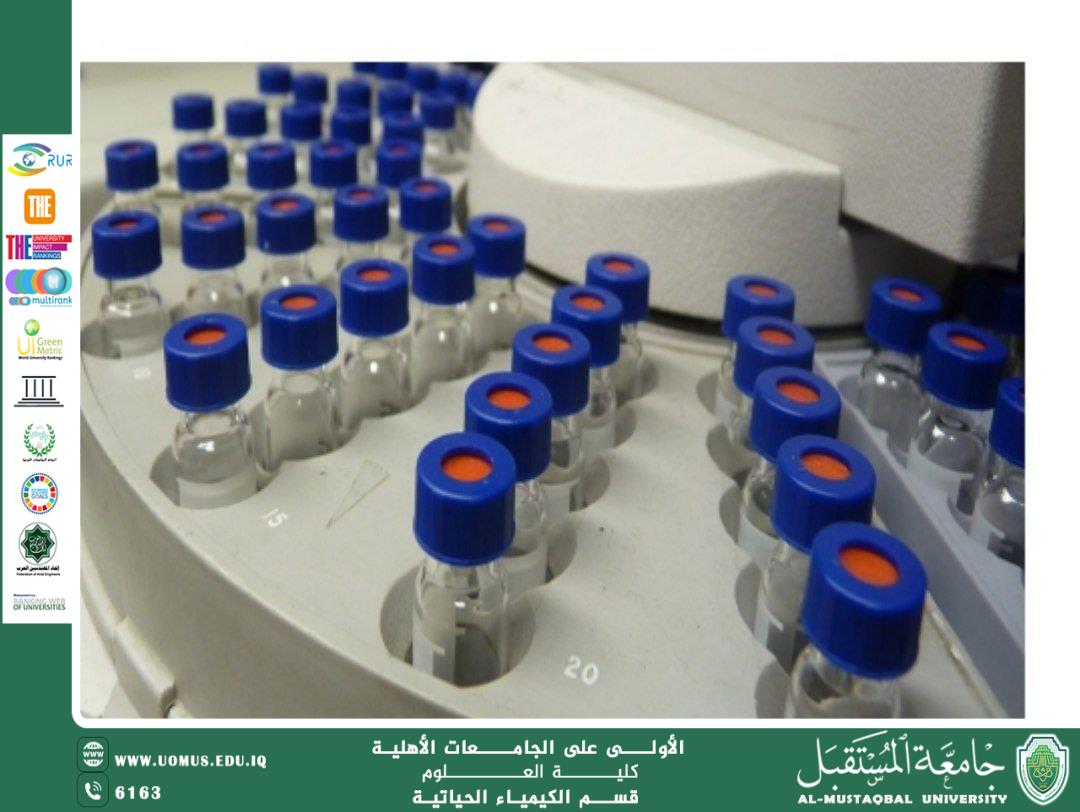
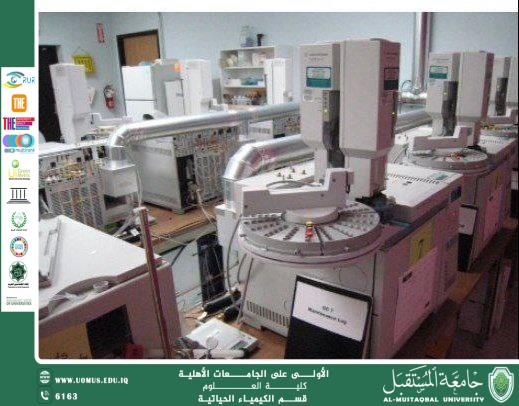
Includes Gas Chromatography (GC) and High-Performance Liquid Chromatography (HPLC).
Used for the separation and detection of components in complex mixtures.
Plays a vital role in pharmaceutical and environmental industries.
3. Electrochemical Analysis
Includes techniques such as Potentiometry and Amperometry.
Used to measure ion concentrations and monitor oxidation–reduction reactions.
Second: Chemical Manufacturing Techniques
1. Molecular Design
Relies on principles of computational chemistry to design new compounds with specific performance characteristics.
Widely used in drug development and smart material design.
2. Green Chemistry
A technology aimed at reducing the use of toxic substances and minimizing waste generation.
Example: Using environmentally friendly catalysts instead of harmful organic solvents.
3. Nanochemistry
Focuses on the study and synthesis of materials at the nanoscale (1–100 nm) with unique physical and chemical properties.
Applied in medical formulations, solar cells, and smart coatings.
Third: Role of Chemical Techniques in Other Fields
Medicine: Drug design, disease diagnosis through biosensors, and chemotherapy.
Environment: Pollutant analysis and the development of technologies for removing heavy metals or carbon dioxide.
Industry: Manufacturing polymers, alloys, construction materials, batteries, and paints.
The advancement of chemical techniques is not a scientific luxury but a necessity imposed by the requirements of the modern world in terms of precision, efficiency, and innovation. With the integration of artificial intelligence and big data analysis into the field, the pace of development is accelerating, making chemistry one of the sciences best equipped to face future challenges.
Al-Mustaqbal University
Ranked First Among Private Universities in Iraq