
New and Emerging Biomarkers in Chronic Kidney Disease A scientific article prepared by Dr. Tuqa Hazem Abdullah
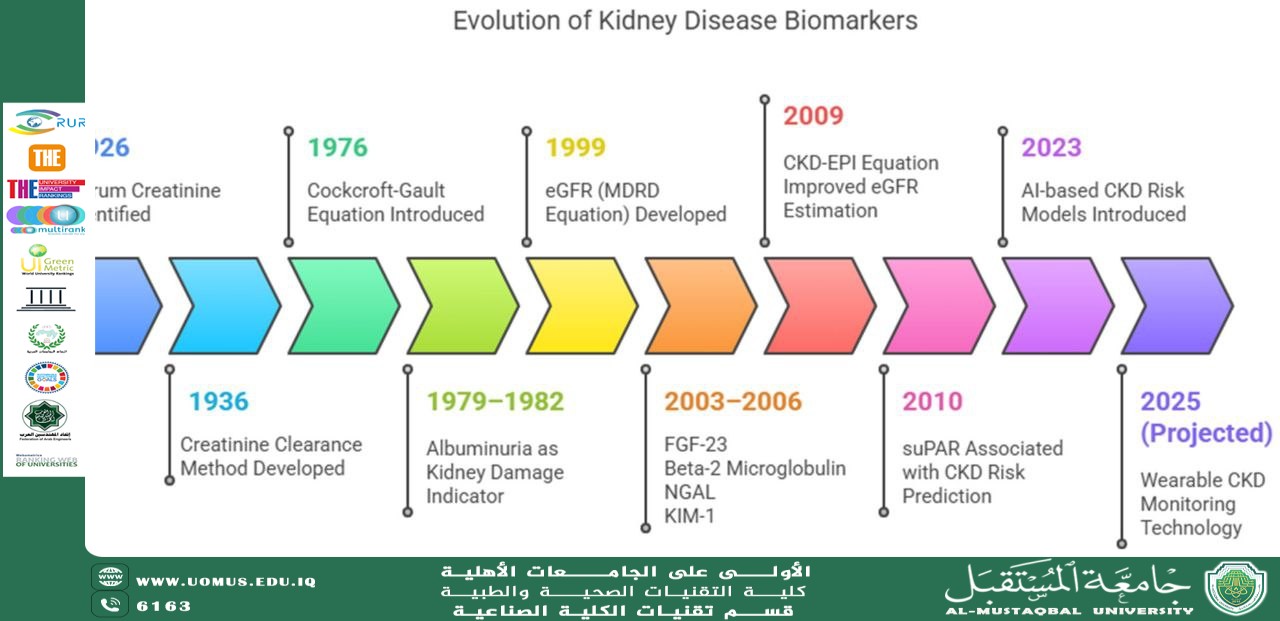
Chronic kidney disease (CKD) represents a major and widespread global health challenge. It affects over 800 million people worldwide, which is approximately 13% of the world’s population. Over the past 20 years, it has consistently ranked among the leading causes of death. As a result of its typically painless and asymptomatic presentation in the early stages of the disease, CKD is frequently diagnosed late, when the patient is already suffering from serious complications. In recent years, studies have identified novel biomarkers associated with the pathophysiology of CKD, including chronic inflammation, tubular injury, and CKD-related outcomes such as bone and mineral metabolism disorders, cardiovascular events, and all-cause mortality. Identifying and using these emerging biomarkers—like kidney injury molecule, N-acetyl–D-glucosaminidase, ficolins, the NLRP3 (nucleotide-binding domain, leucine-rich–containing family, pyrin domain–containing-3) inflammasome, soluble suppression of tumorigenicity-2, galectin-3, growth differentiation factor-15, soluble urokinase-type plasminogen activator receptor, sclerostin, the Dick-kopf proteins, and indexes such as the systemic inflammation response index—may lead to a significant advancement in early diagnosis, risk stratification, and personalized treatment strategies for CKD patients. Despite their potential, the routine clinical use of these novel biomarkers remains limited due to challenges such as high costs and the lack of standardized testing methods. There is still considerable room for advancement in both the diagnosis and management of CKD. Hopefully, increasingly more new biomarkers will become usable in clinical practice, ultimately improving care quality and outcomes for patients with CKD.
Al-Mustaqbal University the first in Iraq