Gene Therapy Prospects for Down Syndrome: Can the Extra Chromosome Be Removed? Prepared by: Lect. Abbas Hamza Khudhair Department of Biochemistry – College of Science – Al-Mustaqbal University
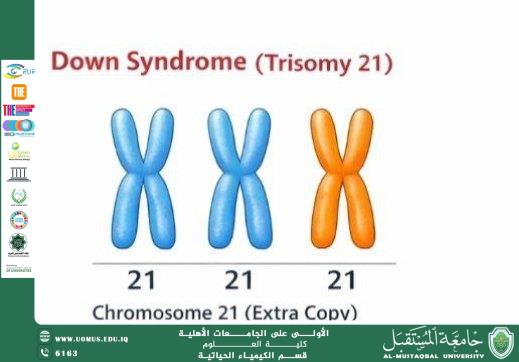
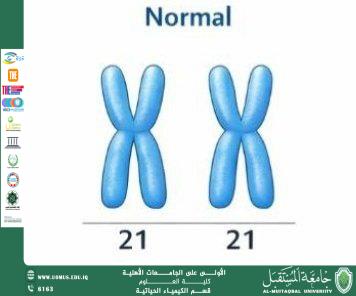
Recent scientific research has witnessed remarkable progress toward exploring potential gene therapy approaches for Down syndrome, focusing on identifying feasible and biologically applicable strategies. Down syndrome results from the presence of an extra copy of chromosome 21, where a typical individual carries two copies, while affected individuals carry three.
A very recent study employed CRISPR gene-editing technology to target the extra chromosome. However, a major challenge lies in the difficulty of removing an entire chromosome without unintentionally affecting the two normal copies, which could lead to serious and unpredictable genetic consequences.
To address this issue, researchers developed an innovative approach involving differential labeling of chromosomes, allowing precise tracking of the extra chromosome after gene editing and clear identification of which copy was eliminated. The targeted chromosome was cut at multiple sites, a strategy shown to increase the likelihood of its elimination while preserving the two original chromosomes.
Initial experiments were conducted in vitro using skin cells and stem cells, with a reported gene-editing success rate of approximately 13%. Although these results remain at a very early experimental stage, they provide promising proof-of-concept evidence that selective removal of the extra chromosome may be achievable under controlled laboratory conditions.
Conclusion:
While clinical application of gene therapy for Down syndrome is still far from reality, advances in CRISPR-based genome editing offer new scientific insights and genuine hope for future therapeutic possibilities.