The Department of Medical Laboratory Technologies Organizes a Training Workshop on the Use of the PCR Device
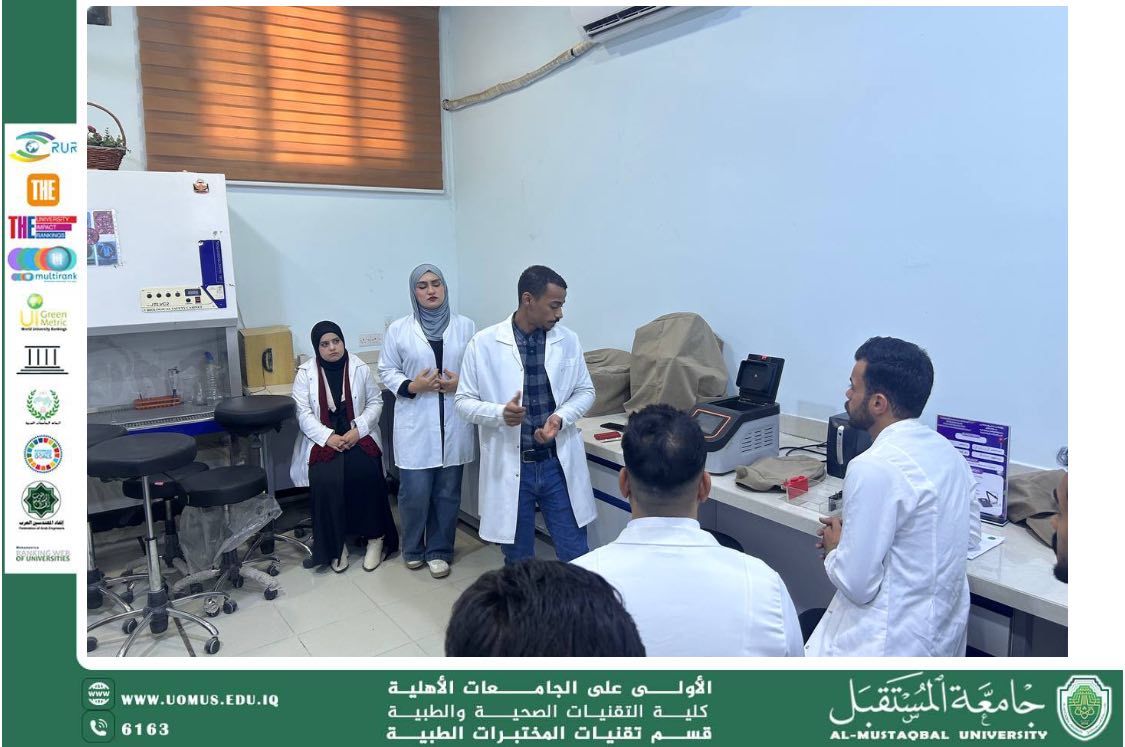
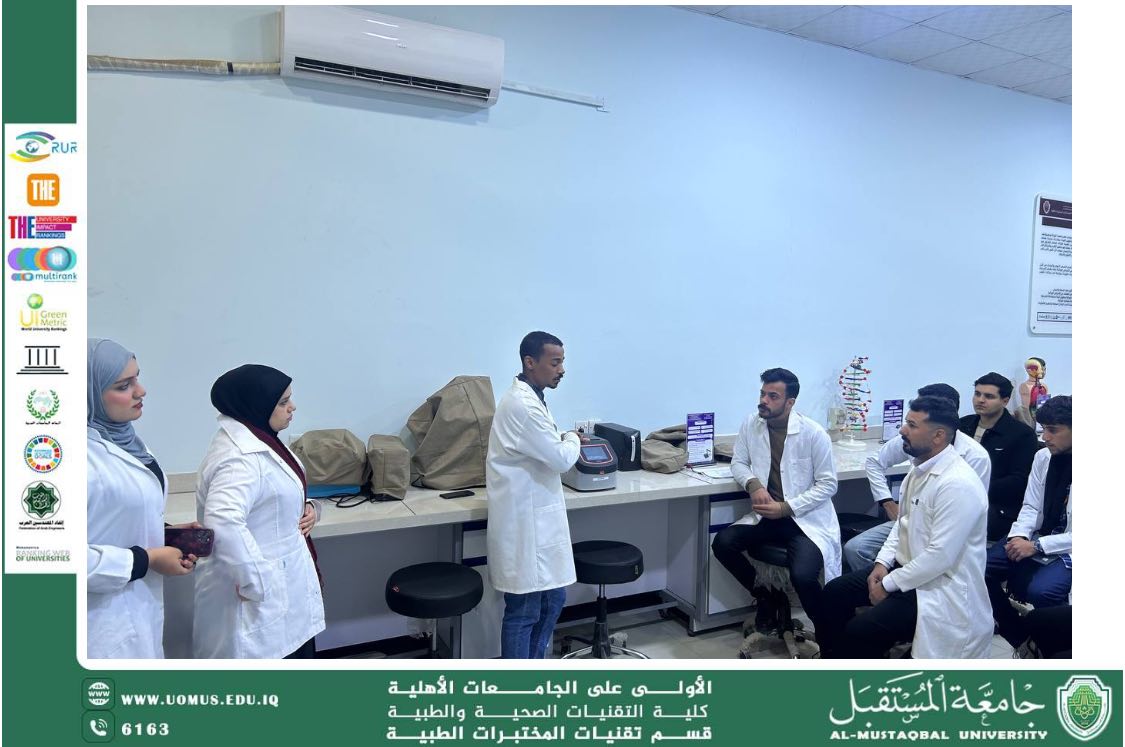
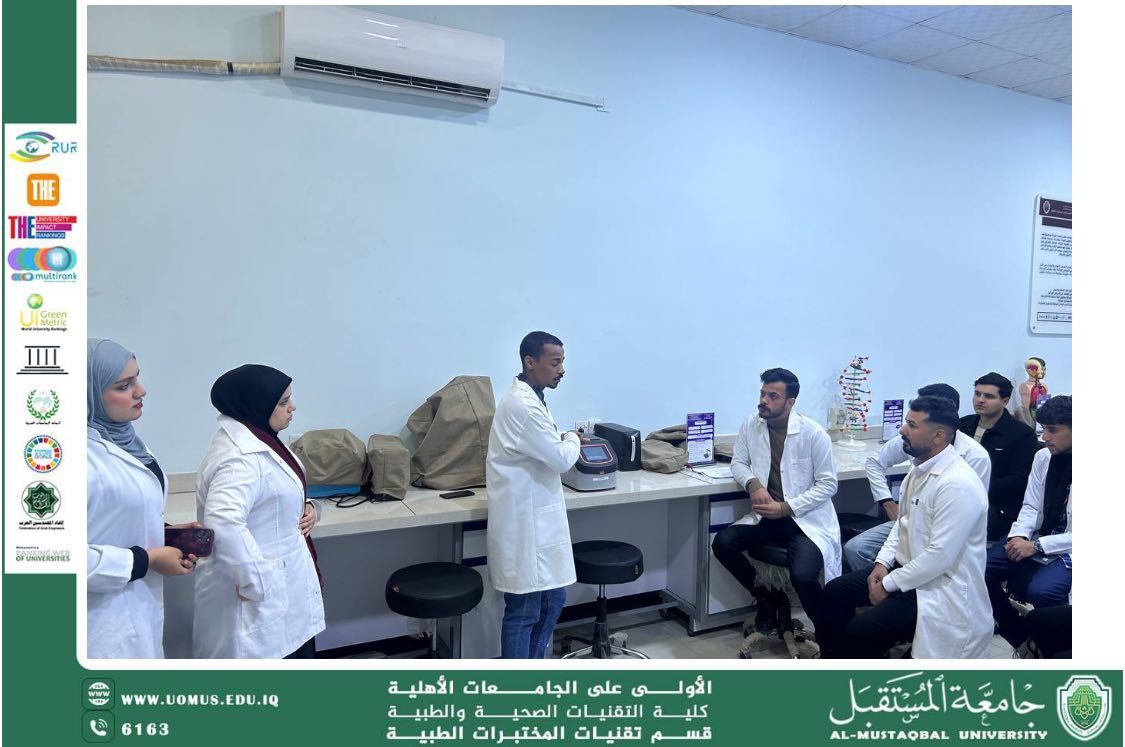
The Department of Medical Laboratory Technologies organized a specialized scientific training workshop on the use of the Polymerase Chain Reaction (PCR) device, with the participation of a group of faculty members and the attendance of a number of first-year students, as part of the department’s efforts to enhance practical skills and link theoretical knowledge with modern laboratory applications.
The workshop included a simplified explanation of the working principle of the PCR device, which is considered one of the essential laboratory instruments used to amplify DNA or RNA in very large quantities within a short period of time. The mechanism of repeated genetic material replication and the role of the device in amplifying it millions of times within a few hours were also explained.
In addition, the basic components of the PCR device (Thermal Cycler) and its operating mechanism through precise temperature control were reviewed, along with an introduction to the materials used in the reaction, such as the sample, polymerase enzyme, primers, and nucleotides (dNTPs).
The workshop also highlighted the most important applications of PCR technology in medical and research fields, including medical diagnosis for the detection of viruses such as COVID-19, hepatitis viruses (HBV, HCV), and Human Immunodeficiency Virus (HIV), in addition to genetic analyses and scientific research.
Furthermore, the most well-known types of PCR were introduced, including Conventional PCR, Real-Time PCR (qPCR), which provides direct quantitative results, and RT-PCR, which is used for RNA analysis.
The workshop was presented by Mr. Ahmed Jamal, Ms. Duaa Fadhil, Ms. Banin Turki, and Ms. Zainab Mahmoud, who emphasized the importance of such workshops in developing students’ practical skills and preparing them to work with modern laboratory technologies.
Al-Mustaqbal University is the first university in Iraq
Department of Medical Laboratory Techniques – First in the Iraqi National Ranking.