Scientific Article by Hayman Waleed Mazloom: The Role of Medicinal Plants in Modern Cosmetic Products
Introduction
Medicinal plants are among the oldest resources used by humans for therapeutic and cosmetic purposes. Ancient civilizations, such as the Egyptian and Chinese civilizations, relied on plant extracts in the preparation of body care products. With scientific and technological advancement, renewed attention has been given to these plants within a modern scientific framework, due to their proven therapeutic and cosmetic properties, as well as their lower side effects compared to synthetic chemical compounds.
Importance of Medicinal Plants in Cosmetics
Medicinal plants play a major role in the production of natural cosmetic products, as their extracts are used in skin creams, oils, masks, and shampoos. These plants are characterized by their ability to:
Moisturize the skin and enhance its elasticity.
Reduce inflammation and skin irritation.
Protect against free radicals due to their antioxidant content.
Contribute to the treatment of acne and skin pigmentation.
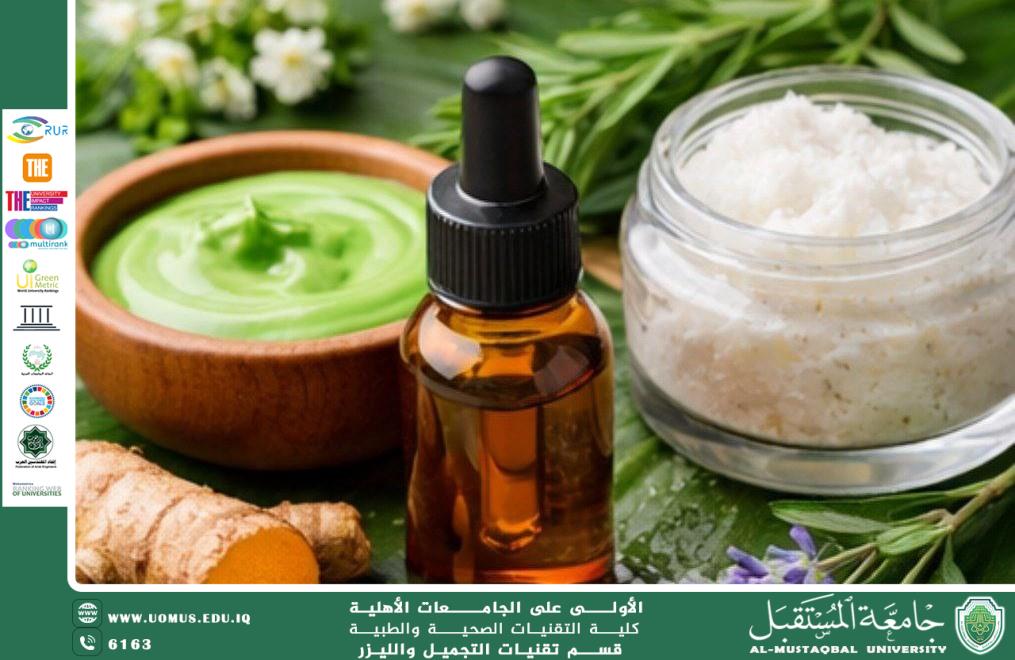
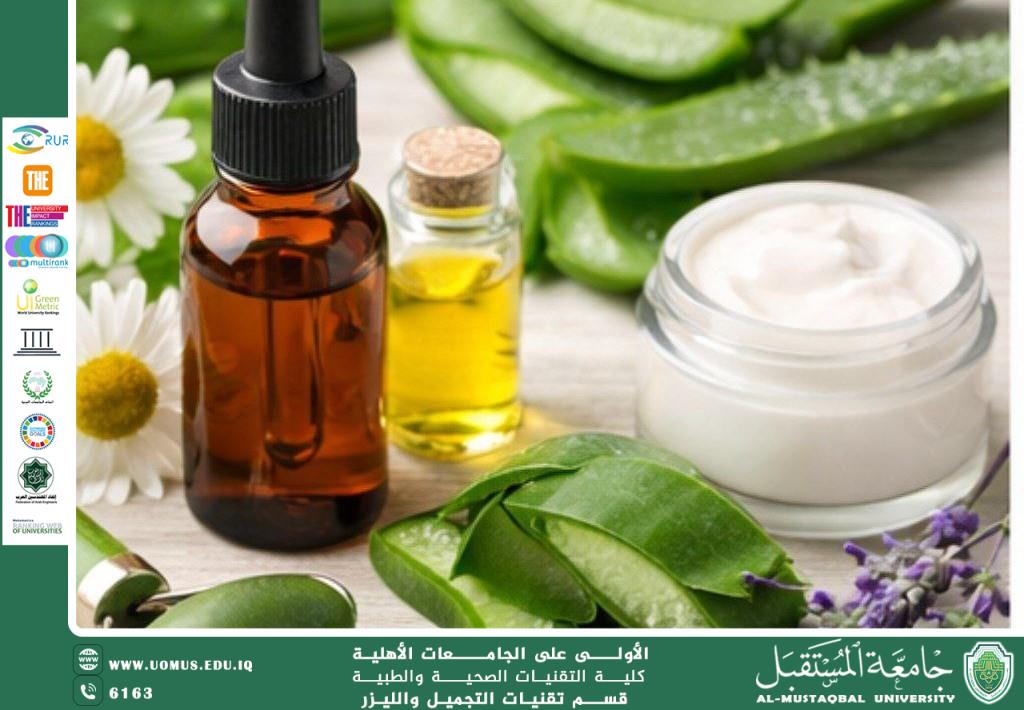
Common examples of medicinal plants used in cosmetics include Aloe vera, Chamomile, Lavender, Turmeric, and Henna.
Modern Techniques for Extracting Plant Compounds
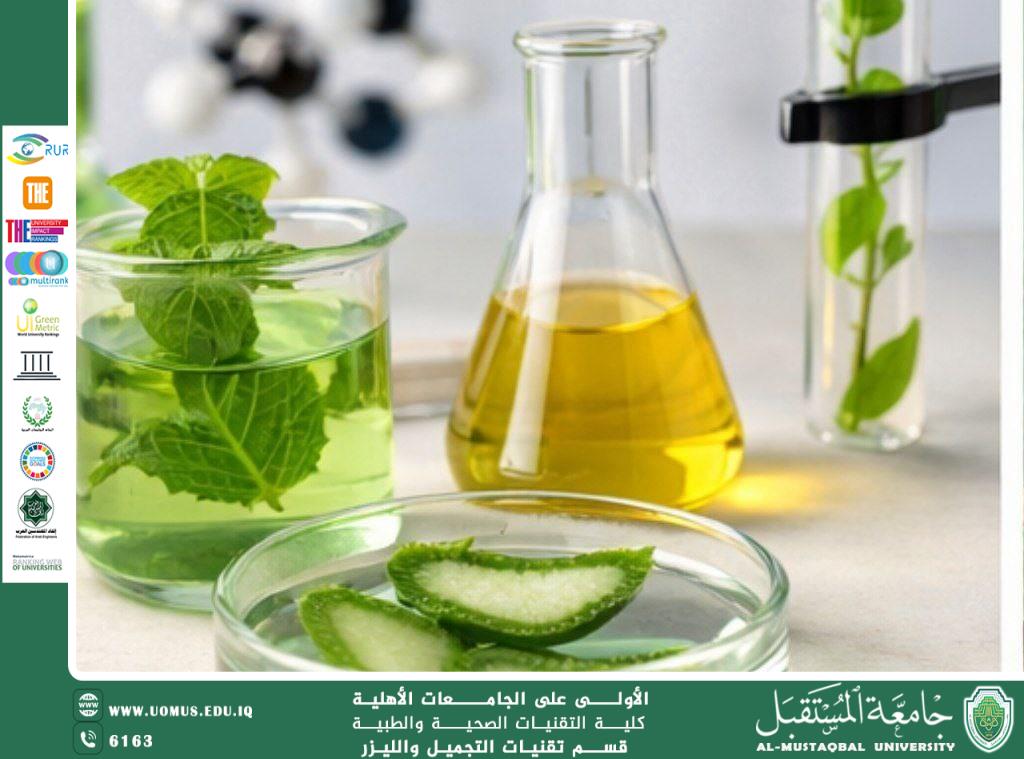
Modern technologies have contributed to improving the efficiency of extracting active compounds from medicinal plants, such as solvent extraction, supercritical fluid extraction, and biotechnological techniques. These methods have resulted in highly pure and concentrated extracts, enhancing the effectiveness and safety of cosmetic products.
Conclusion
Medicinal plants have proven their significant role in the modern cosmetic industry due to their natural, safe, and effective properties. With the increasing consumer awareness of the importance of natural products, reliance on medicinal plants is expected to continue in the development of innovative and environmentally friendly cosmetic products that combine beauty and health simultaneously.
AL_mustaqbal University is the first university in Iraq